
Exodus

Elements area

Taxonomy

Code

Scope note(s)

    Source note(s)

      Display note(s)

        Hierarchical terms

        Exodus

          Equivalent terms

          Exodus

            Associated terms

            Exodus

              6 Archival description results for Exodus

              6 results directly related Exclude narrower terms
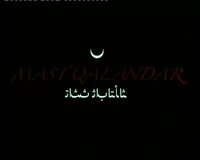
              Mast Qalandar
              ES ES-OVNI CTX-S012-SS001-0003 · Item · 2005
              Part of Non-Identified Video Observatory (OVNI)

              Above all, Mast Qalandar (Ecstasy) is a look at heterodoxy and a celebration of its existence. Qalandars are a Sufi brotherhood of roaming dervishes who once ranged through an arch that crossed Asia, from Turkey to Pakistan and India. They are characterized by extreme mystical devotion and their revolutionary and anti-dogmatic attitudes within Islam, such as use of hachis and the rejection of alcohol and free submission to Haqq, the truth, which they see as the absence of limits rather than something which narrows and defines horizons. “Mast Qalandar” immerses us in the ritual encounter of these dervishes around the grave of the brotherhood's founder in Pakistan. A vision of heir devotion to “the beloved” that leads them into trance and ecstasy, where death means simply to “draw aside a veil”. Available online until December 27th 2020.

              Untitled

              Keep on steppin'
              ES ES-OVNI CTX-S012-SS002-0006 · Item · 2007
              Part of Non-Identified Video Observatory (OVNI)

              In 1925 William Faulkner lived in New Orleans for a few months writing short sketches in which he called the city to life. Inspired by Faulkner's impressions, Dutch Filmmaker Marjoleine Boonstra drifts through the devastated streets of New Orleans, at any hour of the day, looking for the fears and dreams of people whose lives have gone adrift as a result of hurricane Katrina.

              Untitled
              Eternal Beauty
              ES ES-OVNI CTX-S012-SS007-0081 · Item · 2003
              Part of Non-Identified Video Observatory (OVNI)

              This is an essay on the aesthetics of National Socialist cinema. The history of the Third Reich is investigated in light of its own image making. What hopes, desires and fears are reflected in these images? The film unfolds chronologically, with original material dating from 1918 to 1945.

              Untitled
              Calcutta Calling
              ES ES-OVNI CTX-S012-SS007-0084 · Item · 2006
              Part of Non-Identified Video Observatory (OVNI)

              Vikeeh Uppal is a young Indian who works in a Calcutta Call Centre selling cell phones and ?re extinguishers to America and Great Britain. Vikeeh lives with his traditional Punjabi family and has never been out of Calcutta. The Brits he deals with on the phone, Hollywood movies and Manchester United soccer matches give him an idea of the globalized world.

              Untitled
              ES ES-OVNI CTX-S012-SS003-0006 · Item · 2004
              Part of Non-Identified Video Observatory (OVNI)

              July 1st, 1997. An elderly man arrives in Italy on a flight from Paris. The special forces of the Carabinieri immediately arrest him. Antonio Negri had voluntarily returned to his home country after 15 years in exile. The newspaper Liberation hails it as, “The return of the Devil”. Over the years, few intellectuals have experienced as much admiration and hatred, or as much praise and rejection, as Antonio Negri. His book “Empire”, a critical analysis of the new global economy, was hailed as a bold new manifesto for the 21st century and overnight it turned Negri into a leading spokesperson for the international anti-globalization movement.

              Untitled
              ES ES-OVNI CTX-S012-SS004-0012 · Item · 2006
              Part of Non-Identified Video Observatory (OVNI)

              A Journey in Afghanistan. After two decades of chaos and destruction, a country searches for its identity. Eight places. A cinematic encounter with people and their realities. A nightclub, a school, a hospital, a taxi – the people there talk about daily life in Afghanistan beyond the war and the Taliban. The director observes people and incidents on his journey, starting in the northern province and eventually reaching the capital Kabul. The result is a mosaic, presented as episodes leaving out West-European commentary.

              Untitled