
“Radical Imagination (Carnivals of Resistance)” is the second part of the “Entre sueños” (Between Waking and Sleeping) series. It deals with the “Global carnival against capital”, an action staged by the Reclaim the Streets movement in London on June 18, 1999, which brought urban commercial life to a standstill. The City of London, a world financial centre and a major hub of international capital, was paralysed, and the protest developed into an epicentre of a political current that reappropriated the idea of the carnival as a tool that points to new approaches of the occupation and formation of public space in recent anti-globalization movements.
UntitledExodus
64 Archival description results for Exodus
The life story of an elderly Mauritanian woman, Aïcha Messaoud, who spent her whole life as part of Sheik Ma-el-Aïnïne's distinguished family of nomads and now lives in the small Moroccan village of Tata, in the northern part of Western Sahara. The filmmaker sets out to trace the memories of her heroine. Stage after stage, she travels through thousands of kilometres across the desert, encountering the descendants of the Sheik.
UntitledIn 1925 William Faulkner lived in New Orleans for a few months writing short sketches in which he called the city to life. Inspired by Faulkner's impressions, Dutch Filmmaker Marjoleine Boonstra drifts through the devastated streets of New Orleans, at any hour of the day, looking for the fears and dreams of people whose lives have gone adrift as a result of hurricane Katrina.
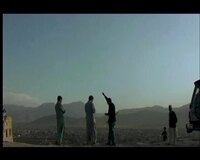
UntitledIn the broken cityscape of Kabul, Afghanistan, amid the dust and rubble of war, Westerners and Afghans adjust to the uncertain possibilities of peace. Kabul Transit shuttles through the broken streets of the city, moving between public space and private, listening in on conversations, posing questions, probing the darker alleys mainstream media avoids. The result is a shifting mosaic of encounters and raconteurs, captured glances and telling gestures, all beautifully shot and woven together by the music and the found sounds of a city sluggishly coming to life, a place that is at once hauntingly strange and altogether familiar.
UntitledBeirut, July 2006. Israeli bombings strike the city. While Beirut is still on fire, the filmmaker starts a journey across his native land. The film is not a documentary - although the images are burningly real - but an essay. Using two complementary techniques, 16 mm film and HDV, the artist questions the deep foundations of the documentary genre. The eye of the cameras goes through a country in a state of terror, it records the immediate effects of war when it touches civilians.
UntitledThe word is like the fire that fell from the sky in the shape of Garizi (the tuber of power), which our ancestors once ate. It's not tangible, it can't bee seen, it is simply an exhalation (Jafaiki). Odo Buijidima.
UntitledThe earth, its fruits, its particular places and the traditional cultural practices of its people are sacred, material and immaterial assets shared by all. Food sovereignty is at the heart of the Cauca peasant women's and indigenous communities' peaceful struggle to achieve overall sovereignty. Barter is still one of their strategies.
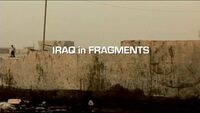
UntitledAn opus in three parts, Iraq In Fragments offers a series of intimate, passionately-felt portraits: A fatherless 11-year-old is apprenticed to the domineering owner of a Baghdad garage; Sadr followers in two Shiite cities rally for regional elections while enforcing Islamic law at the point of a gun; a family of Kurdish farmers welcomes the US presence, which has allowed them a measure of freedom previously denied them.
UntitledDue to her Mongolian birthmark, the filmmaker Theresia Grösslinger embarks on a cinematic journey through Mongolia. However, the illusion of being closer to the country and its people because of her birthmark is destroyed right from the beginning. While taking part in a family's everyday life in the southern veldt, she soon has to admit to herself her disappointment at feeling completely lost in this vastness and that the family only regards her as a tourist.
Untitled1994 is the year the director of this film turned 20. It's the year of the genocide in Rwanda and the year she lost her father. 1962 is the year the director's mother turned 20. It's the year the country officially got independence and the year the director lost her grandfather. “Homeland” is a journey around Rwanda, with characters from two different generations. A trip back in time to reconcile intimate stories with Rwanda's History, personal view points and unpublished archives. An immersion into the origins of violence and fate.
Untitled