
Can Ricart, in Barcelona's Poble Nou, was a textiles factory in the 19th century and an industrial complex with numerous workshops in the 20th century. At the start of the 21st century, the approval of the urban rehabilitation project Plan 22@, meant that industrial areas in Poble Nou were earmarked for demolition, to be replaced by office buildings. Can Ricart then became the subject of litigation between the affected workshops, the developer and owner – Federico Ricart, Marquis of Santa Isabel – defenders of the heritage value of the complex who wanted it turned into public space, and Barcelona City Council, responsible for the urban plan.
UntitledExodus
64 Archival description results for Exodus
An investigation into the fraud in the 2006 Mexican elections that saw left-wing front-runner Manuel Lopez Obrador lose to right wing candidate Felipe Calderon.
UntitledVideo letters from Beirut to the World. July 21, 2006. Calling outside Lebanon, the bombings in 2006.
A documentary about the city of Beijing which is undergoing enormous changes during the preparations for the summer Olympics 2008. A brand new Beijing, with a vision for the future, is replacing the old imperial capital. In a series of close-ups, we meet the people of Beijing who will lose their homes and face an uncertain future. They have raised their voices against the destruction of their homes and the loss of their city's history for ever.
Untitled1994 is the year the director of this film turned 20. It's the year of the genocide in Rwanda and the year she lost her father. 1962 is the year the director's mother turned 20. It's the year the country officially got independence and the year the director lost her grandfather. “Homeland” is a journey around Rwanda, with characters from two different generations. A trip back in time to reconcile intimate stories with Rwanda's History, personal view points and unpublished archives. An immersion into the origins of violence and fate.
UntitledDue to her Mongolian birthmark, the filmmaker Theresia Grösslinger embarks on a cinematic journey through Mongolia. However, the illusion of being closer to the country and its people because of her birthmark is destroyed right from the beginning. While taking part in a family's everyday life in the southern veldt, she soon has to admit to herself her disappointment at feeling completely lost in this vastness and that the family only regards her as a tourist.
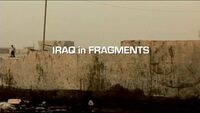
UntitledAn opus in three parts, Iraq In Fragments offers a series of intimate, passionately-felt portraits: A fatherless 11-year-old is apprenticed to the domineering owner of a Baghdad garage; Sadr followers in two Shiite cities rally for regional elections while enforcing Islamic law at the point of a gun; a family of Kurdish farmers welcomes the US presence, which has allowed them a measure of freedom previously denied them.
UntitledThe earth, its fruits, its particular places and the traditional cultural practices of its people are sacred, material and immaterial assets shared by all. Food sovereignty is at the heart of the Cauca peasant women's and indigenous communities' peaceful struggle to achieve overall sovereignty. Barter is still one of their strategies.
UntitledThe word is like the fire that fell from the sky in the shape of Garizi (the tuber of power), which our ancestors once ate. It's not tangible, it can't bee seen, it is simply an exhalation (Jafaiki). Odo Buijidima.
UntitledBeirut, July 2006. Israeli bombings strike the city. While Beirut is still on fire, the filmmaker starts a journey across his native land. The film is not a documentary - although the images are burningly real - but an essay. Using two complementary techniques, 16 mm film and HDV, the artist questions the deep foundations of the documentary genre. The eye of the cameras goes through a country in a state of terror, it records the immediate effects of war when it touches civilians.
Untitled