Barzaj

Elements area

Taxonomy

Code

Scope note(s)

    Source note(s)

      Display note(s)

        Hierarchical terms

        Barzaj

          Equivalent terms

          Barzaj

            Associated terms

            Barzaj

              5 Archival description results for Barzaj

              5 results directly related Exclude narrower terms
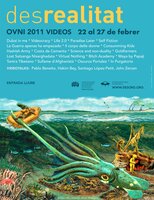
              Dis_Reality
              ES ES-OVNI CTX-S014 · Series · 2011
              Part of Non-Identified Video Observatory (OVNI)

              / CONTEXT 1994 - 2020

              "You are asleep, and your vision is a dream; all you see is an illusion.” (1)

              OVNI disReality aims to reflect upon different phenomena of the critique of reality, their repercussions and the horizons that they illuminate, or recall.

              Extremely heterogeneous traditions and forms of experience radically question not only the concept of reality, but the very experience of the real.

              Some of the most radical questionings of reality arise from the culture of images, “when the real world is transformed into mere images, mere images become real beings.” (2) Others are a result of simulation mechanisms: as soon as the copy ceases to be a pale reflection of the original image and begins to erode it in its entirety, then the original becomes nothing more than one copy among many, and not necessarily the one with the greatest verisimilitude. The extreme condensation of these phenomena springs from digital technology: video games, simulation, virtual images, expanded reality, mutating into fields as diverse as leisure, military training, communication, industrial processes, personal relationships, the administration of pleasure... becoming the psychic and emotional habitat of a large part of the population. A fictional whole.

              Nevertheless, this virtual reality in turn generates a reified, totally physical reality, like that which we now see on a grand scale in cities like Dubai, and in so many other instances of our everyday life. Realities emanating directly from virtual environments, which also condense around social and work relationships, and the spaces and non-places that they generate. Virtual metaphysics thus seems to turn back to the physical, in a feedback dynamic. The evanescent and inapprehensible post-modern reality once again coagulates into cumbersome, real structures of power and exploitation, but this time they are suspended in the digital cloud, and their presence is therefore more volatile and harder to confront. In China, for example, there are hundreds of thousands of illegal workshops in which workers play online videogames for twelve hours a day, to win and accumulate virtual assets that are then exported to the rest of the world, and virtual currency that is traded against real currencies. In the fictional “all” that emerges, realities merge like layers in the dreams of an ever-deepening sleep.

              “The sleep of our era is not a good sleep that provides rest. It is an anxious sleep that leaves you feeling even more worn out (...) There is a narcosis that begs for an even deeper narcosis. Those who, by luck or misfortune, awaken from the prescribed sleep, come into this world like lost children.” (3)

              A sleep that turns everything it touches into images. A sleep based on image as a veil, as as a social instrument of blindness. Sure enough, a veil of mass produced images spreads out, covering the entire field of vision, like a master film, a screen-world with a flexible, ever-changing reality that clings to the skin of objects, people and landscapes. Not like a patchwork of handcrafted images, personal visions, dreams, imaginations or ruins of former imaginaries...sprinkled with gaps, inaccuracies that invite vision and imagination. Rather, a visible “all,” fuelled by the realities it conceals.

              Thus we find a kind of questioning of reality that is directly political: the observation of the expansion of a dominant reality that threatens the fabric of other realities; that threatens to erase forms of knowledge, landscapes, people, ways of life, feelings... As if a thousand libraries of Alexandria, still inscribed in people’s daily lives, in their actions, in their spaces, were already burning once again. As if, perhaps within a very short space of time, all that will remain to read, with luck, will be their sad ashes catalogued by experts.

              There has never been such an intense and extensive expansion of a dominant reality as that of global capitalism, or, in consequence, a comparable resistance or refusal. In fact, this dominant reality is already “the” reality; a reality that has the consistency of a “beached jellyfish,” a gelatinous mass that covers any surface, filling any crack. In the face of this, “Only the total refusal of reality reveals it to us in its reality, reveals it to us in its truth.” (4) A reality that disrealizes us: a disreality.

              On another level, this refusal of the world as reality coincides with visions that stem from the poetic and the metaphysical: the advaita vedanta (Hindu non-dualism) or Sufi mysticism in Islam, among others. “The One is reality. Multiplicity is illusion, the world of names and forms.” (5) If we identify with these names and forms, if we endow them with reality, we move away from our true nature, we set out in pursuits of phantoms. From this perspective, so-called reality only seems to persist through a kind of autosuggestion, which stems from the dense network of desires and fears, false identifications, actions and reactions... in an experience not too distant from a dream.

              Pondering on sleep and wakefulness reveals the following. In wakefulness, the world exists clearly in the light of the sun, things appear to be “out there” and consciousness simply has to initiate the move towards appropriation, under the impulse of desire. From wakeful life we learn that a reality exists, but this reality is the reality of the other: objects, beings, etc... and our reality is defined in relation to this alterity. In sleep, however, the light that shines on the world and reveals it to us is the light of the mind; alone with ourselves, we cannot talk about an external reality. Our own consciousness projects the world of objects and beings, it is created by the dreamer; a world that disappears when we awaken. Sleep liberates us from time, and teaches us to doubt the external reality of waking life: perhaps we awaken from one dream and enter another. Perhaps the difference between sleep and wakefulness is simply one of duration. Finally, in deep sleep, both the inner and and outer world disappear without affecting consciousness: one is there, without dreams, without desires, without world.

              In this context, awakening means that the dreamer ceases to project reality onto the imagined dis_reality of separate entities; it means remembering the essential unity of all things, recognising oneself in the consciousness that is One, but the intimate experience of which is unique in each being, and which we call by different names, Being, Life, Reality,...

              “Oh mankind, your injustice is only against yourselves.” (6)

              (1) Mahmud Shabistari, The Secret Garden. Persia, 18th century.

              (2) Guy Debord, Society of the Spectacle.

              (3) And the War has Only just Begun (Tiqqun)

              (4) Santiago López Petit, La movilización global.

              (5) Ramana Maharshi, Be as You Are

              Thematical screenings

              Hall and Auditorium.Simultaneous Screenings

              Centre de Cultura Contemporània de Barcelona

              Montalegre 5. 08001 Barcelona

              Image: Collage numérique. Alain Kugel

              http://photografiques.free.fr/montages/vues/pages/pieuvre.html

              in Limbo
              ES ES-OVNI CTX-S016 · Series · 2014
              Part of Non-Identified Video Observatory (OVNI)

              falling and flying / OVNI 2014

              / CONTEXT 1994 - 2020

              falling and flying / OVNI 2014

              Limbo (Lat. Limbus) ~ the world between the living and the dead ~ the storage space where deleted files are sent ~ a tale by Aldous Huxley.

              There is an enormous, constant, and well-organised pressure on social rights and freedoms, backed by a media apparatus that appropriates language and steals our words. Meanwhile, nature is still the source from which we extract the fuel that feeds the engines of progress for the few.

              Borders spill beyond boundaries and permeate cities like the laboratory for a new totalitarian society.

              Fall & Winter, Cómo robar la vida a un ser humano, Terrorisme d'Auteur, Barcelona the Dead City, Deleuze à Vincennes, Marinaleda, iPhone China, Detroit Wildlife, Barcelona panAfrica, Agustín García Calvo at Sol, Homeland Security.

              Thematical screenings

              Hall and Auditorium. Simultaneous Screenings

              Centre de Cultura Contemporània de Barcelona

              Montalegre 5. 08001 Barcelona

              Image: Pour Auguste (2010). Chantal Michel

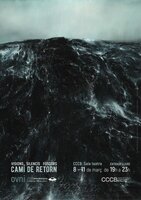
              Path of Return
              ES ES-OVNI CTX-S019 · Series · 2018
              Part of Non-Identified Video Observatory (OVNI)

              / CONTEXT 1994 - 2020

              Path of Return / OVNI 2018

              visions, silence, darkness

              A few years ago – just after OVNI The Border as Centre (and perhaps as a consequence of it) – we entered a period of introspection. And in that inward-looking space, certain images from Bela Tarr’s film The Turin Horse (1) kept returning over and over again. In particular, three sequences:

              In the first, an elderly man struggles to drive his horse and loaded cart through a fog-filled landscape. After a while, we begin to understand the need for so much effort: the driver is one-armed, and a cart intended for two horses is being pulled by just one. Something is missing in this soulless world. A profound lack of balance is causing it to crack and at the same time bringing it to a standstill. The mutilated substance of that which animates it, mutilated itself, is crushed under its own weight and sinks on its blind side. Every gesture, every task, even eating, is arduous.

              In the second scene, a character appears on screen and delivers a wild, lucid monologue about the course the world has taken: “everything has been debased that they’ve acquired (…) whatever they touch – and they touch everything – they’ve debased (…) Acquire debase, debase, acquire. Or I can put it differently if you like: to touch, debase and thereby acquire, or touch, acquire and thereby debase. It’s been going on like this for centuries (….) Because this is not some kind of cataclysm, coming about with so-called innocent human aid. On the contrary, it’s about man’s own judgement.”

              The cart driver’s answer is laconic: “Come off it, that’s rubbish”. (2)

              Then, the wind, the barren plain, the loneliness.

              In the third scene, near the end of the film… as night falls, the two main characters, father and daughter, try to light an oil lamp or at least a candle but they are unable to do so. Light has already left that world.

              Light is leaving the world.

              For months and months, as we were saying, these images played over and over inside us, suggesting a possible path but also imperceptibly plunging us into their dense fog. We tried to navigate inside it but we could barely see our hand stretched out before us. So we walked for a time through that invisible world, and little by little we learnt to trust that fog, that not-knowing, that not-seeing with our eyes, until we came, in a sense, to recognise ourselves in it… Once this state had stabilised we shared it with the rhizome that gives rise to ovni, and this was how a few people came to talk to us about death and deaths (3) … and how the “Path of Return” unexpectedly opened up in the fog, not denying it but rather incorporating it like a veil that protects the mystery that surrounds us and runs through us at every moment.

              And so this OVNI of fog takes us on a journey through the middle world, the experience of physical death and of the deaths of the ego.

              Instead of a regular video programme, it takes the form of a rite of passage in which visions (videos), texts, sounds, rituals, and breaths are interwoven with shared silence and darkness.

              To open up our vision (4), to open up to the awareness of that which we call film, video… those strange projections of light and shadow that portray worlds and lives, landscapes and feelings that arise in the dark cave of the screening room. It is there, in that shared or solitary darkness, that visions of worlds are incubated… before the emergence of boundaries between the real and the unreal, wakefulness and sleep, life and death… Visions on a white screen that will remain white once the visions of the worlds have disappeared. (5)

              Perhaps an old wound in our culture and our lives is thus healed, the hemispheres come together, other eyes open, and the Turin horse is no longer beaten. (6)

              So as not to separate death from life, each day’s journey will begin by passing through the gates of dreams – death’s twin – and trance, exploring the rituals of farewell and dissolution of the body… A contemplation of dissolution that will lead us to the grateful contemplation of life.

              So Path of Return unfolds as a rite of passage, a journey that we recommend making in full each day (*), to aid in a good crossing through intense and sometimes difficult inner landscapes that may perhaps help us to regain the perception of the unlimited, inappropriable, unrepresentable nature of the Real.

              (*) OVNI will take place from 7 to 11pm each day.

              The CCCB Theatre will open at 7pm. Once the programme starts the doors will remain closed, opening at least twice more in the course of each evening. The Lobby of the Theatre will be open from 7 to 11pm, and a room nearby will be fitted out and equipped with audio recordings for those waiting.

              The Turin Horse ( A torinói ió in the Hungarian original) is a 2011 film directed by Béla Tarr and Ágnes Hranitzky.

              Transcription of the monologue from The Turin Horse :

              The people who come to mind are Palmar Álvarez Blanco, Marco Antonio Regueiro, … and also all those who have already left us during this long period of searching

              Abu Ali, Abrir la Visión, 2016

              http://www.al-barzaj.org/2016/10/abrir-la-vision.html

              This image is often used by Ramana Maharashi.

              According to the oft-repeated story, Nietzsche was in Piazza Carlo Alberto when he noticed the driver of a hansom cab flogging his stubborn horse. Nietzsche ran towards them, threw his arms around the horse’s neck to protect him, and then collapsed on ground.

              March 2018, 8th - 11th / 19:00h - 23:00h

              Image de Thierry DE CORDIER, “MER GROSSE”.

              Toni Serra *) Abu Ali
              ES ES-OVNI TS-S002 · Series · 2019
              Part of Non-Identified Video Observatory (OVNI)

              Toni Serra *) Abu Ali

              / VIDEO ESSAY 2001-2016 /

              / THE BLACK TAPES / TV CODE /

              / EL HAMDULILLAH TAPES * PIRATE UTOPIAS & EUROPEAN RENEGADOES /

              / THE RAIN IN DUAR MSUAR /

              Entre el Agora y la Frontera

              Toni Serra *) Abu Ali

              / TONI SERRA *) ABU ALI

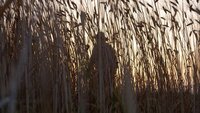
              The sheaves of wheat hide the thorns of the jujube... drops of blood are sown in the dust

              the woman's belly enters full moon... announcing a still-distant October

              the harvest is a time of Remembrance, of gratitude.

              Winter’s End
              ES ES-OVNI CTX-S020 · Series · 2020
              Part of Non-Identified Video Observatory (OVNI)

              Observatory Archives 2020

              / CONTEXT 1994 - 2020

              Observatory Archives 2020

              Founded in 1994, OVNI (Observatorio de Video No Identificado) is a video-based research project that focuses on the analysis and critique of a significant part of contemporary culture. Created by video makers rather than cultural managers or curators, OVNI has always shunned the stereotype of the competitive festival and new releases. It is a project run by creators about creators who use the medium of independent video, in which creative practice has always been imperative. With the birth of the Observatory Archives in 1999 as one of its milestones, OVNI has witnessed three crucial decades, observing the birth of the internet, the transition from analogue to digital, and the tectonic shifts in the political and spiritual strata of contemporary culture. All of which have been reflected in its archives.

              In 2020, OVNI offers a collectively mapped itinerary through this period. Under the title “ WINTER'S END ”, it presents four sessions of video-reverie, in a programme that subtly speaks of being adrift in the present moment and of memory. The title refers to a notion that is evocative, but also, more specifically, given the dates of the sessions, to the last days of winter and the transition to lightness. A concreate reference in overly volatile times, an evocation in times of loss.

              Winter's End is held in memory of Toni Serra-Abu Ali, who met with death on 21 November 2019. Co-founder of OVNI and author of an important and extensive video oeuvre, the OVNI 2020 programme is guided by some of his works: each session begins and ends with one of his videos, in line with the thematic thread of each day’s programming. But it also includes many of his lesser-known titles, some made under a pseudonym, others anonymously.

              Winter 's End- OVNI 2020, is not a retrospective or a representative survey of the Observatory Archives: that would be entirely impossible given the extent of the collection. However, at a moment in its history very much marked by Toni’s death, twenty-seven years after its foundation the Observatory is taking its extensive collection as a starting point for a particular reading. A look at fundamental questions and fragments, witnesses, and landscapes from these decades, which connect and establish a dialogue with a chaotic present presided by loss.

              Without focusing on a clearly defined theme, Winter's End contemplates the drifting of the present in a programme marked by loss, in a space of time of attentive reading and of slowness, based on a desire to recover an intimate relationship with images.

              Sensing the Twilight (day 1)

              The first session of OVNI 2020 presents video portraits from the 1980s and 1990s, video diaries, people who talk to and with the camera on their own, in the low resolution and slower pace of analogue times. We observe video as it was then, more naïve, and therefore with a greater sense of freedom in relation to the media, through works made in pre-digital times, when the explosive spread of social media was still undreamt of. Pieces like Iñaki Álvarez’s El Dolor (1996), in which a group of people talk about their notion of pain, alone except for the camera; Xavier Hurtado’s Interview Agency (1992), a project in post-Olympic Barcelona that reveals the tension between the interviewer-cameraman and the interviewee, between transparency and manipulation, ideology and neutrality. Works that were particularly significant at the time, also in OVNI programmes in the 1990s, as was Ardele Lister’s Split (1981), in which a teenager talks about running away from home, and It Happens to the Best of Us (1989) in which she looks back on the episode as a young woman eight years later.

              Crossing Mirages (day 2)

              The second day of OVNI 2020 is a session that moves between loss and oblivion, illusion, and, finally, recognition in the essence. It includes important works like Marcos on Media (1996), which addresses the role of the independent media in the decade of globalisation; Una Cruz en la Selva (2006), a look back at colonised Guinea through historical archival materials, and Now I Become Death (2012), a reconsideration of Openheimer’s words after the first nuclear test, both edited by Toni Serra under a pseudonym. This second session swings between dreamlike moments and more concrete references situated in specific historical and geopolitical realities. But they all lead to the dissolution of materiality in Satsanga, en compañía de la realidad (2012), Toni Serra’s study on the non-dualistic nature of reality based on archival footage of Sri Nisargadatta Maharaj. This fundamental questioning of experience and its origin in unity is one of the core themes of the research at the heart of the Observatory Archives over the years.

              Arriving at Memory (day 3)

              A third session rounds off the main section of the End of Winter trilogy of programmes: a spectrum ranging from the notion of the personal relationship with the image, the media versus intimacy, and the days of “analogue naivety”, to the period of the consolidation of globalisation and the digital boom, by way of the true nature of reality and the exploration beyond the drifting moment in which we all find ourselves in one way or another, individually or collectively. On this third day, works like Toni Serra’s 7 Contemplaciones (2016), Till Passo’s Mast Qalandar (2005), and Dee Dee Halleck’s Bronx Baptism perhaps share a sense of devotion, community in unity, and contemplation as the path to becoming the other.

              There is a fourth programme that we like to call the “Opening” session. Perhaps an opening up to times and spaces that will come in our interaction and continuity with the world. In any case, it is a session dedicated to Toni Serra-Abu Ali, with his works Al Barzaj (2010) and En el Camino de las Abejas (2018), which was his last video, made for the exhibition Beehave at the Fundació Joan Miró, OVNI 2020 Opening also presents two special titles in the archive, Xavier Hurtado’s Pi'txi (Acompañante) (2010) and Keith Sanborn’s For the Birds (2000).

              OVNI Archives – Observatorio de Vídeo No Identificado

              Rosa Llop, Simona Marchesi, Joan Leandre.