The urban and social structure of neighbourhoods in the medina is one of vast intricacy and complexity, being organized around a series of vital establishments for the everyday life of their inhabitants, such as the hammam or public baths, the bakery, schools and the foundouk, or caravanserai. Communal bakeries provide the heating for the public baths or hammam, fully active establishments that are very important for the cohesion of the city's social fabric. Foundouks are establishments where visiting merchants traditionally stayed and stored their products overnight. Most have now lost their original function and are adapted for other uses, such as dwellings or workshops.
Ritual
10 Archival description results for Ritual
L'escriptor Jordi Esteva torna a Costa d'Ivori per a esbrinar sobre l'esperit de la pantera que es va manifestar durant el rodatge del seu anterior documental "Retorn al país de les ànimes" sobre les creences ancestrals i els fenòmens de tràngol i possessió. En la pel·lícula, rodada en blanc i negre, amb el ritme d'una "road movie", l'escriptor assistirà de nou a una cerimònia de tràngol en la qual un komian serà posseït per l'esperit de la pantera i emprendrà la cerca de l'altra komian, en tota la Costa d'Ivori, posseïda pel mateix esperit poderós. El periple li portarà a la veïna Ghana a la recerca dels únics percussionistes que poden invocar a l'esperit de la pantera amb els seus ritmes.
UntitledAnonymous guide. Fes el Bali, the old medina of Fez founded in 809 by Idris II, is still completely contained within city walls. The gates (Bab Bou Jeloud, Bab Fteuh, Bab Er Rsif, Bab Guissa...) therefore retain all their social and symbolic value, associated with the different activities of the city and its inhabitants.
Fez is the Moroccan city with the liveliest tradition of artisans. Far from being "just a job", the activity of the artisan reflects a whole conception of the world and a way of experiencing time and giving it meaning. This native wisdom is passed down from parents to children, from the maalem, the master, to the apprentice.
Fez is one of the North African cities to have had most madrassas, of great architectural beauty. Madrassas, former Koran schools and now open for visits as public monuments, formerly provided one of the functions that raised Fez to the height of its splendour: the study of Islamic tradition and the body of laws and regulations governing social life. They were also the home of the students. Madrassas: Bu Inaniyya (1350), al-Attarin (1323), Seffarin (1280), al-Sahri (1321).
The markets of Fez, accessible from the main streets of the medina, are mostly situated very near the entrances to the city and reflect the vitality of an economic microsystem associated with the basic needs of the medina and its immediate rural surroundings.
Deliberations on death while a corpse is carefully cleaned and shrouded. 3 Mostra de Vídeo Independent de Barcelona 1996.
UntitledRadio Qman Txun, crónica de un pueblo maya tells a story between entertainment and reflection, so it allows every watcher whether to do a deep analysis or not, according to their own interest: it can be seen just as a show but it can also make one wonder about the main social, economic and cultural problems of present day: the conflict between tradition and a far reaching globalization, the old social unfair and its links to current immigration, young people and Indian women, the peace process and the new born democracy in Guatemala, the only hope for a change. We just pretend to make questions and let every watcher figure out their own answers.
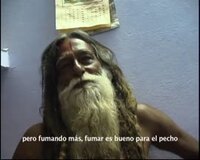
Varanasi, India, 6am. 2nd week of the shoot. The heat is already unbearable. Among the alleyways of this sacred city, someone invites me to carry out an interview. I don't understand what he is saying, but I follow him.
UntitledRituals from Phuket island, Thailand South, dedicated to the sons or representations of Doumu Godess (Kwam Im on Thailand). Ascetics devotees in Chinese Temples performing in trance doing transfixion, fire walks, hot oil flagellation, nails bridge walk and procession for their purification.
Untitled