
ovni 2012

Elements area

Taxonomy

Code

Scope note(s)

    Source note(s)

      Display note(s)

        Hierarchical terms

        ovni 2012

          Equivalent terms

          ovni 2012

            Associated terms

            ovni 2012

              49 Archival description results for ovni 2012

              49 results directly related Exclude narrower terms
              Why Colonel Bunny Was Killed
              ES ES-OVNI CTX-S015-SS007-0016 · Item · 2010
              Part of Non-Identified Video Observatory (OVNI)

              Triggered by the memoirs of a medical missionary on the Afghan borderlands, this film is constructed from still photographs of colonial life on the North West frontier of British India at the turn of the 20th century. Searching for clues to the realities behind images framed during a time of colonial conflict, the film plays sound against image to find contemporary parallels in Western portrayals of a distant place and people.

              Untitled
              ES ES-OVNI CTX-S015-SS007-0027 · Item · 2011
              Part of Non-Identified Video Observatory (OVNI)

              He asked me: “Ms Ziadah, don’t you think that everything would be resolved if you would just stop teaching so much hatred to your children? (...). Pause. I look inside me for strength to be patient but patience is not at the tip of my tongue as the bombs drop over Gaza. Patience has just escaped me. Pause. Smile. We teach life, sir! (...) These are not two equal sides: occupier and occupied. And a hundred dead, two hundred dead, and a thousand dead. (...) Is anybody out there? Will anyone listen? I wish I could wail over their bodies. I wish I could just run barefoot in every refugee camp and hold every child, cover their ears so they wouldn't have to hear the sound of bombing for the rest of their life the way I do. (...) Today my body was a TV’d massacre. We teach life, sir. We Palestinians wake up every morning to teach the rest of the world life, sir.”

              Untitled
              Urban Rhizomes-Taller
              ES ES-OVNI CTX-S015-SS006-0005 · Item · 2012
              Part of Non-Identified Video Observatory (OVNI)

              Urban Rhizomes is a workshop exploring the ambivalence of the natural world and social movements. Through an examination of certain trees and plants that contain both productive and destructive elements, we question political tendencies that reduce discourse to good/bad dichotomies. We can learn from and utilize natural forces in order to build the world we want to live in today without waiting for the collapse-in-progress to arrive in full force.

              ES ES-OVNI CTX-S015-SS007-0006 · Item · 1965
              Part of Non-Identified Video Observatory (OVNI)

              “By late 1964 Harold Wilson’s newly elected Labour Government had already broken its election manifesto to unilaterally disarm Britain, and was in fact developing a full-scale nuclear weapons programme, in spite of wide-spread public protest. There was a marked reluctance by British TV at the time to discuss the arms race, and there was especially silence on the effects of nuclear weapons - about which the large majority of the public had absolutely no information. I therefore proposed to the BBC that - using one small corner of Kent in southeastern England to represent a microcosm - I make a film showing the possible effects, during an outbreak of war between NATO and the USSR, of a nuclear strike on Britain.” The BBC panicked when they first saw the film, and sought government consultation re showing it. They subsequently denied this, but the sad fact remains that the BBC violated their own Charter of Independence, and on September 24, 1965, secretly showed The War Game to senior members of the Home Office, the Ministry of Defence, the Post Office (in charge of telecommunications), a representative of the Military Chiefs of Staff, and Sir Burke Trend, Secretary to Harold Wilson’s Cabinet. Approximately six weeks later, the BBC announced that they were not going to broadcast the film on TV - and denied that their decision had anything to do with the secret screening to the government". Peter Watkins

              Untitled
              ES ES-OVNI CTX-S015-SS007-0001 · Item · 2001
              Part of Non-Identified Video Observatory (OVNI)

              The Universal Clock (UC) is a documentary, which accompanies the boxed dvd set of Peter Watkins' La Commune (Paris, 1871). UC takes us through the production process of La Commune and also shows us the commercial barriers to having Watkins' recreation of the Paris Commune shown after it was created. “The Universal Clock” refers to the standardization of video content on the 47-minute model (with commercial and public service announcements taking up the balance of the time.) Watkins calls this the 'monoform' and is shown describing this concept. UC also includes interviews with the cast members, who are non-professional actors participating in this group project. These Parisians and immigrants talk about how being part of the performance changed the way they view themselves and the media around them.

              Untitled
              The Tracks of My Tears II
              ES ES-OVNI CTX-S015-SS007-0022 · Item · 2011
              Part of Non-Identified Video Observatory (OVNI)

              Saddam Hussein’s palace is looted in Baghdad 2003. A red Ferrari Testarossa disappears from his garage. Years pass by and cars from the same garage are found around the world; some crashed, some in mint condition. The Testarossa is still out there, ghost riding through the never-ending desert.

              Untitled
              The Shock Doctrine
              ES ES-OVNI CTX-S015-SS007-0021 · Item · 2009
              Part of Non-Identified Video Observatory (OVNI)

              The film traces the doctrine’s beginnings in the radical theories of Milton Friedman at the University of Chicago, and its subsequent implementation over the past forty years in countries and situations as disparate as Pinochet’s Chile, Yeltsin’s Russia, Thatcher’s Britain, and most recently the neo-con invasions of Afghanistan and Iraq. It exposes the darker side of Friedman’s ideology, which was so unpopular that it could only be implemented through the use of torture and repression. Based on the book by Naomi Klein.

              Untitled
              ES ES-OVNI CTX-S015-SS003-0003 · Item · 1989
              Part of Non-Identified Video Observatory (OVNI)

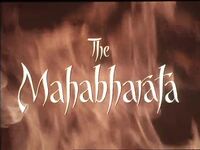
              Having been tricked by Power and humiliated by the arrogance of those who now wield it, the Pandavas are forced into exile even though they still harbor a desire for justice. They face twelve years of banishment in the wilderness, and a further year during which they must live in disguise and avoid being discovered. The Mahabharata, portrays this exile as a period of extreme hardship in which death is always present – but so is the growing awareness of its opposite. To abandon the palace and swap the city for nature also leads them to renew direct contact with life, embark on a search for knowledge, start a process of cleansing and strengthen the bond of brotherhood. Nevertheless, this strengthening seems to lead back towards war. Part two ends with the famous reflections of the Baghavad Gita in which Krishna responds to the doubts of Arjuna.

              Untitled
              ES ES-OVNI CTX-S015-SS004-0001 · Item · 1989
              Part of Non-Identified Video Observatory (OVNI)

              After the reflections from the Bhagavad Gita, the war begins: a tragedy that pits brother against brother and sucks up whole families, people of great courage. It is a war of devastating consequences, which does not just threaten the survival of one of the two sides, but the continuity of life on earth. “Even the blades of grass tremble in fear.” A battle in which the clashing sides do not hesitate to use the ultimate weapons. Vishnu himself exclaims: “Now I am become Death, the destroyer of worlds.” This is a war that is also played out inside every human being.

              Untitled