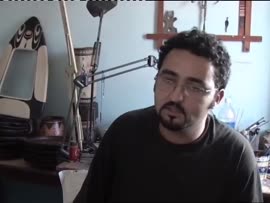
June 2005, the forest of Benyounes in Morocco, 2 km from the fence that separates Ceuta from Morocco. As happens every week, we come across African citizens who are hoping that here they will find an opportunity to cross into Spanish territory, into Europe. Two people from our collective meet with our working group and we talk about many things that worry and affect us. After sharing our stories, we decide to make a documentary that will show the realities that we experience in Morocco as a country of transit.
Marruecos
70 Archival description results for Marruecos
Under the benevolent shadow of Jean Genet, buried in Morocco, this film is a dialogue between the living and the dead, an invitation to bring those realms together, between silent humanist revolt and poetic elegy. A family takes loving care of a white tomb, in a cemetery with a view of the sea. We are in Larache, south of Tangier, where Jean Genet lived the last ten years of his life. Today, the writer is finally home, among his own. And for the locals of the city, he is a legend.Few of them actually knew him. Still fewer have read him. Most all have reinvented him for themselves. Everyone has their own story to tell. But they all agree on onething: “Jon Joney” valued them. He was on their side. Thesesimple, poor, quite frankly invisible individuals form the voiceless and futureless people of Morocco. Living incarnations of the characters in hiswork, they now keep watch over his grave.
UntitledThe life story of an elderly Mauritanian woman, Aïcha Messaoud, who spent her whole life as part of Sheik Ma-el-Aïnïne's distinguished family of nomads and now lives in the small Moroccan village of Tata, in the northern part of Western Sahara. The filmmaker sets out to trace the memories of her heroine. Stage after stage, she travels through thousands of kilometres across the desert, encountering the descendants of the Sheik.
UntitledThis documentary explores immigration from two points of view: from the place of origin, and through the eyes of those that stay.
The tragic participation of Africans from the French colonies in major world conflicts is a very important issue. We have just commemorated the 60th Anniversary of the Liberation of Europe. Unfortunately, not a single African or Asian who fought alongside the allies has been honoured together with his French, American and English brothers in arms....
UntitledIn Benyounes forest, “la foret” as they called their habitants, was the last stage of a long trip for thousands of people coming from Sub-Saharan Africa. Close to the fence that divides Ceuta (Spain) from Morocco, they establish in a variable time, before flank the last obstacle in they way to Europe, looking for a better life. Sometimes running away from wars, politics persecutions, hunger or a precarious economy situation. Lots of times of all of this. In years, the migrants pass across this forest and after some weeks or months they manage to arrive to Ceuta. In finals of 2004, European union start agreements of subcontract Morocco in the control of the Spanish – Moroccan border. The habitants of the forest, started to feel the effects of this agreements: the increase of illegal devolutions, the abuses from the civil police, they install police controls near the forest, they forbid the access to current water, military attacks to the camps in with they made mass arrests and rapes as a war weapon. The border it's close. Systematic violation of human rights, financed with the tax of the democratic European Union citizens. The migrants organize themselves in spaces like this and construct spaces; support nets in Moroccan territory, confronting and resisting this way the European politics. In the forest of Benyounes, they organized themselves from origin communities. In February of 2005, decided between all the community's, record this video, to made visible their situation, in with they report the systematic violation of their human rights, the absolutely abandonment from the NGO's, Associations an Human Rights Institutions, an they demand their citizens condition and they require their rights as human beings.
UntitledA conversation with a woman who washes and massages the women who go to the hammam (public baths), helps bring the neighbourhood children into the world, and to wash the dead.
Anonymous guide. Fes el Bali, the old medina of Fez founded in 809 by Idris II, is still completely contained within city walls. The gates (Bab Bou Jeloud, Bab Fteuh, Bab Er Rsif, Bab Guissa...) therefore retain all their social and symbolic value, associated with the different activities of the city and its inhabitants.