Chinese Ghost Story is a poetic essay in which history and landscape converge to explore the construction of the railroad where 1,300 Chinese laborers lost their lives. There are no stories without places, and places are largely silent to what occurs. The retelling of Pu Songling's (1640-1715) “Kon-Sun-Ju-Liang” sets the counterpoint for this tale of the 1869 Transcontinental Railroad. Throughout the American West, we searched for those absent from the 19th century A.J. Russell photograph documenting the joining together of the eastern and western United States.
Untitledexperimental film
71 Archival description results for experimental film
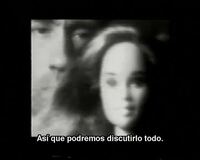
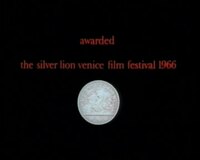
This controversial, startling and hypnotic mix of music and visuals is a semi-autobiographical psycho-drama following one addict's journey from sickness to health, anguish to well being. The Chappaqua filmscape is polulated with counter-cultural icons: Allen Ginsberg and William S. Burroughs, Jean Louis Barrault and Ornette Coleman...
UntitledThe skin of a teddy bear and its synthetic insides....
Gibbons takes a morbid casting to the Barbie doll, full of dark intentions toward that unattainable ideal of beauty.
UntitledBy manipulating time, we wanted to evoke both the danger as well as the power and euphoria of collective experience.
UntitledAn Injury to One provides a glimpse of a particularly volatile moment in early 20th century American labor history: the rise and fall of Butte, Montana. Specifically, it chronicles the mysterious death of Wobbly organizer Frank Little. Butte's history was entirely shaped by its exploitation by the Anaconda Mining Company, which, at the height of WWI, produced ten percent of the world's copper from the town's depths. War profiteering and the company's extreme indifference to the safety of its employees (mortality rates in the mines were higher than in the trenches of Europe) led to Little's arrival. “The agitator” found in the desperate, agonized miners overwhelming support for his ideas, which included the abolishment of the wage system and the establishment of a socialist commonwealth.
UntitledA great blow-up character succumbs to time
UntitledA family’s place in the wilderness, outside of time; free-range animals and children, junk and nature, all within the most sublime landscape. The work aims at an idea of freedom, which is reflected in the hand-processed Scope format, but is undercut with a sense of foreboding. There’s no particular story; beginning, middle or end, just fragments of lives lived, rituals performed.
UntitledWhat is a filmmaker? It is this vague, perhaps vain question that Travis Wilkerson hoped to answer clearly when he went to Cuba to question Santiago Alvarez, a legend of militant cinema. Although he had seen none of his films, Wilkerson did an interview with the master that quickly became something of a combined lesson in film and history, with Alvarez presenting his many essays and adding commentary. On returning from his trip, Wilkerson was very disappointed. The camera had recorded nothing of these very warm-hearted, instructive sessions, neither sound nor pictures. Technology had let him down. Alvarez's face and voice vanished, almost at the same time as himself. So only his films remain. His portrait remains to be done, to be made from scratch, from memory. This is why this homage to Alvarez is presented, according to a certain poetic tradition, in the form of a mélange. It includes Wilkerson's autobiographical parts, archive footage, excerpts of films made for Cuban television and pictures taken today, assembled with no concern for hierarchy or precedence.
UntitledRivers tells the story of a journey to Woodbridge, Suffolk, to visit his friend Ben and his father Oleg...