
People and places citylife in Casablanca. 6th Independent Vídeo & Interactive Phenomena Show - OVNI 2000 Moroccan video panorama.
UntitledVida Diaria
66 Archival description results for Vida Diaria
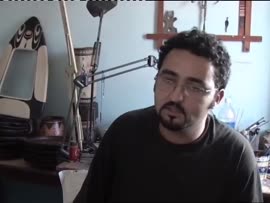
IA is an exercise that explores the format of the interview – as testimony or as a document – and the values associated with it: transparency/manipulation, neutrality/ideology and subjectivity/objectivity. When the procedure is laid bare, the substance is transformed. It could also be described as a series of visions from a city undergoing a reverse metamorphosis, an encapsulation, we could say: Barcelona 1992. A series of interviews edited with the camera in 1992 and 1994, and subsequently compiled onto two DVDs. Through the manipulation of the ritual, the interview becomes a space in which processes of the construction of meaning are challenged. Meta-interviews, self-interviews, interviews with the medium, views.
This documentary explores immigration from two points of view: from the place of origin, and through the eyes of those that stay.
A conversation with a woman who washes and massages the women who go to the hammam (public baths), helps bring the neighbourhood children into the world, and to wash the dead.
Anonymous guide. Fes el Bali, the old medina of Fez founded in 809 by Idris II, is still completely contained within city walls. The gates (Bab Bou Jeloud, Bab Fteuh, Bab Er Rsif, Bab Guissa...) therefore retain all their social and symbolic value, associated with the different activities of the city and its inhabitants.
This video captures the rhythm of its subjects, the daily life of a family in rural Mexico. A black and white film of extraordinary beauty, created with the most rudimentary tools. 6th Independent Vídeo & Interactive Phenomena Show
UntitledFez is the Moroccan city with the liveliest tradition of artisans. Far from being "just a job", the activity of the artisan reflects a whole conception of the world and a way of experiencing time and giving it meaning. This native wisdom is passed down from parents to children, from the maalem, the master, to the apprentice.
"As poor people we shouldn't work, being poor is already a job, isn't?"
Fez is one of the North African cities to have had most madrassas, of great architectural beauty. Madrassas, former Koran schools and now open for visits as public monuments, formerly provided one of the functions that raised Fez to the height of its splendour: the study of Islamic tradition and the body of laws and regulations governing social life. They were also the home of the students. Madrassas: Bu Inaniyya (1350), al-Attarin (1323), Seffarin (1280), al-Sahri (1321).
In a city destroyed by war, while society tries to come to terms with the consequences of extreme violence, a little girl finds a peculiar way to survive.
Untitled