A journey through Beirut's devastated neighbourhoods and some villages in southern Lebanon. The ordinary stories of ordinary people. Women, children and men face the challenge of remaking their lives in the midst of the devastation. 34 days of bombing by Israel have left indelible marks. Hundreds of families have lost their loved ones, a million displaced people return to their devastated houses. The Lebanese people wake from the nightmare full of rage and sorrow. Bombs are heavy, peace has no weight.
UntitledVenezuela
22 Archival description results for Venezuela
Kim, Harold, Miguel Duque, Ratablanca y Cross-T “We say there is social war when everything gets reduced to a plan. All of the possibilities for creation and existence that all of us want for ourselves, what we call life, require the availability of resource this purpose. Symbolic, imaginary, actual, physical resources. If this doesn't happen, then what is democracy? Democracy is a potentiality. Is the urge towards creativity and complexity, which exists as potential in every life, fulfilled or is it not fulfilled' If it is not fulfilled, then what is democracy? The way we see it, democracy means that those who produce the world can produce it entirely. Not that some produce it, and the rest obey”. Colectivo Situaciones, Argentina.
From an agroecological and alternative perspective to capitalist globalization, "monte culebra" approaches the productive and organizational processes of peasant collective experiences in western Venezuela. A critical look at the agricultural development model that the Bolivarian government's agrarian policy promotes in rural cooperatives as a strategy to achieve food sovereignty. In addition, the evaluation of self-managed peasant experiences that practice agroecology -for more than 30 years- and participate in a network of food production and distribution through urban consumer fairs. "Monte Culebra" traces the history of Venezuelan rural displacement (common denominator in the world's peasant populations) and its resistance. In a context of corporate media dictatorship, community television emerged as a tool for the counter-hegemonic struggle, accompanying the experiences of rural life. Agroecological practices, inspired by ancestral methods and peasant rationality, insurge the agribusiness-educational paradigm and challenge the creativity of a government that tests new forms of territorial political action.
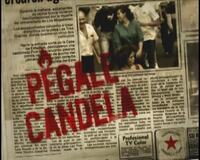
It's the eighties, “times of peace and class compromise”, and only a handful of young people resist the lethargy and protest, to the extent of paying with their lives for daring to believe in a fairer world. They are times of a social unrest that is strange and therefore incomprehensible to a large part of Venezuelans. Pégale Candela is a historical record of a country that awakens from the Saudi delusion and explodes violently in a process that has been identified as the genesis of contemporary Venezuelan times: the “Caracazo”, 27th of February 1989.
To Exist is to Resist is the testimony of a fight that goes beyond the borders of the country where it takes place: the fight for a home. The film offers a reflection on private property from the perspective of those who have already taken over more than 160 buildings in the country of the Bolivarian Revolution. Throughout the film, we are taken into the heart of the “National Committee for the Homeless” by means of its main protagonists, dreamer-soldiers, “tomadores”, who take abandoned buildings in order to give them back to the people who built their ceilings and walls, and could only look at the locked door from the outside...
The Bolivarian Revolution of Venezuela as connected to the worldwide movement against capitalist globalization. The evolution of the popular movement in Venezuela from the "Caracazo" riots of 1989 to the massive actions that brought revolutionary president Hugo Chávez back to power, 48 hours after a U.S.-led military coup in 2002. The main theme is how the Bolivarian Revolution, thanks to its incredible grassroots and networking power, is a revolution that transcends the national frontiers of Venezuela and contributes with concrete alternatives to the fight against neoliberal capitalism.
UntitledThe Ancla2 Photography Cooperative, with the Venezuelan filmmaker and documentarian Rafael Lacau, carry out photography workshops in rural areas of South America, especially with children who have never had contact with a camera. The experience documented here is that of the youngest inhabitants of Tuñame, a town in the Venezuelan Andes. In this production, the children express how they see their community, how they understand problems - especially environmental problems - and what they feel about their reality and the solutions to face it. This documentary is part of the series "Venezuela seen by its children", presented on public television in that country.
Non-Identified Video Observatory (OVNI)translate