In 2005 a food crisis hit Niger. Out of a population of 12 million, 3.6 million went hungry and 800,000 children faced starvation. But activists in Niger claim that the famine was not caused by drought.
UntitledUnited States of America
19 Archival description results for United States of America
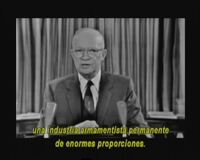
A documentary that examines America's policies regarding making war, most recently the Iraq war and what is termed “the Bush doctrine”, which includes pre-emptive strikes. The author suggests that this policy has been in the works for many years, reviewing past wars in the 20th century. A variety of individuals are asked “Why de we fight?” and, predictably, come up with a variety of answers. This is followed by a look at today's U.S. military/industrial complex via interviews with individuals involved in it.
UntitledHow can you document the elusive stuff myths are made of? That is what the furtive chalk graffiti on freight train wagons is, the fleeting consecration of their anonymous creators. The word “graffiti” stands for an art with schools and aspirations, very different from that other fleeting and legitimately popular art, which may bring to Argentinian minds the painted messages on the rocks of Mar del Plata. Bill Daniel pulls it off by getting onto those bare wagons with his camera, by traveling with those who load them and the tramps who use them.
UntitledOn August 6th and 9th, 1945, two atomic bombs vaporized 210,000 people in Hiroshima and Nagasaki. Those who survived are called “hibakusha” -people exposed to the bomb- and there are an estimated 200,000 living today. Today, with the threat of nuclear weapons of mass destruction frighteningly real -the world's arsenal capable of repeating the destruction at Hiroshima 400,000 times over-, filmmaker Steven Okazaki revisits the bombings and shares the stories of the only people to have survived a nuclear attack.
UntitledWar Made Easy reaches into the Orwellian memory hole to expose a 50-year pattern of government deception and media spin that has dragged the United States into one war after another. The film exhumes remarkable archival footage of official distortion and exaggeration from LBJ to George W. Bush, revealing in stunning detail how the American news media have uncritically disseminated the pro-war messages of successive presidential administrations.
Untitled“Hello, I'm going to read a declaration of war. Within the next 14 days we will attack a symbol of American justice”. - Former Underground Member Bernardine Dohrn. Thirty years ago, with these words, a group of young American radicals announced their intention to overthrow the U.S. government. Fueled by outrage over the Vietnam War and racism in America, they went underground during the 1970s, bombing targets across the country that they felt symbolized “the real violence” that the U.S. government and capitalist power were wreaking throughout the world. From pitched battles with police on Chicago's city streets, to bombing the U.S. Capitol building, to breaking acid-guru Timothy Leary out of prison, this carefully organized clandestine network attempted to incite a national revolution, while successfully evading one of the largest FBI manhunts in history.
UntitledSince the invasion, hundreds of thousands of Iraqis have been detained by the US, one and a half million Iraqis have had an immediate family-member detained, almost every Iraqi knows someone who has been through the US detention system. Few American institutions affect the lives of ordinary Iraqis more directly and profoundly than the US detention system.
There is a glut of wealthy in the city of Saba. Everyone has more than enough. Even the bath stokers wear gold belts. Huge grape clusters hang down on every street and brush the faces of the citizens.
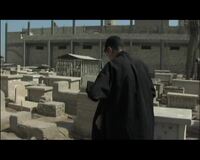
UntitledA story of the war in Iraq from a perspective rarely seen. The primary point of view is Iraqi - a family grieving the tragic death of its eldest son. After years of hard work, Ra'ad, an Iraqi portrait photographer, has saved enough money to open his own shop. On the night of the opening, while volunteering to guard the ancient mosque in Kadhimiya, Ra'ad is shot and killed by an American patrol.
UntitledFollowing Nigeria's independence in 1960, the British left the country but multinationals began to proliferate thought the land, specially after the discovery of the region's largest oil well. Agriculture, which had previously given the country a degree of economic equilibrium, was hurt by the agreement between Nigeria's new leaders and foreign investors, which resulted in the expansion of the oil fiends and the destruction of agricultural land. The documentary reflects this situation through the musician and political activist Fela Kuti and his son Fema Kuti. Music is depicted as the awakening of a conscience, as a celebration of life and African roots, and as an indictment of a government that acts as a franchise of western multinationals.
Untitled