The coalition forces before the launch of their war on Iraq promised the removal of a Saddam style dictatorship with the implementation of freedom and democracy. It was in the name of Freedom that Britain and America launched a brutal war on the people of Iraq who are predominantly Muslim. Far from accepting the occupation of the coalition forces, the people of Iraq have refused to be forced to accept democracy and freedom. In replacement of Saddam, America has installed a new dictator and continues its onslaught on cities and villages in Iraq that wish to remain independent. This powerful and moving documentary will question the justification of the whole war, expose the butchery inflicted upon the Iraqi people and set a vision (for action) for the Muslim communities in Britain and the West.
UntitledUnited Kingdom (Great Britain)
158 Archival description results for United Kingdom (Great Britain)
Reviews the history of immigration to the United States up to the restrictive law passed in 1924. A dramatized scene in an European steamship office is used to show the economic, political and religious motives for immigration. Contains scenes of Ellis Island and New York City in the early 20th century. From www.archive.org
Feedback, crosses, juxtaposition of levels of psychic representations. Return to the primordial fish-tank.
“There is a saying in Arabic that translates as ‘I see the stars at noon'. We use it when everything in life is turned upside-down, when things are not as they should be. I first heard it in the tiny Moroccan village of Sebt Jahjouh, travelling with a man named Abdelfattah, a man whose world was upside-down, a man for whom things were definitely not as they should have been.” In January of 2004, in the northern Moroccan city of Tangiers, Abdelfattah is one of many trying to illegally immigrate to Spain by stowing away on a cargo ship. “I See the Stars at Noon” is at times humorous and disturbing, as it intimately examines the circumstances that lead him to risk everything for an utterly uncertain future. The traditional relationship between filmmaker and subject is thrown into question when Abdelfattah asks why his life is being filmed for the benefit of European audiences, and what he deserves in return.
UntitledA fragmented road trip through Britain on the peripheries. Down empty roads, off in the wilderness, a few lone stragglers. My first stop, geologist Jan Zalasiewicz, talking about the Earth in one-hundred millions years time.“What would be left of human action, human traces, human constructions, human buildings and the wider ripple effects of humans after that length of time… assuming that humans disappear in the geologically near future.”
It is nightfall. A hunter lurks in the darkness, wandering further towards the impenetrable. Do the meanings lie in the stream, in the mountains, the stars, or in the death of things?
UntitledThrough a structuralist and simultaneously ambiguous form, the image's reality treads closer to the abstract, leaving the sunset and trees behind. As we enter the image's gloaming, it reveals its true eye: reality's pure haptic energy, where there is nothing but sonorous light, and the dregs of the Unknown.
UntitledChris Oakley's new film ‘Half-life' looks at the histories of Harwell, birthplace of the UK nuclear industry, and the development of fusion energy technology at the Culham facility in Oxfordshire. The film examines nuclear science research through a historical and cultural filter. Drawing on archive footage of the sites, alongside contemporary materials, the work draws structural clues from nuclear physics, exploring the heritage of nuclear energy from the roots of the technology that drove the industrial revolution. The relationship between nature, and our reliance on mineral energy resources, and the portrayal of the often-mundane realities of nuclear research seek to ‘normalise' the subject. With the recent widespread acceptance of the reality of climate change driven by carbon dioxide emissions, the work explores the realities and myths surrounding the nuclear sciences.
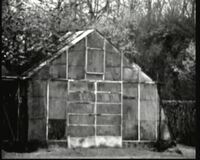
Greenhouses left untouched for 15 years, nature reinstating its authority. When the farmer caught me coming out of them after filming, he called out - “bloody idiot, you could've had your head chopped in half!”
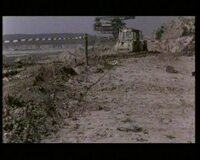
The landscape near an enormous mine.