Trance

Elements area

Taxonomy

Code

Scope note(s)

    Source note(s)

      Display note(s)

        Hierarchical terms

        Trance

          Equivalent terms

          Trance

            Associated terms

            Trance

              19 Archival description results for Trance

              ES ES-OVNI DIF-S002 · Series · 2003/2009
              Part of Non-Identified Video Observatory (OVNI)

              Video Concerning the Arab World

              TransArab Itinerant 2003-2005

              2003 / 2005 / 2006 / 2009 - TransArab

              Video Concerning the Arab World

              This programme is not intended to provide an overview of independent video in Arab and Islamic countries, nor does it seek to be representative in any way.

              The works being presented, like the programme as a whole, reflect the notion of “slices of reality”, in the sense that they are subjective visions, aware of their partiality, which do not exclude contradiction or conflict. Visions that perceive a strong tension on their surface and take up these eddies of confusion and violence as cause for  urgent reflection and knowledge.

              Images and stories, realities in themselves, rhizomatic realities: interwoven without a centre or a fixed meaning. And for that very reason, instead of giving rise to cultural dualism based on opposition, they engender a web of underground connections.

              7 Contemplaciones
              ES ES-OVNI CTX-S020-SS003-0007 · Item · 2016
              Part of Non-Identified Video Observatory (OVNI)

              “You can see a bird in flight and watch to observe it, or feel that you are flying with it. That is contemplation, becoming the other.” Hafiz. Despite (or because of) its apparent calmness, contemplation is the state that most radically dissolves and liberates the self. Through contemplation, the other gradually seeps into us like gentle rain ... without realising it, we suddenly start to see ... the world is not outside us and nothing is lifeless ... images appear and disappear over the silence of that which has no name or form ... like the blinking of something that isn’t our eyes... perhaps then the inner teacher will appear intimately... you will recognise him because all that has withered blooms again ... then we will know that the sky can also be stone and feet can walk on clouds and ... But make sure you do not name him ... for he will vanish.

              Bronx Baptism
              ES ES-OVNI CTX-S007-SS003-0010 · Item · 1979
              Part of Non-Identified Video Observatory (OVNI)

              A document about the ritual of a religious service; faith and ecstasy as means of survival in the Puerto Rican community of the South Bronx, in New York.

              Untitled
              COMMUNITIES
              ES ES-OVNI CTX-S007 · Series · 2000
              Part of Non-Identified Video Observatory (OVNI)

              Observatory Archives 2000

              / CONTEXT 1994 - 2020

              Observatory Archives 2000

              OVNI 2000 brings toughener a series of works which we hope may serve as a plural and multifaceted reflection on the notion of COMMUNITY, understood not as ideal, a closed and defined paradigm, but as a reality: spaces for social, anthropological, cultural and emotional relationships where we already find ourselves, irrespective of the acceptance, participation or conflict we develop within tem.

              COMMUNITY as a key reality, often hijacked, transformed by media, caricatured by states, by markets and ideologies. The “community” in this way is separated from the necessities of day to day chores and realities. Singularities, unique people are kept from forming communities unless the declare conformity to ab identity, or pertain to a group. Instead masses od individuals are constructed, eliminating, however, whats is always alive underneath, what remains of a people, indescribable, without a nam, without boundaries, whose lack of definition gives it its force and its grace. (1)

              (1) Contra el hombre Agustin Garcia Calvo. Fundació Anselmo Lorenzo. Madrid, 1996 . La Comunidad que viene. Giorgio Agamben. Pre-Textos. Valencia 1996 .

              Thematical screenings

              Hall and Auditorium.Simultaneous Screenings

              Centre de Cultura Contemporània de Barcelona

              Montalegre 5. 08001 Barcelona

              ES ES-OVNI RSC-1914 · Item · 1999
              Part of Non-Identified Video Observatory (OVNI)

              A journey of initiation into a city and a its culture. The set of projections (10 screens) aimed to create a journey in the complex sense of the term: using audiovisual segments to illustrate aspects of the anthropological, sociological, urban and religious tissues of the city. A journey claiming both: a certain objectivity (in the working method), and the subjectivity (of the travel experience and approach to another culture). Moreover, the projections do not meet the criteria of a film with a beginning and an end, but rather the creation of a landscape, so the viewer choosed the time he/she wished to dedicated to each fragment. This made it possible to enjoy a deeper level of inquiry to specific fragments (artisans, rituals interviews, etc.). Consequently, the result of each visit to the exhibition gave an unique combinatorial fragments, since the total length of the projections would be about 6 hours. VideoInstallation 10 screens total lenght: 6h 40' Toni Serra , Albert García Espuche CCCB Centre de Cultura Contemporània de Barcelona 2002

              Untitled
              ES ES-OVNI CTX-S012-SS007-0095 · Item · 2006
              Part of Non-Identified Video Observatory (OVNI)

              Long suppressed by missionaries and then by Soviet anti-religious campaigns, Siberian shamanism has experienced an unprecedented revival following the collapse of the Soviet Union, and the number of shamans continues to rise. But who are these new shamans? Are they tricksters, magicians, businessmen, or cultural activists? This film takes a behind-thescenes look at a Buryat shaman living on an island in Lake Baikal as he moves between intimate shamanic rituals performed for local clientele and shows performed at various resorts for Western tourists in search of “primitive” cultures.

              Untitled
              Komian
              ES ES-OVNI RSC-4231 · Item · 2015
              Part of Non-Identified Video Observatory (OVNI)

              L'escriptor Jordi Esteva torna a Costa d'Ivori per a esbrinar sobre l'esperit de la pantera que es va manifestar durant el rodatge del seu anterior documental "Retorn al país de les ànimes" sobre les creences ancestrals i els fenòmens de tràngol i possessió. En la pel·lícula, rodada en blanc i negre, amb el ritme d'una "road movie", l'escriptor assistirà de nou a una cerimònia de tràngol en la qual un komian serà posseït per l'esperit de la pantera i emprendrà la cerca de l'altra komian, en tota la Costa d'Ivori, posseïda pel mateix esperit poderós. El periple li portarà a la veïna Ghana a la recerca dels únics percussionistes que poden invocar a l'esperit de la pantera amb els seus ritmes.

              Untitled
              ES ES-OVNI CTX-S017-SS001-0003 · Item · 2012
              Part of Non-Identified Video Observatory (OVNI)

              collection Petites Planètes. ‘Jihad’ is a fundamental Arab concept. In these times of conflict and violence, we only hear the mass media version – the extreme meaning of the term, which has strayed from its original sense – while its deeper meaning is ignored. Jihad can be translated as effort, commitment, and struggle in the broad sense. It is a concept and an experience with two different levels, one subordinate to the other. On one hand there is the ‘small jihad’ which has to do with effort, with the communal struggle to attain a society that is fairer and more aware of the mystery of reality (Al-Haqq) and of life (Al Hayy), which are two of the names of Allah. And the other is the ‘great jihad’, which is considered more important, and which determines whether the success, failure, or digression of the small jihad. This great struggle is the inner quest, the effort to cleanse everything inside us that distances mankind from the real... everything that favours a world made up of separate, selfish entities, a world that is closed, appropriable, and doomed to conflict. One of the most beautiful and profoundly meaningful practices of the great jihad is the ritual ceremony of ‘dhikr’ (zikr), an Arabic word that means memory... and in this context refers specifically to the memory of Allah... a personal reencounter - within a collective ceremony - with the mystery of the Real... in other words, with that which is cannot be defined, represented, or appropriated... that which is beyond physical or rational measure. According to this tradition, only one organ is capable of accommodating such an immensity: the human heart. Sufism struggles to remain within the heart of Islam. And in suffering Chechnya, Sufism is the most widespread form of Islam. Vincent Moon and Bulat Khalylov recorded a beautiful, immersive form of the experience of this dhikr ceremony.

              Untitled
              Mast Qalandar
              ES ES-OVNI CTX-S012-SS001-0003 · Item · 2005
              Part of Non-Identified Video Observatory (OVNI)

              Above all, Mast Qalandar (Ecstasy) is a look at heterodoxy and a celebration of its existence. Qalandars are a Sufi brotherhood of roaming dervishes who once ranged through an arch that crossed Asia, from Turkey to Pakistan and India. They are characterized by extreme mystical devotion and their revolutionary and anti-dogmatic attitudes within Islam, such as use of hachis and the rejection of alcohol and free submission to Haqq, the truth, which they see as the absence of limits rather than something which narrows and defines horizons. “Mast Qalandar” immerses us in the ritual encounter of these dervishes around the grave of the brotherhood's founder in Pakistan. A vision of heir devotion to “the beloved” that leads them into trance and ecstasy, where death means simply to “draw aside a veil”. Available online until December 27th 2020.

              Untitled
              Path of Return
              ES ES-OVNI CTX-S019 · Series · 2018
              Part of Non-Identified Video Observatory (OVNI)

              / CONTEXT 1994 - 2020

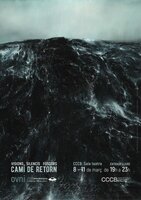
              Path of Return / OVNI 2018

              visions, silence, darkness

              A few years ago – just after OVNI The Border as Centre (and perhaps as a consequence of it) – we entered a period of introspection. And in that inward-looking space, certain images from Bela Tarr’s film The Turin Horse (1) kept returning over and over again. In particular, three sequences:

              In the first, an elderly man struggles to drive his horse and loaded cart through a fog-filled landscape. After a while, we begin to understand the need for so much effort: the driver is one-armed, and a cart intended for two horses is being pulled by just one. Something is missing in this soulless world. A profound lack of balance is causing it to crack and at the same time bringing it to a standstill. The mutilated substance of that which animates it, mutilated itself, is crushed under its own weight and sinks on its blind side. Every gesture, every task, even eating, is arduous.

              In the second scene, a character appears on screen and delivers a wild, lucid monologue about the course the world has taken: “everything has been debased that they’ve acquired (…) whatever they touch – and they touch everything – they’ve debased (…) Acquire debase, debase, acquire. Or I can put it differently if you like: to touch, debase and thereby acquire, or touch, acquire and thereby debase. It’s been going on like this for centuries (….) Because this is not some kind of cataclysm, coming about with so-called innocent human aid. On the contrary, it’s about man’s own judgement.”

              The cart driver’s answer is laconic: “Come off it, that’s rubbish”. (2)

              Then, the wind, the barren plain, the loneliness.

              In the third scene, near the end of the film… as night falls, the two main characters, father and daughter, try to light an oil lamp or at least a candle but they are unable to do so. Light has already left that world.

              Light is leaving the world.

              For months and months, as we were saying, these images played over and over inside us, suggesting a possible path but also imperceptibly plunging us into their dense fog. We tried to navigate inside it but we could barely see our hand stretched out before us. So we walked for a time through that invisible world, and little by little we learnt to trust that fog, that not-knowing, that not-seeing with our eyes, until we came, in a sense, to recognise ourselves in it… Once this state had stabilised we shared it with the rhizome that gives rise to ovni, and this was how a few people came to talk to us about death and deaths (3) … and how the “Path of Return” unexpectedly opened up in the fog, not denying it but rather incorporating it like a veil that protects the mystery that surrounds us and runs through us at every moment.

              And so this OVNI of fog takes us on a journey through the middle world, the experience of physical death and of the deaths of the ego.

              Instead of a regular video programme, it takes the form of a rite of passage in which visions (videos), texts, sounds, rituals, and breaths are interwoven with shared silence and darkness.

              To open up our vision (4), to open up to the awareness of that which we call film, video… those strange projections of light and shadow that portray worlds and lives, landscapes and feelings that arise in the dark cave of the screening room. It is there, in that shared or solitary darkness, that visions of worlds are incubated… before the emergence of boundaries between the real and the unreal, wakefulness and sleep, life and death… Visions on a white screen that will remain white once the visions of the worlds have disappeared. (5)

              Perhaps an old wound in our culture and our lives is thus healed, the hemispheres come together, other eyes open, and the Turin horse is no longer beaten. (6)

              So as not to separate death from life, each day’s journey will begin by passing through the gates of dreams – death’s twin – and trance, exploring the rituals of farewell and dissolution of the body… A contemplation of dissolution that will lead us to the grateful contemplation of life.

              So Path of Return unfolds as a rite of passage, a journey that we recommend making in full each day (*), to aid in a good crossing through intense and sometimes difficult inner landscapes that may perhaps help us to regain the perception of the unlimited, inappropriable, unrepresentable nature of the Real.

              (*) OVNI will take place from 7 to 11pm each day.

              The CCCB Theatre will open at 7pm. Once the programme starts the doors will remain closed, opening at least twice more in the course of each evening. The Lobby of the Theatre will be open from 7 to 11pm, and a room nearby will be fitted out and equipped with audio recordings for those waiting.

              The Turin Horse ( A torinói ió in the Hungarian original) is a 2011 film directed by Béla Tarr and Ágnes Hranitzky.

              Transcription of the monologue from The Turin Horse :

              The people who come to mind are Palmar Álvarez Blanco, Marco Antonio Regueiro, … and also all those who have already left us during this long period of searching

              Abu Ali, Abrir la Visión, 2016

              http://www.al-barzaj.org/2016/10/abrir-la-vision.html

              This image is often used by Ramana Maharashi.

              According to the oft-repeated story, Nietzsche was in Piazza Carlo Alberto when he noticed the driver of a hansom cab flogging his stubborn horse. Nietzsche ran towards them, threw his arms around the horse’s neck to protect him, and then collapsed on ground.

              March 2018, 8th - 11th / 19:00h - 23:00h

              Image de Thierry DE CORDIER, “MER GROSSE”.