Fez is the Moroccan city with the liveliest tradition of artisans. Far from being "just a job", the activity of the artisan reflects a whole conception of the world and a way of experiencing time and giving it meaning. This native wisdom is passed down from parents to children, from the maalem, the master, to the apprentice.
Trabajo
53 Archival description results for Trabajo
"As poor people we shouldn't work, being poor is already a job, isn't?"
Twenty videos filmed secretly in several prisons in Quito, Ecuador, over a three year period. Far from simply idealising participative mechanisms, the method used in this audiovisual project ensures that the inmates' point of view remains. Whether this point of view is mediated by learning techniques on graphics, or the inmates pose before the camera like actors, they are always fully aware of the work to be done and, at the same time, of the motivations behind this project. The clandestine nature of the camera and the non-hierarchical production process created emotional bonds that, in one case, went beyond the prison and were reproduced on the outside, affecting relatives and friends.
UntitledInterview with Marcello Tarì.
Mardi Gras: Made in China follows the path of Mardi Gras beads from the streets of New Orleans during Carnival – where revelers party and exchange beads for nudity – to the disciplined factories in Fuzhou, China – where teenage girls live and sew beads together all day and night. Blending curiosity with comedy, Mardi Gras: Made in China is the only film to explore how the toxic products directly affect the people who both make and consume them.
Yamina Benguigui turns her camera on a multi-ethnic region on the outskirts of Paris. These 'backyards' of Paris - suburban industrial ghettos filled with poor immigrants - are a breeding ground for social problems in the midst of an eclectic mix of conflicting cultures and identities.
UntitledOver the last twenty five years, Maghrebian immigrants living in France have brought their families to join them. Many of them lived in shanty towns before moving to working class suburbs. Their children were sent to school and grew up in France. Now their grandchildren cannot move forward, because they have lost their historical memory. This community of two million people, of whom a third have French nationality, are weighted down by double silence: the silence of their parents, and the silence of the public institutions. Mémoires d'immigrés, l'héritage maghrébin is an inside look at this community scattered throughout the four corners of French territory. Benguigui constructs her documentary by intercutting the personal and moving stories of three groups of interviewees: the fathers, the mothers, and the children.
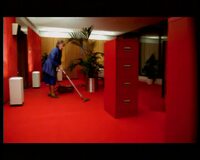
UntitledA piece about isolation and solitude in daily life. In an atmosphere of complete alienation, the solitary worlds of the workers in an office building are shown: managers, cleaning ladies...Contrasts the bright and glamorous hyper-real world with the internal darkness of its inhabitants. OVNI 2000 Community 6th Independent Vídeo & Interactive Phenomena Show
A short film based on an interview in a bakery in Berlin. When I first struck up a conversation with the people working there, they told me that they were from Iraq. As we continued talking to each other, they became more and more insistent on the fact that they were all Kurdish, and that they were making bread after a Kurdish tradition. A sign above the shop window that says “Oriental flat bread” in German, and I was curious to find out why the bakery “orientalized” itself. The answer to this question is not simple at all, and cannot be found in this film. What emerges instead is a fragment of a story suppressed between national narratives of war, displacement and migration.
Back in the old days, a 'maquila' was a “millers portion”, the amount of grain that farmers paid millers to process their grain. Now maquilas are tax-free factories set up in underdeveloped countries to produce their goods using cheap labour. In Nicaragua, 100,000 people work in maquilas, which pay $0.32/hour and violate all workers rights. The Nicaragua maquilas are virtually unknown to international public opinion, and essential to the supply of the US consumer market.
Untitled