Soberanía Almentaria

Elements area

Taxonomy

Code

Scope note(s)

    Source note(s)

      Display note(s)

        Hierarchical terms

        Soberanía Almentaria

          Equivalent terms

          Soberanía Almentaria

            Associated terms

            Soberanía Almentaria

              10 Archival description results for Soberanía Almentaria

              AGIP y sus vecinas
              ES ES-OVNI CTX-S011-SS003-0009 · Item · 2003
              Part of Non-Identified Video Observatory (OVNI)

              This video documents the extent of the environmental impact provoked by the activities of an oil company in the Equatorial Amazon. Oil-related activity in the indigenous communities of north-east Ecuador has had a very serious social impact. Since the 1960s, various companies have been damaging the ecosystems of indigenous communities who live in shelters, supposedly protected by the state, while they are affected by disease and their internal relationships gradually break down.

              Bullshit
              ES ES-OVNI CTX-S012-SS004-0011 · Item · 2005
              Part of Non-Identified Video Observatory (OVNI)

              Her opponents call her “The Green Killer”. They gave her “The Bullshit Award” for sustaining poverty. TIME says she is a hero of our times, an icon for youngsters all over the world. In this documentary, the filmmakers follow Vandana Shiva over a two-year period, from her organic farm at the foot of the Himalayas to institutions of power all over the world. Here Vandana Shiva does battle with one of her toughest opponents, Monsanto, a huge American biotech company, when they try to patent an ancient Indian strain of wheat.

              ES ES-OVNI CTX-S014-SS001-0032 · Item · 2009
              Part of Non-Identified Video Observatory (OVNI)

              Conversations With the Earth is a global indigenous-led multimedia initiative that is amplifying indigenous voices in the global discourse on climate change and enhancing local capacity for action. CWE conveys local accounts of the impacts of climate change on indigenous communities, stories of the unintended consequences of imposed mitigation efforts on local livelihoods, and examples of traditional knowledge and its value in developing appropriate responses to climate change. CWE is a way of listening closely to traditional stewards of the Earth in order to formulate a viable global response to the challenges of climate change.

              Exodus
              ES ES-OVNI CTX-S012 · Series · 2008
              Part of Non-Identified Video Observatory (OVNI)

              The Margins of the Empire _ OVNI 2008

              / CONTEXT 1994 - 2020

              The Margins of the Empire _ OVNI 2008

              "Open your eyes and look within. Are you satisfied with the life you're living? (...) So we gonna walk, alright, through the roads of creation. We're the generation (Tell my why) trod through great tribulation". Exodus Bob Marley

              The videos screened at OVNI 2008 will offer an initial reflection on the “marginal” and the desire to cross margins, on forms of personal or collective exodus – whether physical or as a state of mind. They include perspectives on different forms of marginalization and exploitation which lie directly under the oppressive vertical force of power, such as workers in Chinese export factories or clandestine Palestinian day workers in Israel. And perspectives on armed conflict zones that go beyond the “propaganda-counter propaganda” dialectic: in South America, Chechnya, Lebanon, Iraq, Darfur, Afghanistan...

              But they also include reflections and perspectives on other realities and forms of organization that grow on the margins: self-organization of the homeless, indigenous communities in Ecuador and Columbia, brotherhoods of transvestites in India, ancient heterodox traditions and their rituals, self-managed collectives in Barcelona, groups of deserters in the US... Together with accounts of dreams and the inner revolution, of seeking and of exodus... These are videos that question and consider this attraction towards exodus, the desire to abandon a reality and a set of values that we can no longer believe in, or wish for. Perspectives that refuse to remain trapped in an eternal “against” stance and use resistance tactically, but embark on a journey to other possible worlds. Exodus itself is another world, functionally unmappable, because exodus is always on the side of emptiness and movement, of listening to voices of the others (?) and recognising oneself in them. What gets left behind are societies swing between an abundance of poverty – made visible and turned into spectacle by the media – and the increasingly obvious misery of abundance, the misery of consumer societies.

              Let's allow fragments of transcriptions from some of the videos that will be projected talk to us about the journey:

              “A society that is always sicker, but always stronger, has everywhere concretely re-created the world as the environment and decor of its illness, a sick planet. A society that still hasn't become homogenous and that isn't determined by itself, but is always more determined by a part of itself that places itself above the rest and is exterior to it, has developed a movement that dominates natures but isn't itself dominated. (...) The production of non-life has more and more pursued its linear and cumulative process; overcoming a final threshold in its progress, it now directly produces death”. (1)

              “The consumer society has destroyed the environment. Exterminated millions of species of plants and animals. Poisoned the seas, the rivers and the lakes. Polluted the air. Filled the atmosphere with carbon dioxide and other harmful gases. Destroyed the ozone layer. Exhausted our oil, coal and gas reserves and rich mineral resources. Exterminated our forests and destroyed their own. So what is left for us? Underdevelopment. Poverty. Dependence. Underdevelopment. Debt. Uncertainty. For the super developed societies the problem is not growth but distribution. Not only amongst themselves but amongst everybody. Sustainable development is impossible without fairer distribution amongst all nations. After all, mankind is one great family all sharing the same destiny”. (2)

              “Today's ideal is consumerism. It is a homologating civilisation that makes everything the same. Without ideology? What, it has no ideology? With a consumer ideology you don't... instead of having a flag, the clothes they wear are their flag. Some of the means and some of the external phenomena have changed but, in practice, it's a depauperation of individuality which is disguised through its valorisation (...) During the so-called “repressive” ages sex was a joy, because it was practiced in secret and it made a mockery of all the obligations and duties that the repressive power imposed. (...) And so, at a certain point, one of the characters in the films says exactly this: “Repressive societies repress everything... therefore, men can't do anything.” But I have added this concept which for me is lapidary: permissive societies permit a few things and only those things can me done. Hey! That is terrible! A degree of bestowed freedom that later becomes compulsory. As it is bestowed it becomes compulsory.

              Sadomasochism is an eternal category of man: it was there in De Sade's time, it's here today, etc. But this is not what I care about. I also care about this, but the real sense of sex in my films is a metaphor of the relation between power and its subject. Therefore, in reality, it is true for all times. The drive came from the fact that I detest, above all things, today's power. Everyone hates the power he is subject to. Therefore, I hate the power of today, of 1975, with particular vehemence. It is a power that manipulates bodies in a horrible way, it has nothing to envy Himmler's or Hitler's manipulation. It manipulates them, transforming their conscience, in the worst way, establishing new values which are alienating and false. The values of consumerism, which accomplish what Marx called genocide of the living, real, previous cultures.

              In reality, the producers force the consumers to eat shit. Knapp bouillon or... They give adulterated, bad things, little Robiola cheeses, processed cheese for babies,... all horrible things that are shit (...)

              Power remains exactly the same, only its characteristics change, the subject is no longer parsimonious or religious, he is a consumer and so he is short-sighted, irreligious, secular, etc. The cultural characteristics change, but the relationship is identical. Therefore, it (Salò) is a film not only about power, but about what I call “the anarchy of power”. Nothing is more anarchic than power. Power does what it wants and what it wants is totally arbitrary or dictated by its economic reasons which escape common logic.

              My real vision, the older, more archaic one given to me at birth and shaped in my early childhood, my original way of seeing is a sacred vision of things. In the end, I see the world like those who have a poetic vocation do, that is, like a miraculous, almost sacred fact. And nothing can desecrate my fundamental sacredness”. (3)

              Constant work, constant consumption

              “... We are terrorized into being consumers. We can choose between brand A, brand B or C, that's the freedom we have. Yes, I think there are too many things. Constant work and consumption, it's crazy. This is what's destroying everything, and it has to go. I can see very little worth preserving. I don't see any benefit or wellbeing in preserving this system. Achieving all these things is actually coercion. People are forced to work in mines and packaging factories. Without them we don't have all this. A world of things, which we have to spend our whole lives fighting for. I don't think anybody really takes it seriously, but inertia keeps it moving. This has to be stopped, it has to be destroyed (...)

              Why do people go out and try to protest or try to do something? That's not violence. Sitting there doing dope and watching MTV. Then you go and get a job. Just schlep along. To me that is violence.

              It is necessary to damage or destroy property, it lies outside political confines o the politics of the everyday. What do you achieve by holding a sign at the usual demonstration? I've seen the same thing for decades, it doesn't achieve anything! But when people fight, that’s something else. They capture people’s attention, it’s real. Corporate property is the most obvious legitimate target in my view. Banks, e

              La Tierra Prometida
              ES ES-OVNI CTX-S011-SS001-0010 · Item · 2004
              Part of Non-Identified Video Observatory (OVNI)

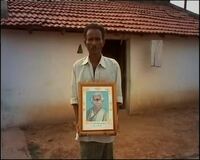
              The unfulfilled promise of the Agrarian Reform in Brazil. On weighing up three years of managing the country, Agrarian Reform is still one of the unfulfilled promises of the Lula government in Brazil. Lula's rise to power raised the hopes of the social movements that want to democratise the land and the occupation of large unproductive landholdings increased, but so did the violence of the paramilitary commandos that defend the interests of the landowners, with the collusion of the local legal authorities. Seventy three people died in rural conflicts in 2003, murdered by gunmen who act with impunity.

              Untitled
              One Man, One Cow, One Planet
              ES ES-OVNI CTX-S014-SS001-0013 · Item · 2008
              Part of Non-Identified Video Observatory (OVNI)

              Our existence on this planet is precarious. This film exposes globalisation and the mantra of infinite growth in a finite world for what it really is: an environmental and human disaster. But across India marginal farmers are fighting back. By reviving an arcane form of agriculture, they are saving their poisoned lands and exposing the bio-colonialism of multinational corporations. One Man, One Cow, One Plant tells their story through the teachings of an expert in biodynamic agriculture, Peter Proctor, who teaches organic and biodynamic methods in India. This film is a model for a post-industrial future. The result of the battle for control of agriculture in India may dictate the future of the planet.

              Rhizomes
              ES ES-OVNI CTX-S013 · Series · 2009
              Part of Non-Identified Video Observatory (OVNI)

              Liberated spaces / OVNI 2009

              / CONTEXT 1994 - 2020

              Liberated spaces / OVNI 2009

              OVNI Rhizomes lays bare the subterranean, rhizomatic points of contact between worlds and experiences that seem very different from each other. The remembered image is that of a rhizome (1), or rhizomes, it doesn't matter which because it is both at once, the singular and plural do not affect it.

              “Advice, slogans: follow the plants” (2). In a world of concrete and asphalt we see different plant species living in cracks in the most unlikely places, gathering rain and seeking out soil that has been banished. At other times, these same plants, or the roots of trees, create the cracks and buckle the asphalt. We have also seen plants cover entire buildings, opening walls and destroying them; but so have we seen them holding together the ruins of immemorial knowledge, ancient temples in the jungle, in a strange union that seems to complete them. Like the cobra that saw Buddha meditating and instead of biting him, decided to cover him and shelter him from the rain. An image that perhaps renews a forgotten pact: to awaken to the smooth continuity between nature and human, between nature and knowledge, a continuum that hovers over words to remind us of the essential unity and manifest multiplicity of all things.

              Plants also show us diverse systems. Along with the centralised and hierarchical organisation of the roots of trees, there are the spidery roots of shrubs and bushes, the rhizome of certain species (grass, reeds, ginger, mangroves...) creates "an acentred, nonhierarchical and nonsignifying system without a General and without an organizing memory or central automation, defined solely by a circulation of states" (3).

              We screen videos like visions that connect and interrelate these states and realities, producing rhizome in space, but also in time, given that the first two principles of the rhizome are connection and heterogeneity: any of its points can and must be connected to anything else. This is not the case with trees and roots, which always fix a point, a particular order. Thus, like a violently smothered echo, the Black Panthers’ "all power to the people” resonates in the possibility of immigrant communities, in the “banlieues" of the world. The anti-Vietnam war protests and the underground that derived from them emit lines that break the sad, or even complicit, silence around the occupation of Palestine, Iraq, Afghanistan... or around the wars "subcontracted" by big corporations in Africa. (4)

              Indigenous peoples are part of a rhizome that includes the earth, plants and animals, forms of knowledge that derive from their forms of survival and celebration, and wakefulness and dreams. They see this multiplicity as a substantive, not an accumulation: another of the principles of rhizomes. They know that an attack against any one of their realities is unavoidably a prelude to other acts of violence. This is why a Yaqui Indian explains that those responsible for the genocide against his people also exterminated wild animals, domesticated others, imprisoned the survivors of his people in reserves. It is also like the indigenous community in Peru that dreams up a different kind of schools, and creates them with urgency on awakening; because they seen how the official educational system teaches their children to be enemies of their own traditions, of their own environment. They warn us, they are not isolated points on the outside of the “other”, they are lines of alert, for ourselves (5).

              In Europe, the warning came from Exarchia, a neighbourhood in Athens. The death of 15 year old Alexis, shot by a policeman, triggered a new awareness, the occupying of spaces, the issuing of communiqués in which teenagers sorrowfully condemned the submissiveness of many of their parents, the conformism instilled by the schools of consumption and production;... the impossibility of imagining, together, another form of existence:

              “We want a better world. Help us. We are not “terrorists”, nor “hooded ones", nor the "known-unknowns". We are your children, they are the known-unknowns... We have dreams, don’t destroy them We are alive, don’t stop us Remember, you were also young once Today you run after money, you only worry about “appearances” You’ve grown fat, you’re bald You’ve forgotten We hoped for your support We hoped for your concern We wanted you to make us proud for once. But it was in vain. You lives are nothing but lies, you have bowed down You’ve dropped your pants and you are waiting to die You don’t imagine, You don’t fall in love You don’t create You only buy and sell Materialism everywhere, Love nowhere, Truth nowhere (6).

              Dark roots, prisons opposite factories, maps and imaginaries that don't include us as life, neighbourhoods in ruins, third-generation migrants – forever migrants? - bombed hospitals, hundreds of dead birds by a lake, torn rhizomes.

              But unlike the cuts that isolate other kinds of structures, a rhizome can be torn and cut off at any part. Rhizomes can be broken or cut without causing any harm (7), because rhizomes are made up of ruptures, they can keep functioning and even thrive in spite of these “ruptures”. This is how other nomadic maps begin, inspired by roaming cats, in the non-useful areas of cities: where abandoned sites create space for communities of cats and, and room for the dreams of the people who feed them, humans adopted by feline tribes; in urban micro deserts, jungles and ruins. Where squatted abandoned buildings become hybrid, mingling with other distant memories, scorned by speculation. Liberated spaces that come back to life, that break the Totality (8).

              “What is the Totality? It is the high residue of hazardous and potentially lethal chemicals inside your fat cells. It is you shopping when you are depressed. It is you sitting inside and turning on the television or computer on a beautiful day. It is feeling you get that something is missing. It is the headache that won't go away. It is the bleeding in your intestines from years of pain alleviating drug use. It is the drugs you have take when you need an escape. The bulldozer that destroyed the woods you might have known so well. It is the towering skyscraper that makes you feel forever tiny and powerless. It is your prison, sometimes with bars, sometimes without. It is all your fears. It is the thing that has categorised you. It is the ache in your back. It is your adrenaline. The tears that pour down your face after a sad movie. It is your longing for a dramatic romance with a happy ending. It is the extinct species. It is the dying world. It is polluted air. It is the farmer killing her/himself with the pesticides that were going to make life better. It is the feeling of superiority, which supplies the reason to destroy all else.” (9)

              A Totality that is always aimed at the conquest of the other. And the result is a society based on competition, on commodification and global expansion. A society that doesn’t contemplate any logic other than growth (10). A society made up of masses of solitary individuals.

              Dominant thought can be recognised in power that is directed outwards. But this outward-focus does not mean that this form of power is only exercised on material forms and surfaces. Rather, it causes and forces everything that is inwardly focused – anonymous, hidden, insignificant – to flow towards the surface, be reduced to the external, reveal itself, publicise itself, to end up becoming nothing more than the outside. This is the only way that it can impose its full cartography, group and produce its identities... so that it can allocate its experts and target its goods. This outwardly-directed power necessarily dominates and subjugates the other – whether beings, territories or forms of knowledge – but also to constantly produces it, through the exhibition of images and attitudes, the unceasing creation of politica

              ES ES-OVNI CTX-S015-SS003-0002 · Item · 2009
              Part of Non-Identified Video Observatory (OVNI)

              Alarm-raising and catastrophist films have been made, and they have served their purpose. Now it is time to show that there are solutions. To give voice to the farmers, philosophers and economists who are inventing and experimenting with new alternatives while also explaining why our society is mired in the current ecological, financial and political crises. Pierre Rabhi, Claude and Lydia Bourguignon, the landless workers of Brazil, Kokopelli and Vandana Shiva in India, Mr. Antoniets in Ukraine... Meet the resistance fighters in love with planet Earth. The series of surprisingly concordant interviews proves that options exist and that an alternative is possible. It is a concrete response to the ecological challenges – and the crisis of civilisation in general – that we are currently in the midst of.

              Untitled
              The Meatrix
              ES ES-OVNI CTX-S011-SS001-0004 · Item · 2003
              Part of Non-Identified Video Observatory (OVNI)

              The Meatrix is a humorous 4-minute Flash animation that spoofs The Matrix films while drawing attention to the problems caused by factory farming. Instead of Keanu Reeves, The Meatrix stars a young pig, Leo, who lives on a pleasant family farm ... he thinks. Leo is approached by a trenchcoat-clad cow, Moopheus, who shows him the ugly truth about agribusiness, complete with a send-up of the "stop-motion" camera work immortalized by the Matrix. At the end of the movie, viewers are directed to an "action page" which provides additional information about factory farms and encourages consumers to support local family farmers and purchase sustainable-raised meats through the Eat Well Guide.

              Untitled
              Tierra Sagrada
              ES ES-OVNI CTX-S011-SS004-0009 · Item · 2000
              Part of Non-Identified Video Observatory (OVNI)

              For more then 500 years indigenous people in Chiapas have been struggling to regain ownership of their lands. Until the Zapatista uprising in 1994, most indigenous people in Chiapas existed by working on large plantations for rich landowners. “The Sacred Land” describes what life was like on these plantations. It includes stories that go back four generations about slavery-like conditions in which people worked for the rancheros. Produced in the autonomous municipality of "November 17th" and edited by indigenous video makers, The Sacred Land helps provide a context for the events of 1994 through unique insight into the past. Community members reflect on how life has changed since 1994 and express their hopes and dreams for their collective future.

              Untitled