An unhurried film dealing with the notion of the abstract.

Russian Federation
9 Descripción archivística resultados para Russian Federation
Crying Sun tells the story of people from the Chechen mountainous village of Zumsoy and their struggle to preserve their cultural identity and traditions in the context of military raids and enforced disappearances by the federal army, attacks by guerilla fighters, and subsequent displacement. By helping to articulate the voices of Zumsoy villagers in the public and policy spheres, the video calls on local and federal authorities to end impunity for human rights violations and to restore policies for the return of mountain villagers to their ancestral homes.
Sin títuloThis film is the final part of a three-documentary series by Carlos Casas that explores life in some of the most inhospitable regions of the planet. In this case, a group of whale hunters in northern Siberia continue to keep a thousand-year-old tradition alive today. Their archaic methods, their skills and their own struggle to survive are captured in all their harsh and spectacular glory.
Long suppressed by missionaries and then by Soviet anti-religious campaigns, Siberian shamanism has experienced an unprecedented revival following the collapse of the Soviet Union, and the number of shamans continues to rise. But who are these new shamans? Are they tricksters, magicians, businessmen, or cultural activists? This film takes a behind-thescenes look at a Buryat shaman living on an island in Lake Baikal as he moves between intimate shamanic rituals performed for local clientele and shows performed at various resorts for Western tourists in search of “primitive” cultures.
Sin títuloYoung women in St. Petersburg are going back to school. They want to learn how to seduce, marry and control men. They try to find a path to stability, happiness and prosperity. They want to learn how to be a successful bitch. Bitch Academy is a tragicomic documentary of early Russian capitalism, which determines the dreams and intimacies of its young generations, in at atmosphere of fear and hope.
Through the prism of an annual beauty pageant staged by the inmates of UF-91/9 prison camp near Novosibirsk (Siberia), Marina Yatskova builds a complex narrative of the lives of the first generation of women to come of age in Post-Soviet Russia. Prison warden Natalya Baulina recounts the origins of the pageant during the turbulent nineties, when they had no clothing or supplies and inmates were forced to make their own dresses out of plastic bags from the prison kitchen. The prize for the winner was parole for good behavior. In a subtle paradox, these women – blind victims of their age and of unfulfilled promises of economic well-being – have been able to turn their confinement around, at least in the emotional sense.
In this film, a mother and her daughter demonstrate that poverty in Russia is increasingly a women's phenomenon. Liuba and Alesya are milkmaids at a state farm – a profession that is underpaid and perceived as too strenuous for most people. But Liuba and Alesya, who are raising children and fleeing domestic violence, have little choice.
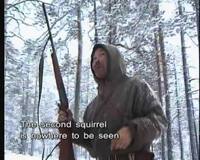
The documentary follows Yuri Vella, a Forest Nenets writer and social activist who lives in West Siberia. He left his village ten years ago to lead the life of a reindeer herder in the taiga. The unique little world he created there was meant to protect him from the alcoholism and unemployment that sadly poses a serious threat to the indigenous peoples of Siberia. To give his grandchildren a proper education in their natural environment and teach them reindeer herding skills, he established an elementary school in his winter camp. Unfortunately, Yuri Vella's world is but an oasis of traditional lifestyle in one of the largest oil-producing regions of Russia.
Sin título