Mindanao, the easternmost island in the Philippine archipelago, is home to the majority of the country's Muslims, as well as indigenous Lumad tribes and Christian settlers. There is an ongoing Islamist armed guerrilla war on the the island, sparked by the history of discrimination and marginalisation of its inhabitants. Over the last forty years, this war has claimed more than 150,000 lives and displaced 750,000 people. But what is behind the conflict? What are the main parties involved' What is being done to achieve peace? It is time to listen to the Voices of Mindanao.
UntitledResistencia
22 Archival description results for Resistencia
One of the most unknown uprisings of our history "The bread mutinery" was led by women in Cordoba, May 1652. There are no faces, there are neither names. There is no image of them. How can we recover the gestures of resistance that we cannot see?
UntitledSin Papeles tells the story of the of a hunger strike staged by migrant workers, without papers (sin papeles), in a small church in Barcelona by bringing together a sound recording of its climax made in March 2001 and film footage of the location shot four years later to the day. The subjective account of the event made by the artist in the form of a sub-titled narration is a process of personal reflection de-objectifying the subject of migration for the purpose of work, displacement and social order. The film is a reflection on the implications and realities of the aspects of the EU project that have created a fortress of Europe.
Rene Vautier, Brittany, 1928, studied at the “Institut des Hautes Etudes Cinématographiques”. Author of several works denouncing Colonialism, including: Afrique 50, Un homme est mort, Une nation, l'Algerie, L'Algerie en Flammes, Hirochirac,... René Vautier appears to be the archetypal socially committed filmmaker: his militant films are held up by a flexible rigorousness and formal ingenuity that help him overcome the practical problems arising from his "social intervention" works. In his own words, his motto could be: "Write history in images, immediately". In 1950, disgusted by the French censors who confiscated many of his reels, he managed to finish Afrique 50, the first French anti-colonial film. His social commitment as a filmmaker leads to 13 charges against him, and a jail sentence. At the price of many years in jail and a hunger strike, René Vautier's struggle against all kind of oppression - political, economic and cultural – will endure.
Radio Qman Txun, crónica de un pueblo maya tells a story between entertainment and reflection, so it allows every watcher whether to do a deep analysis or not, according to their own interest: it can be seen just as a show but it can also make one wonder about the main social, economic and cultural problems of present day: the conflict between tradition and a far reaching globalization, the old social unfair and its links to current immigration, young people and Indian women, the peace process and the new born democracy in Guatemala, the only hope for a change. We just pretend to make questions and let every watcher figure out their own answers.
On May 27, 2011, police tried to evict the camp at Plaça Catalunya (Barcelona), which consisted of citizens exercising their right to freedom of assembly in a public space. The ensuing events in Barcelona became one of the most-documented cases of police brutality in recent history. They will also go down in history for the effective, exemplary and forceful non-violent response of the demonstrators. Following these events, a group of citizens filed a complaint reporting police abuse. But the judge closed the case without even hearing the complainants. This decision effectively left the claimants – and all citizens – utterly defenceless, and left the perpetrators of the serious events that took place on May 27 unpunished. It also created a dangerous precedent that is reminiscent of the impunity that existed in Spain during Franco’s dictatorship. #SOS27M Police impunity questions Spain’s democracy and justice system and calls for the support of the international community.
UntitledThe upgrading of the final stretch of Diagonal avenue in Barcelona's Poble Nou area, for the launch of the "Forum" zone, will lead to the physical disappearance of entire blocks of housing and a way of life. An interview with a group of residents affected by a PERI (special renovation plan) that affects a block of ground floor houses in Poble Nou. They talk about the real estate agency's bad management and the lack of interest shown by the City Council in their excitement over the opening of the Universal Forum of Cultures.
UntitledAn inside view from the streets of the events that took place over one week in the Palestinian city of Nablus in August 2004. The camera takes us into the world of children who play at being soldiers in an army that has stones and motives as its only weapons. In the midst of Israeli gunshots and bombs, a dialog takes place with soldiers who sometimes seem more frightened than their own victims. The camera, with a group of international activists and paramedics, follows the soldiers as they search the city house by house. The international presence also acts as an "occupier-witness" of the zone of impunity in which Israel regularly acts.
UntitledMemory of the Land, is a reflection of the human condition under the yoke of different forms of violence, collective memory and identity as forms of resilience. Palestine. A body is trapped at a checkpoint; an essential mechanism of the Israeli occupation. The body is pierced by structural and physical violence, which is aggressive and arbitrary and prevents and attacks its free movement and existence.
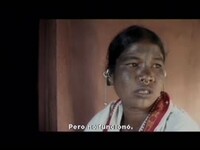
At the beginning of the eighties a new road reached the most remote villages of Soraland, in the Ganjam District of Orissa. From then on, the Lanjia Sora, a tribe with their own special conception of illness, life and death, got in touch with the people from the plains and fell under the influence of the missionary activities of several Christian groups. This culture clash meant a structural change among the Lanjia Sora tribal society. Around 90% of the young people have currently converted to Christianity (Catholic, Baptist and Pentecostal) and they have completely abandoned the old rites and traditions.
Untitled