In 2003, the government headed by ex-president Gonzalo Sánchez de Lozada and Carlos Mesa (Bolivia's current president) passed a new Income Tax act, provoking a police riot that was subsequently repressed by the armed forces. The citizen protests that took to the streets were also repressed by the military and snipers. The documentary is made up of radio audio, TV images and newspaper archives from the main Bolivian newspapers.
UntitledResistencia
104 Archival description results for Resistencia
In this documentary video, La Jornada and Canal Seis de Julio present a 10-year chronicle of the Zapatista movement, from before the public irruption of the Zapatista Army of National Liberation, on January 1st, 1994, until the disappearance of Aguascalientes and the creation of the Caracoles in August 2003.
Public security and the imposition of the Mexican armed forces in different parts of Chiapas: Nazareth (San Manuel), La Galeana, La Garrucha...
UntitledMany of the indigenous communities in Chiapas have no access to potable water. Water and Autonomy looks at this serious problem and how the Zapatista communities are solving it. Through solidarity and training from internationals many communities are now building their own water systems. Members of the communities speak about ways the water project fits into their autonomous process, helps fight sickness, has provided a means of reflection for how to protect existing water sources and represents another means of resistance to globalization projects like the Plan Puebla Panama.
Untitled"The Reality seen through this camera is more Real." - Subcomandante Marcos. A look at the Zapatista uprising, its historical roots and its lessons for the present and the future.
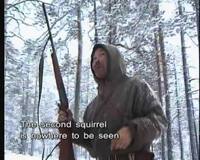
The documentary follows Yuri Vella, a Forest Nenets writer and social activist who lives in West Siberia. He left his village ten years ago to lead the life of a reindeer herder in the taiga. The unique little world he created there was meant to protect him from the alcoholism and unemployment that sadly poses a serious threat to the indigenous peoples of Siberia. To give his grandchildren a proper education in their natural environment and teach them reindeer herding skills, he established an elementary school in his winter camp. Unfortunately, Yuri Vella's world is but an oasis of traditional lifestyle in one of the largest oil-producing regions of Russia.
UntitledTheory and practice of care
"Loneliness is on the rise. "Mainstream discourse hides the fact that the ‘normal’ situation of a 40-hour working week, plus daycare, plus grandma for tricky times, does not just leave room for improvement, it is downright unacceptable.”
Carolina del Olmo, where is my tribe?
In Sweden – an extreme case of Western trends within the Protestant tradition –, over 50% of the population live alone. People also die alone, forgotten by everyone, after a lifetime of pursuing the desire for personal independence, adapting to social norms, comforts, and socialisation without physical contact. The dream of an independent life, free from community bonds and patriarchal family ties, has turned out to be a nightmare of loneliness, sadness, and existential emptiness.
We need to overcome the binary oppositions that lead us to choose between two almost equally bad options. We don’t have to go back to the old, strictly patriarchal family, but we shouldn’t have to settle for metropolitan solitude either. The idea is to create and experiment with other ways of living and loving.
"According to anthropologist and primatologist Sarah Blaffer Hrdy, female lab rats locked in cages with only their young for company started to behave in a manner very similar to 1950s American housewives, with their obsessions and their neuroses. But when observed in the wild, mothers and their offspring showed a wide range of different behaviours in all kinds of social contexts."
Carolina del Olmo, Where is My Tribe ?
In the documentary The Swedish Theory of Love , a Swedish social worker investigating the growing number of people who die abandoned, completely isolated, asks: “What does it matter if I have a million in the bank if I am not happy?” But it’s not just about achieving happiness, it’s about the immense somnambulant sadness washing over a decaying civilization, where life unfolds in the midst of the epiphany of a mountain of waste. “ Did you hear that? It is the sound of your world collapsing ,” say the Zapatistas. Individual independence is the catastrophic ideal of a world that is perfectly organised and efficient but cold as ice.
“ At the end of independence there is no happiness. At the end of independence there is the emptiness of life, the insignificance of life, and utter, unimaginable boredom.”
Zygmunt Bauman, interviewed in The Swedish Theory of Love
Long still frames, text, language, and sound are woven together to unfold the narrative of an anonymous group who fill their time by measuring distance.
Project in Residency Falconetti Peña
/ Exhibition War, insubmission, art /
/ FILMOTECA DE CATALUNYA /
/ CRIPPLES OF WAR AND NORMALITY /
/ PATRIOTISM AND COLONIZATION /
/ YOU WILL DIE AS HEROES /
/ PAMPHLET AND REVOLUTION /
WAR, INSUBMISSION, ART
Project in Residency Falconetti Peña
In 1924, coinciding with the tenth anniversary of the end of World War I, Otto Dix published his work The War, composed of fifty engravings in which he denounced warmongering with a harshness that had not been seen until then. A century earlier, Goya, a painter who inspired Otto Dix, produced The Disasters of War. And now, one hundred years later, a cruel and senseless war is once again being fought in Europe.
Otto Dix is located between two times, Goya's and ours. The project for this exhibition/intervention is to take his engravings as a starting point for a journey through the art that has rebelled against war slogans.
Goya, Dix, Grosz, Arntz, Watkins and many other artists defied the prevailing aesthetic order by creating works of enormous relevance. To do so, they used modest formats, the engraving, the poster, the mimeographed magazine, the pamphlet, the false documentary, the only ones they could access in times of censorship and blockade. These are works that managed to last against all odds, as there were many who were interested in making them disappear.
Thanks to them, today we can follow the trail of those who in their day disobeyed the patriotic slogans, maintaining the flame of resistance to the war madness.
The project will cover various spaces and historical periods, combining different formats, pictorial, graphic and audiovisual.
The idea is to contrast them, face to face, with the messages of those who at the time bet on galvanizing the warrior ardor of the masses.