Poder

Elements area

Taxonomy

Code

Scope note(s)

    Source note(s)

      Display note(s)

        Hierarchical terms

        Poder

          Equivalent terms

          Poder

            Associated terms

            Poder

              34 Archival description results for Poder

              34 results directly related Exclude narrower terms
              Taking Liberties
              ES ES-OVNI CTX-S014-SS001-0096 · Item · 2007
              Part of Non-Identified Video Observatory (OVNI)

              The shocking truth about the erosion of our fundamental civil liberties by Tony Blair's government. The Right to Protest, the Right to Freedom of Speech. The Right to Privacy. The Right not to be detained without charge, Innocent Until Proven Guilty. Prohibition from Torture. Taking Liberties will reveal how these six central pillars of liberty have been systematically destroyed by New Labour, and the freedoms of the British people stolen from under their noses amidst a climate of fear created by the media and the government itself. Irreverent but revelatory, outrageous but true, the program combines these real stories of the loss of liberty with never-before-seen footage, cheeky stunts and comment from leading politicians, celebrities, human rights organisations, academics and lawyers, which all add up to make Taking Liberties one of the most explosive and controversial films of the decade.

              Untitled
              ES ES-OVNI CTX-S014-SS001-0002 · Item · 2010
              Part of Non-Identified Video Observatory (OVNI)

              The Job has been put together from over six hours of archival material shot in the offensive against the city of Fallujah, Iraq. The footage was originally recorded by a journalist embedded with American assault troops, who were the only ones authorised to record images or approach the area before, during and after the fighting. Years later, the journalist posted the unedited footage on a temporary web site, adding a classical music soundtrack, as an “Iraqi souvenir” for the marines who participated in the attack: “to all the marines of kilo 3/5. Nick and Geoff send their thanks for all your acts of kindness and generosity…” This footage was captured online by Jean Pierre Gambarotta and Perro Loco from Caracas Libertaria, and edited by Abu Ali.

              Untitled
              ES ES-OVNI CTX-S015-SS002-0003 · Item · 1989
              Part of Non-Identified Video Observatory (OVNI)

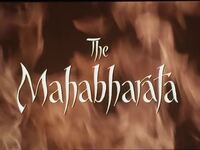
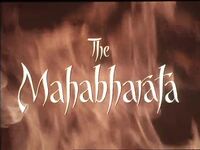
              The Mahabharata is one of the world’s greatest books. It is also the longest poem ever written. It was written in Sanskrit, and is about fifteen times the length of the Bible. “Maha” in Sanskrit means “great” or “complete”, “Bharata” is primarily the name of a legendary character, then that of a family or clan. So the title can be understood as “The Great history of the Bharatas”. However in a extended meaning “Bharata” can mean “Hindu”, and, even more generally “Man”. So the Mahabharata could be translated as “The Great history of Mankind”. According to most scholars, the events recounted in The Mahabharata probably have a historical source. Others maintain that the correct interpretation of the poem lies entirely in the direction of myth. Yet others point out the importance of the teaching books in the epic - political, social, moral and religious - and see The Mahabharata as a long treatise of government initiation “As far as we were concerned, this immense poem, which flows with the majesty of a great river, carries an inexhaustible richness which defies all structural, thematic, historic and psychological analysis. Doors are constantly opening which lead to other doors. It is impossible to hold the Mahabharata in the palm of your hand. Layers of subtext, sometimes contradictory, follow upon one another and are interwoven without losing the central theme. The theme is a threat: we live in a time of destruction - everything points in the same direction. Can this destruction be avoided?” Jean-Claude Carrière In our interview with Carrière, he talked about what he sees as the core of the Mahabharata: it is a poem on oblivion. Mankind seems to constantly forget the source of its true nature. Indian tradition says: “Everything in the Mahabharata is elsewhere. What it is not there is nowhere”. Part one, "The Game of Dice", shows us a growing confrontation between two sides battling for power. One side is clearly closer to the idea of dharma than the other, which barely bothers to respect it. To avoid direct hostilities, they decide to play a game of dice; but the game is rigged. Playing with power is a rigged game.

              Untitled
              ES ES-OVNI CTX-S015-SS004-0001 · Item · 1989
              Part of Non-Identified Video Observatory (OVNI)

              After the reflections from the Bhagavad Gita, the war begins: a tragedy that pits brother against brother and sucks up whole families, people of great courage. It is a war of devastating consequences, which does not just threaten the survival of one of the two sides, but the continuity of life on earth. “Even the blades of grass tremble in fear.” A battle in which the clashing sides do not hesitate to use the ultimate weapons. Vishnu himself exclaims: “Now I am become Death, the destroyer of worlds.” This is a war that is also played out inside every human being.

              Untitled
              ES ES-OVNI CTX-S015-SS003-0003 · Item · 1989
              Part of Non-Identified Video Observatory (OVNI)

              Having been tricked by Power and humiliated by the arrogance of those who now wield it, the Pandavas are forced into exile even though they still harbor a desire for justice. They face twelve years of banishment in the wilderness, and a further year during which they must live in disguise and avoid being discovered. The Mahabharata, portrays this exile as a period of extreme hardship in which death is always present – but so is the growing awareness of its opposite. To abandon the palace and swap the city for nature also leads them to renew direct contact with life, embark on a search for knowledge, start a process of cleansing and strengthen the bond of brotherhood. Nevertheless, this strengthening seems to lead back towards war. Part two ends with the famous reflections of the Baghavad Gita in which Krishna responds to the doubts of Arjuna.

              Untitled
              ES ES-OVNI CTX-S015-SS007-0006 · Item · 1965
              Part of Non-Identified Video Observatory (OVNI)

              “By late 1964 Harold Wilson’s newly elected Labour Government had already broken its election manifesto to unilaterally disarm Britain, and was in fact developing a full-scale nuclear weapons programme, in spite of wide-spread public protest. There was a marked reluctance by British TV at the time to discuss the arms race, and there was especially silence on the effects of nuclear weapons - about which the large majority of the public had absolutely no information. I therefore proposed to the BBC that - using one small corner of Kent in southeastern England to represent a microcosm - I make a film showing the possible effects, during an outbreak of war between NATO and the USSR, of a nuclear strike on Britain.” The BBC panicked when they first saw the film, and sought government consultation re showing it. They subsequently denied this, but the sad fact remains that the BBC violated their own Charter of Independence, and on September 24, 1965, secretly showed The War Game to senior members of the Home Office, the Ministry of Defence, the Post Office (in charge of telecommunications), a representative of the Military Chiefs of Staff, and Sir Burke Trend, Secretary to Harold Wilson’s Cabinet. Approximately six weeks later, the BBC announced that they were not going to broadcast the film on TV - and denied that their decision had anything to do with the secret screening to the government". Peter Watkins

              Untitled
              Une Jeunesse Allemande
              ES ES-OVNI DIF-S006 · Series · 2017
              Part of Non-Identified Video Observatory (OVNI)

              Une Jeunesse Allemande

              Une Jeunesse Allemande by Jean-Gabriel Périot, tells the history of the Rote Armee Fraktion - RAF (or Red Army Faction, a German revolutionary terrorist group from the 1970s founded notably by Andreas Baader and Ulrike Meinhof) as well as the images generated by this story. The film is entirely produced by editing preexisting visual and sound archives and aims to question viewers on the significance of this revolutionary movement during its time, as well as its resonance for today’s society.

              In the 1960s, the young democracy of West Germany was embarrassed by its Nazi past, and ingrown in its role as imperialist and capitalist outpost faced by its communist double. The postwar generation, in direct conflict with their fathers, was trying to find its place. The student movement exploded in 1966. The pas de deux between students and the government deteriorated, and radicalized those involved in a gradual escalation of violence and reprisals. From this seething youth emerged the journalist Ulrike Meinhof , filmmaker Holger Meins, students Andreas Baader and Gudrun Ensslin, as well as the lawyer Horst Mahler. When the student movement collapsed at the end of ’68, they remained isolated in their radicalism, and desperately sought ways to continue the revolutionary struggle.

              The RAF (Red Army Faction) was founded in 1970, its militants disappearing into hiding. Both the government and sympathizers appeared cautious. Initial RAF acts, along with police responses, involved a certain amount of improvisation. Then came 1972, and the irreparable break: in less than a week, the RAF committed five major attacks, resulting in many victims. The government reacted by taking a hardline stance in its conflict with the terrorist movement. Casualties grew on all sides, including the RAF (both outside and in prison), government (police officers but also politicians and officials), and especially anonymous civilians. Voices questioning both the political and moral implications of the RAF’s combat, as well as the federal government’s choice for total repression, were progressively drowned out.

              The autumn of ’77 marked the bloody finale to this story, which was also a war of images. The government refused to capitulate to the demands of both the RAF— which sought the release of its imprisoned members in exchange for Schleyer, the kidnapped president of the Employer Union—as well as the Palestinian commandos who, won over to the RAF cause, had hijacked a plane of German tourists. That same night, the plane was taken by storm at the Mogadishu airport, and the hostages were freed, while in Germany the final founding members of the RAF who were still alive “committed suicide” in prison, and Schleyer was killed by his abductors.

              http://www.local-films.com/

              http://www.local-films.com/

              Une Jeunesse Allemande
              ES ES-OVNI RSC-4192 · Item · 2015
              Part of Non-Identified Video Observatory (OVNI)

              Une Jeunesse Allemande tells the history of the Rote Armee Fraktion (or Red Army Faction, a German revolutionary terrorist group from the 1970s founded notably by Andreas Baader and Ulrike Meinhof) as well as the images generated by this story. The film is entirely produced by editing preexisting visual and sound archives and aims to question viewers on the significance of this revolutionary movement during its time, as well as its resonance for today’s society. In the 1960s, the young democracy of West Germany was embarrassed by its Nazi past, and ingrown in its role as imperialist and capitalist outpost faced by its communist double. The postwar generation, in direct conflict with their fathers, was trying to find its place. The student movement exploded in 1966. The pas de deux between students and the government deteriorated, and radicalized those involved in a gradual escalation of violence and reprisals. From this seething youth emerged the journalist Ulrike Meinhof, filmmaker Holger Meins, students Andreas Baader and Gudrun Ensslin, as well as the lawyer Horst Mahler. When the student movement collapsed at the end of ’68, they remained isolated in their radicalism, and desperately sought ways to continue the revolutionary struggle. The RAF (Red Army Faction) was founded in 1970, its militants disappearing into hiding. Both the government and sympathizers appeared cautious. Initial RAF acts, along with police responses, involved a certain amount of improvisation. Then came 1972, and the irreparable break: in less than a week, the RAF committed five major attacks, resulting in many victims. The government reacted by taking a hardline stance in its conflict with the terrorist movement. Casualties grew on all sides, including the RAF (both outside and in prison), government (police officers but also politicians and officials), and especially anonymous civilians. Voices questioning both the political and moral implications of the RAF’s combat, as well as the federal government’s choice for total repression, were progressively drowned out. The autumn of ’77 marked the bloody finale to this story, which was also a war of images. The government refused to capitulate to the demands of both the RAF— which sought the release of its imprisoned members in exchange for Schleyer, the kidnapped president of the Employer Union—as well as the Palestinian commandos who, won over to the RAF cause, had hijacked a plane of German tourists. That same night, the plane was taken by storm at the Mogadishu airport, and the hostages were freed, while in Germany the final founding members of the RAF who were still alive “committed suicide” in prison, and Schleyer was killed by his abductors.

              Untitled
              VideoLabyrinth
              ES ES-OVNI RSC-1264 · Item · 1999
              Part of Non-Identified Video Observatory (OVNI)

              The "Pirate Utopias and European Archives Renegades" present a silent report on CCTV-security cameras. A catalog of tragedies and ideas for the future.