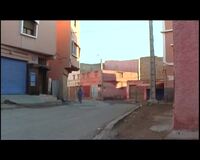
Promotional tourism video. Idealized images that entice consumption. What is omitted screams out, like a wound.
UntitledPalestina
61 Archival description results for Palestina
He asked me: “Ms Ziadah, don’t you think that everything would be resolved if you would just stop teaching so much hatred to your children? (...). Pause. I look inside me for strength to be patient but patience is not at the tip of my tongue as the bombs drop over Gaza. Patience has just escaped me. Pause. Smile. We teach life, sir! (...) These are not two equal sides: occupier and occupied. And a hundred dead, two hundred dead, and a thousand dead. (...) Is anybody out there? Will anyone listen? I wish I could wail over their bodies. I wish I could just run barefoot in every refugee camp and hold every child, cover their ears so they wouldn't have to hear the sound of bombing for the rest of their life the way I do. (...) Today my body was a TV’d massacre. We teach life, sir. We Palestinians wake up every morning to teach the rest of the world life, sir.”
UntitledLong still frames, text, language, and sound are woven together to unfold the narrative of an anonymous group who fill their time by measuring distance.
Anas ek Aili works with Palestinian children in Ramallah. Independently, they create a video to portray their surroundings from their own perspective and their understanding of the language of video.
UntitledImages of orchids opening, plants sprouting, clouds and water superimposed onto images of the Sabra and Chatila refugee camp massacre in Lebanon in 1982. The voice of Abdel Majid Fadl Ali Hassan (a refugee from 1958 who lives in the Bourg El Harajneh camp) tells how his house in Palestine was destroyed.
When Israel withdrew from the Sinai Peninsula in 1982, the city of Rafah was suddenly split, between Egypt and Gaza, by an immense metal and concrete wall. Families found themselves divided by a highsecurity international border, though their houses often lay less than 100m apart. Before long, influential families moved their business underground, through dozens of secret tunnels burrowed below the Israeli border fence. Everything moves through Rafah's tunnels: from cigarettes and drugs to cash and people. It is a vast enterprise, and pays five times the average annual Gaza salary in one month. It is a family business, passed on from father to son and always - for reasons of security as well as economics - kept in the family.
UntitledThe voice of the tour guide takes the viewer through wobbly Super 8 pictures which Irshaid's Palestinian father took on a family trip to Palestine / Israel in the 1970s. An ironic portrait offering an alternative to the images in the mass media.
“On december 19th 2008, the Free Gaza movement sailed from Cyprus to Palestine. Our objective was to break the Israeli siege over the Gaza Strip. We were the last and only foreigners to enter and stay in the territory. We got involved in something that nobody expected”.
The film tells of the lives of four young men in a refugee camp who dream of inviting Rogers Waters (Pink Floyd) to give a concert in their camp, thus giving us an insight into the lives of these young men, their struggles and the daily hardships they face in order to survive.
UntitledLiana Badr's documentary locates itself at the checkpoints and Wall crossings within the Palestinian Occupied Territories. Here, the control of walls, gates, and roads is always political, and seemingly simple structures serve not as means of passage but more often as obstacles to the crops, families, schools, and livelihoods of those who must endure their presence.
Non-Identified Video Observatory (OVNI)