oscuridad

Elements area

Taxonomy

Code

Scope note(s)

    Source note(s)

      Display note(s)

        Hierarchical terms

        oscuridad

          Equivalent terms

          oscuridad

            Associated terms

            oscuridad

              13 Archival description results for oscuridad

              13 results directly related Exclude narrower terms
              VISIONS OF AN EXPANDED TIME
              ES ES-OVNI DIF-S021 · Series · 2024
              Part of Non-Identified Video Observatory (OVNI)

              VISIONS OF AN EXPANDED TIME

              March 16th from 18:30h to 20:30h

              Centre Cultural La Marineta, Mollet del Vallès

              A dialogue between the works of videomakers Scott Barley and  Alessandro Quaranta , both of whom have in common an attitude of radical permanence when facing the experience of that which is observed and the vision delivered to the audience.

              •    Incanto, by Alessandro Quaranta (2022). Italy. No dialogue. 12’

              A little girl sleeps wrapped in her blankets. A lampshade that projects large areas of shadow is the source of a brightness that spreads from the inside of a room, like the circles generated by a stone thrown into the water, until it reaches the most distant places. What is manifested inside reverberates in the environment outside, because it is made of the same material. The video is a chant, a natural prayer in order to live as long as possible.

              •    The Green Ray, by Scott Barley (2017). South Wales (UK). No dialogue. 12’

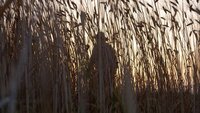
              A Green Ray that never features. Instead, we sense it – seeing beyond our own eyes, beyond the hills – we sense it for an instant. We are plunged into the unknowable, beyond the horizon, beyond seeing altogether. In a single 11 minute take, the film takes us from lush sunsets, to beyond the green ray, and into the gloaming, into the heavy night's darkness, where we await the impending storm.

              •    Lumen by Alessandro Quaranta (2006). Italy. No dialogue. 4’20”

              The neutral surface of the screen is continuously traversed by luminous interferences. The surface, defined by the screen, is traversed by a beam of light in multiple directions, revealing bodies of different nature and identity. Light, as a technical resource, names the object and, in its incessant movement, establishes a play of correspondences. Light is the eye that forms a singularity from the whole.

              Light is the language that isolates from the indistinct noise of sounds.

              •    Womb, by Scott Barley (2017). South Wales (UK). No dialogue. 16’

              The Mouth screams. Like a shadow, it looms on the event horizon. It swells, hunting the night like a snake in the dark. The laceration tears through the stars, devouring its meal. Within the nothing swims something of a memory of movement. Far beyond, something out of the black reveals itself. In the infinite womb, limbs drift suspended, like flies in a giant spider web. An infinite sea of pale flesh. Bodies without organs. Death's renewal awaits, as the bodies pass through the void.

              •    I testimoni si liberano al tramonto della luce , by Alessandro Quaranta (2023). Italy. No dialogue. 5’45”

              What happens when a place is abandoned by humans?

              Thereby, where for a long time there have been temporary settlements of marginalised, rejected, undocumented communities in tents or dilapidated dwellings made from the waste materials of our welfare civilisation, when they are forcibly displaced, it is nature that takes their place.

              Here, the gaze moves in a forest on the outskirts of a city, which grew up where only twenty years earlier there was a Roma camp.

              Only at nightfall is it possible to glimpse the testimonies of these tenures, which emerge as remnants one cannot retain, like absurd intuitions that disappear as soon as one thinks have understood them.

              •    Retirement by Scott Barley 2013. South Wales (UK). No dialogue. 3’

              A solitude found in the distant storm.

              •    Soglie, by Alessandro Quaranta (2016). Italy. No dialogue. 14’

              There are many protagonists in this video: the woods, above all, and different types of animals, natural light effects, installations by various artists (these were installed along the pathway in a Piedmont Valley in the North West of Italy as a result of a production of material in the field occurred during the project “La collera delle lumache” [The Snails’ Wrath]) , the stream, the sky, and other landscapes.

              Each of these elements, from time to time, can ‘take over the scene’ of Soglie (Thresholds ), becoming the momentary protagonist of the work, totally without any pre-established hierarchies.

              An intangible entity that was possible to document only by evoking it with this composition of images and sounds, all of which are absolutely authentic and not treated in any way during post-production.

              One could define Soglie (Thresholds ) as an epic of the events of those days, that which was seen by the invisible eyes of the woods and narrated by the forest itself. I repeatedly dreamed of it over the long term that I devoted myself to the choice of images and sounds, and to their transformation, and now tell my dream to everyone who sees this video work.

              •    The Ethereal Melancholy Of Seeing Horses In The Cold by Scott Barley 2012. South Wales (UK). No dialogue. 4’

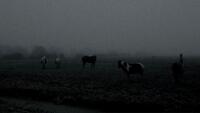
              A silent short, focusing on the beauty and melancholia of seeing horses in the cold fog, and the metaphors that manifest, as time passes.

              •    Les animaux de Stella, by Alessandro Quaranta (2019). Italy. No dialogue. 15’
              Toni Serra *) Abu Ali
              ES ES-OVNI TS · Subfonds
              Part of Non-Identified Video Observatory (OVNI)

              Archivo de Proyectos 1994-2026

                      Búsqueda

              CatalàEnglishEspañol

              CA EN ES 

              Toni Serra *) Abu Ali


              / ... /

              / CONVERSACIONES /

              / VIDEO ENSAYO 2001-2016 /


              / ... /

              / THE BLACK TAPES / TV CODE /

              / BABYLON ARCHIVES /


              / ... /

              / 1989-1994 /

              / ARCHIVOS DE TANGER /

              / EL HAMDULILLAH TAPES * PIRATE UTOPIAS & EUROPEAN RENEGADOES /

              / FEZ CIUDAD INTERIOR /

              / LA VIGILIA Y EL SUEÑO /


              / DUAR MSUAR /

              / LA LLUVIA EN DUAR MSUAR /


              / ... /

              SOBRE PAJAROS Y VISIONES


              Imagenes Previstas

              Abrir la visión

              No solo un cambio.

              Migra Visions 2.0

              Migra Visions

              La Gente Invisible

              Entre el Agora y la Frontera

              Soviet Derviche

              Broken Films

              Fez, Ciudad Interior


              www.al-barzaj.net

              Toni Serra *) Abu Ali
              / TONI SERRA *) ABU ALI

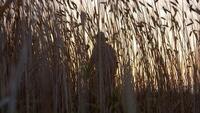
              Los hatillos de trigo esconden los pinchos del azufa

              Toni Serra *) Abu Ali
              ES ES-OVNI TS-S002 · Series · 2019
              Part of Non-Identified Video Observatory (OVNI)

              Toni Serra *) Abu Ali

              / VIDEO ESSAY 2001-2016 /

              / THE BLACK TAPES / TV CODE /

              / EL HAMDULILLAH TAPES * PIRATE UTOPIAS & EUROPEAN RENEGADOES /

              / THE RAIN IN DUAR MSUAR /

              Entre el Agora y la Frontera

              Toni Serra *) Abu Ali

              / TONI SERRA *) ABU ALI

              The sheaves of wheat hide the thorns of the jujube... drops of blood are sown in the dust

              the woman's belly enters full moon... announcing a still-distant October

              the harvest is a time of Remembrance, of gratitude.

              The Green Ray
              ES ES-OVNI RSC-4314 · Item · 2017
              Part of Non-Identified Video Observatory (OVNI)

              A Green Ray that never features. Instead, we sense it – seeing beyond our own eyes, beyond the hills – we sense it for an instant. We are plunged into the unknowable, beyond the horizon, beyond seeing altogether. In a single 11 minute take, the film takes us from lush sunsets, to beyond the green ray, and into the gloaming, into the heavy night's darkness, where we await the impending storm.

              Untitled
              Sleep has her house
              ES ES-OVNI CTX-S019-SS002-0001 · Item · 2017
              Part of Non-Identified Video Observatory (OVNI)

              The shadows of screams climb beyond the hills. It has happened before. But this will be the last time. The last few sense it, withdrawing deep into the forest. They cry out into the black, as the shadows pass away, into the ground.

              sensorium
              ES ES-OVNI RSC-1524 · Item · 2006
              Part of Non-Identified Video Observatory (OVNI)

              In the last moments of a life, human senses blur with those of the surrounding forest. Death is the flowing of human senses out into the world beyond the flesh cage. Death is the final breath joining the endless journey of the night breeze.

              Path of Return
              ES ES-OVNI CTX-S019 · Series · 2018
              Part of Non-Identified Video Observatory (OVNI)

              / CONTEXT 1994 - 2020

              Path of Return / OVNI 2018

              visions, silence, darkness

              A few years ago – just after OVNI The Border as Centre (and perhaps as a consequence of it) – we entered a period of introspection. And in that inward-looking space, certain images from Bela Tarr’s film The Turin Horse (1) kept returning over and over again. In particular, three sequences:

              In the first, an elderly man struggles to drive his horse and loaded cart through a fog-filled landscape. After a while, we begin to understand the need for so much effort: the driver is one-armed, and a cart intended for two horses is being pulled by just one. Something is missing in this soulless world. A profound lack of balance is causing it to crack and at the same time bringing it to a standstill. The mutilated substance of that which animates it, mutilated itself, is crushed under its own weight and sinks on its blind side. Every gesture, every task, even eating, is arduous.

              In the second scene, a character appears on screen and delivers a wild, lucid monologue about the course the world has taken: “everything has been debased that they’ve acquired (…) whatever they touch – and they touch everything – they’ve debased (…) Acquire debase, debase, acquire. Or I can put it differently if you like: to touch, debase and thereby acquire, or touch, acquire and thereby debase. It’s been going on like this for centuries (….) Because this is not some kind of cataclysm, coming about with so-called innocent human aid. On the contrary, it’s about man’s own judgement.”

              The cart driver’s answer is laconic: “Come off it, that’s rubbish”. (2)

              Then, the wind, the barren plain, the loneliness.

              In the third scene, near the end of the film… as night falls, the two main characters, father and daughter, try to light an oil lamp or at least a candle but they are unable to do so. Light has already left that world.

              Light is leaving the world.

              For months and months, as we were saying, these images played over and over inside us, suggesting a possible path but also imperceptibly plunging us into their dense fog. We tried to navigate inside it but we could barely see our hand stretched out before us. So we walked for a time through that invisible world, and little by little we learnt to trust that fog, that not-knowing, that not-seeing with our eyes, until we came, in a sense, to recognise ourselves in it… Once this state had stabilised we shared it with the rhizome that gives rise to ovni, and this was how a few people came to talk to us about death and deaths (3) … and how the “Path of Return” unexpectedly opened up in the fog, not denying it but rather incorporating it like a veil that protects the mystery that surrounds us and runs through us at every moment.

              And so this OVNI of fog takes us on a journey through the middle world, the experience of physical death and of the deaths of the ego.

              Instead of a regular video programme, it takes the form of a rite of passage in which visions (videos), texts, sounds, rituals, and breaths are interwoven with shared silence and darkness.

              To open up our vision (4), to open up to the awareness of that which we call film, video… those strange projections of light and shadow that portray worlds and lives, landscapes and feelings that arise in the dark cave of the screening room. It is there, in that shared or solitary darkness, that visions of worlds are incubated… before the emergence of boundaries between the real and the unreal, wakefulness and sleep, life and death… Visions on a white screen that will remain white once the visions of the worlds have disappeared. (5)

              Perhaps an old wound in our culture and our lives is thus healed, the hemispheres come together, other eyes open, and the Turin horse is no longer beaten. (6)

              So as not to separate death from life, each day’s journey will begin by passing through the gates of dreams – death’s twin – and trance, exploring the rituals of farewell and dissolution of the body… A contemplation of dissolution that will lead us to the grateful contemplation of life.

              So Path of Return unfolds as a rite of passage, a journey that we recommend making in full each day (*), to aid in a good crossing through intense and sometimes difficult inner landscapes that may perhaps help us to regain the perception of the unlimited, inappropriable, unrepresentable nature of the Real.

              (*) OVNI will take place from 7 to 11pm each day.

              The CCCB Theatre will open at 7pm. Once the programme starts the doors will remain closed, opening at least twice more in the course of each evening. The Lobby of the Theatre will be open from 7 to 11pm, and a room nearby will be fitted out and equipped with audio recordings for those waiting.

              The Turin Horse ( A torinói ió in the Hungarian original) is a 2011 film directed by Béla Tarr and Ágnes Hranitzky.

              Transcription of the monologue from The Turin Horse :

              The people who come to mind are Palmar Álvarez Blanco, Marco Antonio Regueiro, … and also all those who have already left us during this long period of searching

              Abu Ali, Abrir la Visión, 2016

              http://www.al-barzaj.org/2016/10/abrir-la-vision.html

              This image is often used by Ramana Maharashi.

              According to the oft-repeated story, Nietzsche was in Piazza Carlo Alberto when he noticed the driver of a hansom cab flogging his stubborn horse. Nietzsche ran towards them, threw his arms around the horse’s neck to protect him, and then collapsed on ground.

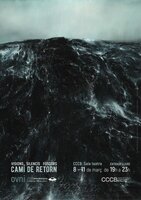
              March 2018, 8th - 11th / 19:00h - 23:00h

              Image de Thierry DE CORDIER, “MER GROSSE”.

              Lumen
              ES ES-OVNI RSC-4311 · Item · 2006
              Part of Non-Identified Video Observatory (OVNI)

              The neutral surface of the screen is continuously traversed by luminous interferences. The surface, defined by the screen, is traversed by a beam of light in multiple directions, revealing bodies of different nature and identity. Light, as a technical resource, names the object and, in its incessant movement, establishes a play of correspondences. Light is the eye that forms a singularity from the whole. Light is the language that isolates from the indistinct noise of sounds.

              Untitled