
no dualiadad

Elements area

Taxonomy

Code

Scope note(s)

    Source note(s)

      Display note(s)

        Hierarchical terms

        no dualiadad

          Equivalent terms

          no dualiadad

            Associated terms

            no dualiadad

              11 Archival description results for no dualiadad

              11 results directly related Exclude narrower terms
              2017 - The Unseen Workshop
              ES ES-OVNI TS-S001 · Series · 2017
              Part of Non-Identified Video Observatory (OVNI)

              2017 - The Unseen Workshop

              / TONI SERRA *) ABU ALI

              Toni Serra *) Abu Ali

              An activity in the framework of OVNI programme for 2017 at the Centre de Cultura Contemporània de Barcelona that proposes -with the help of videos and texts- to go in depth into the notion of the invisible. Given by Toni Serra (Abu Ali), the workshop goes from the political to the poetic, or from poetry to mysticism.

              From forced invisibility to permanent exhibition in the panopticon. The image as a veil. Tunnels of reality. The reality of the dream. Crossing the other side. On contemplation. The one and the multiple.

              You are asleep and your vision is a dream; all you are seeing is a mirage. (1)

              Capitalism’s gigantic audio-visual machine, like all its machines, is driven by an extractivist impulse: life as an infinite reservoir to be exploited. It makes sense to counter this instrumentalist drive with a method based on collaboration, immersion, and commitment that weaves together the creators of images and their environment, and does not turn them into mere agents at the service of that machine. However, there is a danger that this measure alone will be insufficient and reversible, unless it is accompanied by a radical critique of the notion of vision that has prevailed in the dominant global culture: if we do not consider vision’s capacity to extract but also to involve and project, if we do not deconstruct the visual language that implements the colonisation of time and of perception....

              We normally associate images with vision, but in the society of global capitalism the use of images as spectacle (2) has turned vision into a kind of blindness, creating an imaginary woven from a huge number of images that are renewed and also replicated unceasingly. A tissue that solidifies until it forms a dense veil of images that not only hinders vision and obstructs direct experience, but also tends to colonise our realities and dreams, while plundering deposits of fantasy (3) and personal or shared imaginaries. A dominant reality that threatens the fabric of other realities, that threatens to wipe out forms of knowledge, landscapes, people, ways of life, affects... As if a thousand libraries of Alexandria, still embedded in people’s daily lives, in their chores, their places, were already burning once again.

              Much has been said about the manipulative nature of media images, their capacity to deflect, distort, and distract the senses, creating a vision of reality that is completely biased on favour of the big economic powers. A huge, seemingly diverse, audio-visual production machine, in the hands of a few private, government, or hybrid corporations. But the real power of these images does not lie in denying, coercing, or manipulating (which always generate resistance and thus opposition), but in claiming to build, to constitute, to give space and make meaning. In other words, to create an imaginary and offer a place, an individual or creative role in that master film that will then be projected under the heading of “reality”. Of course it is no more real than a theme park or a shopping mall that simulates town squares, street musicians, and even action scenes...

              This spectacle-reality is forged in the constant, high centrifugation of labels: news, fiction, advertising, education, entertainment, training, and so on. Themes and concepts are mixed together, and so is the syntax of consumption, permutating them in time and space until they become indistinguishable or their differences become irrelevant, once they are consumed and absorbed as part of the same segment of experience.

              Audio-visual media have undergone radical change and hybridisation under the impetus of the new consumer, entertainment, and socialisation technologies. They have partly yielded the oligopoly of the means of audio-visual production, and are now complemented (and challenged) by the massive spread of devices for recording, editing, and disseminating images. They have hybridised with other media based on micro-segments of information and opinion..., creating a dense media ambience in which TV news, advertising, video games, film, advertorials, and social media are constantly in self-referential mode. Inspired by marketing strategies and informed by the personal information that is “voluntarily” provided on so-called social networks, critical voices also take on a spectacle-role. An implementation of a new version of the panopticon, given that any “social” element of these networks dissolves with the ownership, management, and use of the data they amass.

              Models are no longer simply projected onto passive viewers, like in the old Hollywood dream factory. Instead, what were formerly audiences are offered an “opportunity to participate”, a chance for interaction that gives them an active leading role in a pre-written script. Stories, feelings, private and shared dramas, aspirations, desires, dreams, fears, likes and dislikes, emotions and ideas, are the raw material that fuels the great accumulation machine, always geared towards obtaining and maintaining maximum profit in the form of financial or cognitive capital. In this context, as Pasolini saw, free participation and interaction paradoxically coexists with looting and plunder, with the exploitation of the enormous experiential and cultural reservoirs, the personal and collective realities of those who participate, whose reality either becomes productive or is cancelled. The “raw material” is used according to the financial logic of marketing and the politics of control. It is extracted, inserted into the timeline (4), filtered, and put back on screen in the form of the global imaginary.

              The dominant power presents itself in an outward-oriented imaginary, but this does not mean that it is only used on forms and surfaces. Rather, it provokes and forces the interior – anonymous, hidden, insignificant – to flow towards the surface, to be reduced to it, to show and advertise itself and ultimately become only that outwardness. Only thus can it be mapped in its entirety, its identities grouped and produced, experts assigned, and goods targeted to it.

              The sleep of our era is not a good sleep that provides rest. It’s an anxious sleep that leaves you feeling even more worn out (...) There is a narcosis that begs for an even deeper narcosis . (5)

              This is the sleep that gives rise to “capitalist realism” (6), which mainly affects people living in the central parts of the global system, where capitalism tends to seem unfair but unavoidable, with no conceivable alternative. Mark Fisher, who coined the term, describes it as the impossibility of there being space for an alternate possibility within a capitalist framework.

              Capitalist realism cannot be confined to art or the quasi-propagandistic way in which advertising functions. It is more like a pervasive atmosphere, conditioning not only the production of culture but also the regulation of work and education, and acting as a kind of invisible barrier constraining thought and action. (7)

              Capitalist realism, implemented as a hegemonic ideology, consists of the conviction that there is no alternative to the paradigm of capitalist social organisation, and also of its own means of reproduction and dissemination to most of the population.

              As we have seen, the image industry and the media are essential for projecting this capitalist realism onto the social screen. Two of its media strategies are notable for their capacity to go viral.

              The first, presented as “information” and “objectivity”, consists of what we could call the creation and export of the visual concept of poverty. Through images (preferably taken from countries on the global periphery), news and mainstream documentaries present decontextualised, re-situated visual segments that illustrate the dominant idea of poverty for “central” audiences and export it as a global imaginary. At the same time

              Del Olvido: OVNI 2012
              ES ES-OVNI CTX-S015-SS001-0001 · Item · 2012
              Part of Non-Identified Video Observatory (OVNI)

              A video essay  on  Oblivion with excerpts from: . The Mahabharata, Peter Brook,  . Conversacion con Jean-Claude Carrière,  Abu Ali, Toni Cots y Stefano Casella.  . La Commune,  Peter Watkins  . Del Poder, Zaván  . I do not call it rioting, I call it Insurrection, Anónimo en la red.  . La Barcelona que no se ve, la Barcelona que se esconde. TEB y OVNI . Sembrando Sueños, Elio González  . Er'hal, Ves-te'n. Diari de la Plaça Tahrir, Marc Almodóvar.  . 27 de Maig del 2011. Plaça Catalunya.  . Solutions locales pour un Désordre global, Coline Serrau

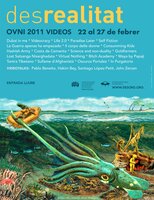
              Dis_Reality
              ES ES-OVNI CTX-S014 · Series · 2011
              Part of Non-Identified Video Observatory (OVNI)

              / CONTEXT 1994 - 2020

              "You are asleep, and your vision is a dream; all you see is an illusion.” (1)

              OVNI disReality aims to reflect upon different phenomena of the critique of reality, their repercussions and the horizons that they illuminate, or recall.

              Extremely heterogeneous traditions and forms of experience radically question not only the concept of reality, but the very experience of the real.

              Some of the most radical questionings of reality arise from the culture of images, “when the real world is transformed into mere images, mere images become real beings.” (2) Others are a result of simulation mechanisms: as soon as the copy ceases to be a pale reflection of the original image and begins to erode it in its entirety, then the original becomes nothing more than one copy among many, and not necessarily the one with the greatest verisimilitude. The extreme condensation of these phenomena springs from digital technology: video games, simulation, virtual images, expanded reality, mutating into fields as diverse as leisure, military training, communication, industrial processes, personal relationships, the administration of pleasure... becoming the psychic and emotional habitat of a large part of the population. A fictional whole.

              Nevertheless, this virtual reality in turn generates a reified, totally physical reality, like that which we now see on a grand scale in cities like Dubai, and in so many other instances of our everyday life. Realities emanating directly from virtual environments, which also condense around social and work relationships, and the spaces and non-places that they generate. Virtual metaphysics thus seems to turn back to the physical, in a feedback dynamic. The evanescent and inapprehensible post-modern reality once again coagulates into cumbersome, real structures of power and exploitation, but this time they are suspended in the digital cloud, and their presence is therefore more volatile and harder to confront. In China, for example, there are hundreds of thousands of illegal workshops in which workers play online videogames for twelve hours a day, to win and accumulate virtual assets that are then exported to the rest of the world, and virtual currency that is traded against real currencies. In the fictional “all” that emerges, realities merge like layers in the dreams of an ever-deepening sleep.

              “The sleep of our era is not a good sleep that provides rest. It is an anxious sleep that leaves you feeling even more worn out (...) There is a narcosis that begs for an even deeper narcosis. Those who, by luck or misfortune, awaken from the prescribed sleep, come into this world like lost children.” (3)

              A sleep that turns everything it touches into images. A sleep based on image as a veil, as as a social instrument of blindness. Sure enough, a veil of mass produced images spreads out, covering the entire field of vision, like a master film, a screen-world with a flexible, ever-changing reality that clings to the skin of objects, people and landscapes. Not like a patchwork of handcrafted images, personal visions, dreams, imaginations or ruins of former imaginaries...sprinkled with gaps, inaccuracies that invite vision and imagination. Rather, a visible “all,” fuelled by the realities it conceals.

              Thus we find a kind of questioning of reality that is directly political: the observation of the expansion of a dominant reality that threatens the fabric of other realities; that threatens to erase forms of knowledge, landscapes, people, ways of life, feelings... As if a thousand libraries of Alexandria, still inscribed in people’s daily lives, in their actions, in their spaces, were already burning once again. As if, perhaps within a very short space of time, all that will remain to read, with luck, will be their sad ashes catalogued by experts.

              There has never been such an intense and extensive expansion of a dominant reality as that of global capitalism, or, in consequence, a comparable resistance or refusal. In fact, this dominant reality is already “the” reality; a reality that has the consistency of a “beached jellyfish,” a gelatinous mass that covers any surface, filling any crack. In the face of this, “Only the total refusal of reality reveals it to us in its reality, reveals it to us in its truth.” (4) A reality that disrealizes us: a disreality.

              On another level, this refusal of the world as reality coincides with visions that stem from the poetic and the metaphysical: the advaita vedanta (Hindu non-dualism) or Sufi mysticism in Islam, among others. “The One is reality. Multiplicity is illusion, the world of names and forms.” (5) If we identify with these names and forms, if we endow them with reality, we move away from our true nature, we set out in pursuits of phantoms. From this perspective, so-called reality only seems to persist through a kind of autosuggestion, which stems from the dense network of desires and fears, false identifications, actions and reactions... in an experience not too distant from a dream.

              Pondering on sleep and wakefulness reveals the following. In wakefulness, the world exists clearly in the light of the sun, things appear to be “out there” and consciousness simply has to initiate the move towards appropriation, under the impulse of desire. From wakeful life we learn that a reality exists, but this reality is the reality of the other: objects, beings, etc... and our reality is defined in relation to this alterity. In sleep, however, the light that shines on the world and reveals it to us is the light of the mind; alone with ourselves, we cannot talk about an external reality. Our own consciousness projects the world of objects and beings, it is created by the dreamer; a world that disappears when we awaken. Sleep liberates us from time, and teaches us to doubt the external reality of waking life: perhaps we awaken from one dream and enter another. Perhaps the difference between sleep and wakefulness is simply one of duration. Finally, in deep sleep, both the inner and and outer world disappear without affecting consciousness: one is there, without dreams, without desires, without world.

              In this context, awakening means that the dreamer ceases to project reality onto the imagined dis_reality of separate entities; it means remembering the essential unity of all things, recognising oneself in the consciousness that is One, but the intimate experience of which is unique in each being, and which we call by different names, Being, Life, Reality,...

              “Oh mankind, your injustice is only against yourselves.” (6)

              (1) Mahmud Shabistari, The Secret Garden. Persia, 18th century.

              (2) Guy Debord, Society of the Spectacle.

              (3) And the War has Only just Begun (Tiqqun)

              (4) Santiago López Petit, La movilización global.

              (5) Ramana Maharshi, Be as You Are

              Thematical screenings

              Hall and Auditorium.Simultaneous Screenings

              Centre de Cultura Contemporània de Barcelona

              Montalegre 5. 08001 Barcelona

              Image: Collage numérique. Alain Kugel

              http://photografiques.free.fr/montages/vues/pages/pieuvre.html

              Maya
              ES ES-OVNI CTX-S014-SS007-0005 · Item · 1992
              Part of Non-Identified Video Observatory (OVNI)

              Maya is “all that is and all that is not"...the complete illusion in imagination.” And with total, absolute, 100% watchfulness, it is possible to see Maya for what it truly is. With this awareness, with this attention onto the experiencer – without reliance on any practice, any method, or to any past or future achievements, you will discover in this split-second, who you really are. The secret of true happiness is revealed in this knowledge. “To cross this ocean of suffering called samsara you must have a raft; Satsang is this raft. Once you are on this raft, you need do nothing and nothing can bother you.” The secret of Satsang is revealed in this split-second. All desires are fulfilled – not abandoned – but fulfilled. Nothing more is desired. You have it all.

              Untitled
              ES ES-OVNI CTX-S013-SS007-0078 · Item · 1982
              Part of Non-Identified Video Observatory (OVNI)

              Sri Nisargadatta Maharaj lived most of his life in a poor section of Mumbai, until he left his body on September 8, 1981. Nisargadatta Maharaj was a teacher extraordinary, absorbed in the Absolute, his teaching have touched the world and spiritual seekers for decades. Maharaj, as his disciples called him, had many devotees, however one of his closest was Jozef Nauwelaerts of Belgium. Before his passing Jozef and Christiana Braes left to the world a film, which takes the viewer on a journey through Mumbai and the area of Maharaj's house, along with a 35 minute question and answer session.

              Untitled
              Path of Return
              ES ES-OVNI CTX-S019 · Series · 2018
              Part of Non-Identified Video Observatory (OVNI)

              / CONTEXT 1994 - 2020

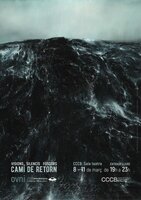
              Path of Return / OVNI 2018

              visions, silence, darkness

              A few years ago – just after OVNI The Border as Centre (and perhaps as a consequence of it) – we entered a period of introspection. And in that inward-looking space, certain images from Bela Tarr’s film The Turin Horse (1) kept returning over and over again. In particular, three sequences:

              In the first, an elderly man struggles to drive his horse and loaded cart through a fog-filled landscape. After a while, we begin to understand the need for so much effort: the driver is one-armed, and a cart intended for two horses is being pulled by just one. Something is missing in this soulless world. A profound lack of balance is causing it to crack and at the same time bringing it to a standstill. The mutilated substance of that which animates it, mutilated itself, is crushed under its own weight and sinks on its blind side. Every gesture, every task, even eating, is arduous.

              In the second scene, a character appears on screen and delivers a wild, lucid monologue about the course the world has taken: “everything has been debased that they’ve acquired (…) whatever they touch – and they touch everything – they’ve debased (…) Acquire debase, debase, acquire. Or I can put it differently if you like: to touch, debase and thereby acquire, or touch, acquire and thereby debase. It’s been going on like this for centuries (….) Because this is not some kind of cataclysm, coming about with so-called innocent human aid. On the contrary, it’s about man’s own judgement.”

              The cart driver’s answer is laconic: “Come off it, that’s rubbish”. (2)

              Then, the wind, the barren plain, the loneliness.

              In the third scene, near the end of the film… as night falls, the two main characters, father and daughter, try to light an oil lamp or at least a candle but they are unable to do so. Light has already left that world.

              Light is leaving the world.

              For months and months, as we were saying, these images played over and over inside us, suggesting a possible path but also imperceptibly plunging us into their dense fog. We tried to navigate inside it but we could barely see our hand stretched out before us. So we walked for a time through that invisible world, and little by little we learnt to trust that fog, that not-knowing, that not-seeing with our eyes, until we came, in a sense, to recognise ourselves in it… Once this state had stabilised we shared it with the rhizome that gives rise to ovni, and this was how a few people came to talk to us about death and deaths (3) … and how the “Path of Return” unexpectedly opened up in the fog, not denying it but rather incorporating it like a veil that protects the mystery that surrounds us and runs through us at every moment.

              And so this OVNI of fog takes us on a journey through the middle world, the experience of physical death and of the deaths of the ego.

              Instead of a regular video programme, it takes the form of a rite of passage in which visions (videos), texts, sounds, rituals, and breaths are interwoven with shared silence and darkness.

              To open up our vision (4), to open up to the awareness of that which we call film, video… those strange projections of light and shadow that portray worlds and lives, landscapes and feelings that arise in the dark cave of the screening room. It is there, in that shared or solitary darkness, that visions of worlds are incubated… before the emergence of boundaries between the real and the unreal, wakefulness and sleep, life and death… Visions on a white screen that will remain white once the visions of the worlds have disappeared. (5)

              Perhaps an old wound in our culture and our lives is thus healed, the hemispheres come together, other eyes open, and the Turin horse is no longer beaten. (6)

              So as not to separate death from life, each day’s journey will begin by passing through the gates of dreams – death’s twin – and trance, exploring the rituals of farewell and dissolution of the body… A contemplation of dissolution that will lead us to the grateful contemplation of life.

              So Path of Return unfolds as a rite of passage, a journey that we recommend making in full each day (*), to aid in a good crossing through intense and sometimes difficult inner landscapes that may perhaps help us to regain the perception of the unlimited, inappropriable, unrepresentable nature of the Real.

              (*) OVNI will take place from 7 to 11pm each day.

              The CCCB Theatre will open at 7pm. Once the programme starts the doors will remain closed, opening at least twice more in the course of each evening. The Lobby of the Theatre will be open from 7 to 11pm, and a room nearby will be fitted out and equipped with audio recordings for those waiting.

              The Turin Horse ( A torinói ió in the Hungarian original) is a 2011 film directed by Béla Tarr and Ágnes Hranitzky.

              Transcription of the monologue from The Turin Horse :

              The people who come to mind are Palmar Álvarez Blanco, Marco Antonio Regueiro, … and also all those who have already left us during this long period of searching

              Abu Ali, Abrir la Visión, 2016

              http://www.al-barzaj.org/2016/10/abrir-la-vision.html

              This image is often used by Ramana Maharashi.

              According to the oft-repeated story, Nietzsche was in Piazza Carlo Alberto when he noticed the driver of a hansom cab flogging his stubborn horse. Nietzsche ran towards them, threw his arms around the horse’s neck to protect him, and then collapsed on ground.

              March 2018, 8th - 11th / 19:00h - 23:00h

              Image de Thierry DE CORDIER, “MER GROSSE”.

              ES ES-OVNI CTX-S020-SS002-0003 · Item · 2012
              Part of Non-Identified Video Observatory (OVNI)

              Video made from a conversation recorded in the 70 in Mumbai (India) .. between a traveler and Nisarghadata Indian philosopher, author of "I am That", one of the most recent and important examples of Advaita Vedanta. Satsanga is a Sanskrit word, which means: (Sat = truth, reality, Sanga = company) describes in Indian philosophy: 1. in the company of truth. 2. company in reality 3. accompanied by an assembly of persons who listen, speak and assimilate reality. This practice also takes the form of hearing or reading scriptures, reflections, discussions and assimilating their meaning, meditating on the source of these words.

              the black anti sun
              ES ES-OVNI EXP-S011 · Series · 2024
              Part of Non-Identified Video Observatory (OVNI)

              A captivating message for dark times

              Music is there to be made 1

              Void and music in the West

              The Black Antisol - //Silence in the awakening of the worlds//

              Invitation to the film-trance: Research project & Live Cinema with Vincent Moon

              To interrupt the noise of the world, to be receptive, to listen, to open to the co-animation of the world.

              An exploration, a week of sound encounters, with a live cinema or film trance session at the CC Convent Agustí.

              Faced with the monotonous and maddening barbarism of the media and the networks that make us see without seeing, that simplify reality by reducing it to spectacular events and violence, Vincent Moon invites us to stop the machines and go out to meet each other.

              To interrupt the noise of the world, not to escape from the horror of the ongoing war or from the clear perception of a civilisation advancing towards the abyss.

              Vincent Moon , independent filmmaker and sound explorer, who has been travelling the world for twenty years, will spend a week travelling with us between Barcelona and the mountains of the Pyrenees, encountering known and unknown music, and an invisible art of living and resisting.

              The way we show the world helps to change the way we see it, changing the way we look helps to change a world flooded with images.

              Vincent Moon says: "I long to rediscover, to rework a link with ancestral tonalities and rhythms, forms of trance...". From the Dhikr (remembrance) of Sufi tariqas in Chechnya, Ethiopia or Turkey; to months in the interior of Brazil or Peru, or incursions in Jakarta, Argentina or Morocco: "A kind of experimental ethnography, trying to hybridise all these genres of trance and music in different parts of the world (...) I think we are recording to gain a certain complexity (...) To reinvent life today we have to elaborate new forms of imagery. And it's very simple. You have to go out into the encounter (...) You break down the barriers to the encounter with the body more than with knowledge. This is what travelling taught me, to trust the memory of the body more than the memory of the brain. Respect is a step forward.

              A poetic approach to the everyday. Exploring rhythm and tonality in the sound and visual resonance between beings and elements and things.

              "Encounter is the fundamental thing. Meeting people, like the Troubadours (...) Film is an excuse to create a very special moment in the present, in the reality of now".

              The Australian Aborigines used to say that "everything slumbers beneath the surface of the earth waiting to be called". - On the acoustic and visionary journey with Vincent Moon we go out to meet voices that continue to sing among the ruins, calling into existence another life, another reality, another truth.

              "When I arrive at a place, I ask myself what is important to film today?" - Vincent Moon's visit is twofold: on the one hand to explore some experiences that are "important to film today"; on the other hand, a moment of encounter and projection in Barcelona, with his Live Cinema or Film-Trance - sound and visual exploration.

              Vincent Moon's work connects with one of the investigations opened at the Unidentified Video Observatory : Silence in the awakening of worlds . At first, this research started from taking the visionary experience seriously and investigating the ways in which it unfolds, through the cracks of this world, from Surrealism to the current decline of naturalist secularism. In a second moment, which we have called first, during the immersion in the materials: The Mirror of the Night ("Mirrors: no one has yet described, knowing it,/ What you are in your being,/ You, like interstices of time,/ Filled only with holes of sieve. / You, still wasters of the empty room,/ At the hour of twilight, vast as forests..."); and now, at the moment of exposure and encounter: The black anti sun , which starts from taking seriously Rilke's intuition in the Sonnets to Orpheus: "Gesang ist Dasein" (To sing is to exist) .   

              «"But the great black anti-sols, wells of truth in the essential weft, in the grey veil of the curved sky, come and go and suck each other in, and people call them ABSENCES" (René Daumal).  These splendours, the aim of the human being is to collect them (...). And it is precisely by fighting against the inertia of the body and the sleep of the soul, by practising techniques of awakening - physical awakening, spiritual awakening - a kind of "long, immense and thoughtful alteration of all the senses", that allows us to overcome the material and spiritual order of this world, in short, by leading a counter-life» (Jacques Lacarrière, Les gnostiques ).