
The street scape of Broken Hill, "the accessible outback" country town of Australia, is seen from the viewing platform of a Lebanese reality. Houses, neat, some pretty, some with children playing in front collide with sounds remembered from so long ago, maybe from one of Beirut's many wars, maybe even from future wars. There, exponential repetition sets apathy on a collision course with fear where mangled silences interrupt - but only to disrupt the remnants of safe living and to send eidetic shock waves through rose-colored lenses. The question of responsibility then emerges to demand, if not an answer, then a pause for grief, for consideration due to the boundaries of the senses and the centrality of the body's - any-body's - pain and sorrow.
Lebanon
42 Archival description results for Lebanon
42 results directly related
Exclude narrower terms
ES ES-OVNI RSC-3573
·
Item
·
2006
Part of Non-Identified Video Observatory (OVNI)
ES OVNI RSC-1500
·
Item
·
2005
Part of Non-Identified Video Observatory (OVNI)
ES ES-OVNI CTX-S014-SS001-0119
·
Item
·
2004
Part of Non-Identified Video Observatory (OVNI)
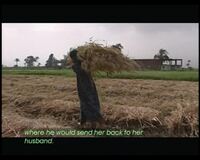
Janata Bennuna is from Morocco; Hanan Al Shaykh is from Lebanon; and Nawal Al Saadawi is from Egypt. All three are authors of the Arab word, committed intellectuals who shed light on the complex social reality of the Arab world through their books. In their hands, literature becomes a weapon through which to draw attention to and denounce situations that they oppose. The three women, from a generation heavily influenced by Pan-Arabism, initially studied against the wishes of their families, but ended up gaining their support. In A Woman's Word, these three very different writers who nonetheless share a common ground talk about their lives and their work. By learning about them, we also gain an insight into the Arab world, which is much more complex than the Manichean and mostly malicious information on the subject that predominates in our own society today. They too are Arabs, women, who refuse the victim mentality, and demand their rights through their work and their commitment.
Untitled
ES ES-OVNI CTX-S013-SS007-0095
·
Item
·
2008
Part of Non-Identified Video Observatory (OVNI)
About Home shows what happen when people live more than 60 years in a refugee camp. The film goes inside the intimate life of a Palestinan familiy to show their thoughts, desires and contradictions after more than half a century living in Lebanon as a refugees. About Home explores the meaning of living in stand-by in an atmosphere of hate, violence and arms. Small clockwork bombs inhabiting a compulsive country.
ES ES-OVNI RSC-3235
·
Item
·
2009
Part of Non-Identified Video Observatory (OVNI)
In the summer of 2006, during the continuous attacks over Lebanon, a young Lebanese artist receives a phone call that makes her want to protect her own space and personal project from outside threats.

ES ES-OVNI CTX-S006-SS002-0002
·
Item
·
1997
Part of Non-Identified Video Observatory (OVNI)
The testimonies of Arab infiltrators in Israel.
Untitled
ES ES-OVNI CTX-S010-SS007-0048
·
Item
·
2002
Part of Non-Identified Video Observatory (OVNI)
Al-Husayn, the grandson of the prophet Muhammad and the son of the first Shiite imam, Alî, was slaughtered alongside many members of his family in the desert in 680. This memory is torture to me. But, basically, one can say this memory is torture to me of every memory, since each reminiscence envelops at some level the memory of the origin of memory, the torture that had to be inflicted on humans in order to make them remember (Nietzsche). The memory that the yearly commemoration of "Âshûrâ" is trying to maintain is not only or mainly that of the past, but the memory of the future, namely the promise of the Parousia of the twelfth imam, the long-awaited Mahdî not with standing the passage of a millennium since his occultation as well as the corresponding promise of Duodeciman Shiites to wait for him. "Âshûrâ": a condition of possibility of an unconditional promise.
ES ES-OVNI CTX-S012-SS007-0008
·
Item
·
2006
Part of Non-Identified Video Observatory (OVNI)
It's a hot summer in Lebanon, as Beirut-born filmmaker Katia Saleh documents how last summer's war affected her and the people around her. The film tells the intimate stories of those we never hear from or see during TV war coverage. While some were unable to leave their homes, others were forced to seek refuge in overcrowded schools and hospitals. For Katia's own mother, the decision whether to leave a home behind and do whatever it takes to get a precious foreign visa for her daughter fuels emotional conversations caught on camera.
ES ES-OVNI CTX-S012-SS006-0007
·
Item
·
2005
Part of Non-Identified Video Observatory (OVNI)
A military helicopter circles in the sky like an evil wasp. Chaos on the ground after the attack. A fast-paced sequence - bleeding people, burning cars and confused soldiers. Subheading: From Beirut - with Love. A cinematic postcard-greeting, so bitter and cynical, it can only come from a city at war with itself. The only dialogue in the film reveals a surprising connotation: Beirut is Paris, or Madrid, or any other metropolis. The scene is set: youth without a future, bomb attacks, drugs, arms, soldiers. The postcard has arrived.
Untitled
ES ES-OVNI CTX-S010-SS007-0008
·
Item
·
1990
Part of Non-Identified Video Observatory (OVNI)
Many people first became aware of the Shatila refugee camp in Lebanon after the shocking and horrific Sabra-Shatila massacre that took place there in 1982. Located in Beirut's "belt of misery," the camp is home to 15,000 Palestinians and Lebanese who share a common experience of displacement, unemployment and poverty. Fifty years after the exile of their grandparents from Palestine, the children of Shatila attempt to come to terms with the reality of being refugees in a camp that has survived massacre, siege and starvation.
Untitled