La frontera como centro

Elements area

Taxonomy

Code

Scope note(s)

    Source note(s)

      Display note(s)

        Hierarchical terms

        La frontera como centro

          Equivalent terms

          La frontera como centro

            Associated terms

            La frontera como centro

              3 Archival description results for La frontera como centro

              3 results directly related Exclude narrower terms
              Borders
              ES ES-OVNI DIF-S010-SS001 · Subseries
              Part of Non-Identified Video Observatory (OVNI)

              The exchange of knowledge and experiences, which contemplates transformation, is increasingly more necessary and urgent. In order to deeply transform the notions that have shaped the globalized world; making a radical revision of the notions of time, work, culture, and the persistence of a single model with its totalitarian drift.

              Mar. 4, 2016
              ES ES-OVNI CTX-S018-SS003 · Subseries · 2016
              Part of Non-Identified Video Observatory (OVNI)

              An informal, small-scale gathering to pick up the previous day's discussion, continue to explore some aspects and introduce new ones.

              ES ES-OVNI CTX-S018 · Series · 2016
              Part of Non-Identified Video Observatory (OVNI)

              [ migra and coloniality ] / OVNI 2016

              The Center as the Border. Zones of Being and not Being

              / CONTEXT 1994 - 2020

              [ migra and coloniality ] / OVNI 2016

              PROGRAMA CASTELLANO PDF

              Videos Talks Debates.

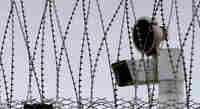
              The border has a tendency to spread: it explodes into outsourcing to third countries, and implodes as domestic borders, control devices, detentions and disappearances...; in other words, it tends to occupy the entire system, becoming centre. In the shadows of the border-as-system, where control is out of control, the prototype of a totalitarian society is assembled.

              Around the subject of migration there are a series of crucial lapses or ‘forgettings’, which not only hinder in-depth reflection but also fuel exclusionary visions There first of these is the colonial lapse – we have forgotten the close ties between migration and coloniality, and its global mutation. The second lapse springs from limiting our reflections on migration to the spheres of politics, policing, economics, demographics and humanitarian action... but rarely considering it in terms of knowledge and wisdom, of which we are truly in need. A third lapse consists of labelling people “immigrants”, creating the corresponding imaginary and confining them within it... failing to remember that all of us in fact migrate between different territories, spaces, times, and forms of knowledge.

              Centre de Cultura Contemporània de Barcelona

              Montalegre 5. 08001 Barcelona