

A powerful, first-hand testament to the reality of the military experience told entirely in the words of American veterans who have been to war and are now opposing it. We hear how they came to join the military, about their experiences in training and in war, and what led to the turning point when they decided they could no longer, in good conscience, participate in the war or keep silent. This documentary serves as a counter-recruitment and organizing tool for activists, schools and organizations. It provides a sober view of the occupation in Iraq and an important counterpoint to the “stay-the-course” rhetoric of the Bush administration.
UntitledThis documentary invites viewers to reflect on the needs that are generated in the West through the lives of four sisters aged three to nine who live in Isla del Sol, a place with no police force, no churches, no motors and no petrol... What is it like to live without these powers that be? The father of the four girls talks about his life in an unedited 40 minute interview accompanied by images of his daughters.
UntitledIn October 1962, an American U-2 spy plane secretly photographed nuclear missile sites being built by the Soviet Union on the island of Cuba. President Kennedy did not want the Soviet Union and Cuba to know that he had discovered the missiles. He met in secret with his advisors for several days to discuss the problem. After many long and difficult meetings, Kennedy decided to place a naval blockade, or a ring of ships, around Cuba. The aim of this "quarantine," as he called it, was to prevent the Soviets from bringing in more military supplies. He demanded the removal of the missiles already there and the destruction of the sites. On October 22, President Kennedy spoke to the nation about the crisis in a televised address.
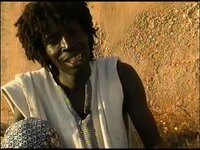
UntitledUnder the guise of a traditional African oral tale, a storyteller from Senegal tells us a story that is not a legend or traditional fairy tale, but his own life.
Untitled...To co-exist with nature is an art; an art of living that the tutu naku communities of the Northern Highlands of Puebla practiced conscientiously for centuries and when they discovered how to conjoin their ingenious agricultural practices with the benevolence of the ecosystems, a mythical dialogue blossomed with Mother Earth, that continues to nourish their spirituality. But, nowadays, the tutu naku women –the weavers of the traditional “fajas” that symbolically protect their reproductive powers- have yet another concern. Cultural erosion and the use of agro chemicals threaten many species and in particular, the traditional corn field. During a process of reflection and consciousness raising about their sacred food, the women weavers decided to dedicate a healing to the endangered corn. The concept of sustainability is, in fact, an integral part of the daily customs that the tutu naku people have practiced for thousands of years and continue practicing in the present day. The world's most advanced scientific research centers now acknowledge indigenous people as the inventors of concrete science and recognize the need for a dialogue, a sharing of knowledge, between scientists and the indigenous peoples to fight against environmental destruction.
"Cossos a la carta III" perteneix a una serie de vídeos sobre programes de televisió on els convidats es sotmetien a operacions estètiques amb l´objectiu de superar els seus complexos i elevar l´autoestima. Les repeticions dels moviments dels protagonistes i els seus gestos congelats reflexen l´artifici d´aquest tipus de programes, el qual s´emetia en obert i en prime time (horari de màxima audiència).
Videos based on two programs of TV, in which the guests were subject under aesthetic operations with the purpose of overcome their complexes and to raise their self-esteem.
UntitledThe first film Peter Watkins made for the BBC was a historical reenactment of the last battle fought on British ground, and the ensuing destruction of the Scottish Highlands Clans following the 1745 Jacobite uprising. Critically acclaimed for its graphic realism and cinema-verité style, the US Army even used the film in its courses on military history.
Untitled