
Young man lives every day as the same. one day he finds a Red Button inside his kitchen wall and around hims say's Do Not Press. No he needs to take the decision of what to do.
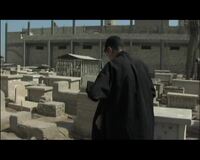
A story of the war in Iraq from a perspective rarely seen. The primary point of view is Iraqi - a family grieving the tragic death of its eldest son. After years of hard work, Ra'ad, an Iraqi portrait photographer, has saved enough money to open his own shop. On the night of the opening, while volunteering to guard the ancient mosque in Kadhimiya, Ra'ad is shot and killed by an American patrol.
Untitled
Street version of a Beatles hit.
A captivating message for dark times
Music is there to be made 1
Void and music in the West
The Black Antisol - //Silence in the awakening of the worlds//
Invitation to the film-trance: Research project & Live Cinema with Vincent Moon
To interrupt the noise of the world, to be receptive, to listen, to open to the co-animation of the world.
An exploration, a week of sound encounters, with a live cinema or film trance session at the CC Convent Agustí.
Faced with the monotonous and maddening barbarism of the media and the networks that make us see without seeing, that simplify reality by reducing it to spectacular events and violence, Vincent Moon invites us to stop the machines and go out to meet each other.
To interrupt the noise of the world, not to escape from the horror of the ongoing war or from the clear perception of a civilisation advancing towards the abyss.
Vincent Moon , independent filmmaker and sound explorer, who has been travelling the world for twenty years, will spend a week travelling with us between Barcelona and the mountains of the Pyrenees, encountering known and unknown music, and an invisible art of living and resisting.
The way we show the world helps to change the way we see it, changing the way we look helps to change a world flooded with images.
Vincent Moon says: "I long to rediscover, to rework a link with ancestral tonalities and rhythms, forms of trance...". From the Dhikr (remembrance) of Sufi tariqas in Chechnya, Ethiopia or Turkey; to months in the interior of Brazil or Peru, or incursions in Jakarta, Argentina or Morocco: "A kind of experimental ethnography, trying to hybridise all these genres of trance and music in different parts of the world (...) I think we are recording to gain a certain complexity (...) To reinvent life today we have to elaborate new forms of imagery. And it's very simple. You have to go out into the encounter (...) You break down the barriers to the encounter with the body more than with knowledge. This is what travelling taught me, to trust the memory of the body more than the memory of the brain. Respect is a step forward.
A poetic approach to the everyday. Exploring rhythm and tonality in the sound and visual resonance between beings and elements and things.
"Encounter is the fundamental thing. Meeting people, like the Troubadours (...) Film is an excuse to create a very special moment in the present, in the reality of now".
The Australian Aborigines used to say that "everything slumbers beneath the surface of the earth waiting to be called". - On the acoustic and visionary journey with Vincent Moon we go out to meet voices that continue to sing among the ruins, calling into existence another life, another reality, another truth.
"When I arrive at a place, I ask myself what is important to film today?" - Vincent Moon's visit is twofold: on the one hand to explore some experiences that are "important to film today"; on the other hand, a moment of encounter and projection in Barcelona, with his Live Cinema or Film-Trance - sound and visual exploration.
Vincent Moon's work connects with one of the investigations opened at the Unidentified Video Observatory : Silence in the awakening of worlds . At first, this research started from taking the visionary experience seriously and investigating the ways in which it unfolds, through the cracks of this world, from Surrealism to the current decline of naturalist secularism. In a second moment, which we have called first, during the immersion in the materials: The Mirror of the Night ("Mirrors: no one has yet described, knowing it,/ What you are in your being,/ You, like interstices of time,/ Filled only with holes of sieve. / You, still wasters of the empty room,/ At the hour of twilight, vast as forests..."); and now, at the moment of exposure and encounter: The black anti sun , which starts from taking seriously Rilke's intuition in the Sonnets to Orpheus: "Gesang ist Dasein" (To sing is to exist) .
«"But the great black anti-sols, wells of truth in the essential weft, in the grey veil of the curved sky, come and go and suck each other in, and people call them ABSENCES" (René Daumal). These splendours, the aim of the human being is to collect them (...). And it is precisely by fighting against the inertia of the body and the sleep of the soul, by practising techniques of awakening - physical awakening, spiritual awakening - a kind of "long, immense and thoughtful alteration of all the senses", that allows us to overcome the material and spiritual order of this world, in short, by leading a counter-life» (Jacques Lacarrière, Les gnostiques ).
The “Bittner Case” made headlines across Germany: In June 2004, police officers in the East German city of Cottbus found the decomposed body of six-year old Dennis in the deep freeze in his parents' apartment. Angelika and Falk Bittner, the parents, were arrested and charged with the murder of their son, one of ten children. Film maker Caterina Woj explores the short and painful life of little Dennis, examining an unfolding tragedy long in the making. A tragedy which should have been plain for all to see. For the family's friends, for the neighbours, and for the staff of the child welfare department, responsible for supporting a family unable to cope on its own. Yet Dennis died without anyone noticing. And his death remained unnoticed – for two whole years. For the first time in this film, the Bittners talk in detail about themselves, about Dennis, and about the events which led to his death by starvation. The film revolves around a series of interviews with the parents. Filmed largely in the period during which they were awaiting trial on murder charges, it extensively uses their own statements and responses to questions to explore their backgrounds, personalities, experiences, and attitudes to life, family, and love. It is at once an intense and thoughtful document of human failing and a powerful portrait of contemporary German society.