
Showing 3971 results

Archival description
1326 results with digital objects Show results with digital objects
ES ES-OVNI CTX-S015-SS007-0006 · Item · 1965
Part of Non-Identified Video Observatory (OVNI)

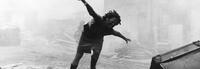
“By late 1964 Harold Wilson’s newly elected Labour Government had already broken its election manifesto to unilaterally disarm Britain, and was in fact developing a full-scale nuclear weapons programme, in spite of wide-spread public protest. There was a marked reluctance by British TV at the time to discuss the arms race, and there was especially silence on the effects of nuclear weapons - about which the large majority of the public had absolutely no information. I therefore proposed to the BBC that - using one small corner of Kent in southeastern England to represent a microcosm - I make a film showing the possible effects, during an outbreak of war between NATO and the USSR, of a nuclear strike on Britain.” The BBC panicked when they first saw the film, and sought government consultation re showing it. They subsequently denied this, but the sad fact remains that the BBC violated their own Charter of Independence, and on September 24, 1965, secretly showed The War Game to senior members of the Home Office, the Ministry of Defence, the Post Office (in charge of telecommunications), a representative of the Military Chiefs of Staff, and Sir Burke Trend, Secretary to Harold Wilson’s Cabinet. Approximately six weeks later, the BBC announced that they were not going to broadcast the film on TV - and denied that their decision had anything to do with the secret screening to the government". Peter Watkins

Untitled
The Wall
ES ES-OVNI RSC-4317 · Item · 2016
Part of Non-Identified Video Observatory (OVNI)

The film tells of the lives of four young men in a refugee camp who dream of inviting Rogers Waters (Pink Floyd) to give a concert in their camp, thus giving us an insight into the lives of these young men, their struggles and the daily hardships they face in order to survive.

Untitled
The Voice
ES ES-OVNI CTX-S012-SS007-0109 · Item · 2005
Part of Non-Identified Video Observatory (OVNI)

“The Voice” shows a world where fundamental Christians and Muslims have finally found out that their basic values are pretty much the same. They join forces and take command of the prosperous northern hemisphere. The rest of the planet is about to be sealed off by a giant world wide wall. Villains, heathens and other evil people stay on that other side of the wall. Long live the Great Northern Union!!! But nobody is safe, the threat looms. Is the enemy among us? Where is the solution to the problem? The Voice Television Network gives us an answer.

Untitled
the voice
ES ES-OVNI CTX-S012-SS007-0002 · Item · 2009
Part of Non-Identified Video Observatory (OVNI)

‘The Voices' tells the story of three lonely persons, each living on a different floor of an apartment. The first floor houses a sound engineer who is just abandoned by his wifeand tries to win her back by establishing his own home studio. There is a girl on the third floor who lives alone and is waiting to emigrate to the US. Between those two floorslives a man who seems to be a criminal. When he murders another man, the lives of the three people suddenly become interrelated. However, they only communicate through voices.

The Visitor
ES ES-OVNI CTX-S013-SS007-0070 · Item · 2007
Part of Non-Identified Video Observatory (OVNI)

The Visitor is an almost mythical account of the artist's audience with Oba Erediauwa, the current king of Benin (in southern Nigeria) and takes the form of a photo-essay. A local narrator follows the artist into the Oba's palace and recounts the conversation between the European visitor and the royal host and his court of chiefs. The exchange centers on the Benin Bronzes (which were famously looted by the British in 1897 and are now in over 500 museums and collections mainly in the West), on collective memory and the demand for restitution.

Untitled
The Very Eye of Night
ES ES-OVNI RSC-2609 · Item · 1958
Part of Non-Identified Video Observatory (OVNI)

The Very Eye of Night (1958) was a collaboration with the Metropolitan Opera Ballet School. The film was beset by problems in its production and carried with it a heavy weight of expectation. A shimmering constellation of stars established the background for negative images of figures resembling Greek Gods superimposed on and magically transported along the milky way. Deren called it her ‘ballet of night’, an ethereal dance within a nocturnal space that focused on the spectacle rather than the narrative. Ito collaborated on the soundtrack using tone blocks and bells, recalling the trance rhythm of Meshes of the Afternoon. Prioritizing enchantment over interpretation, The Very Eye of Night proved to be Deren’s most controversial and misunderstood film.