When a staged revolution is part of the historical reality of a country, the representation becomes the moulding of the every day life. Revolution after Revolution is a poetical outline of a contemporary and multiethnical Romania, wich is drawing in itself on the empty whiteboards of a preconceived imaginary. The video show empty adverticement boards on the streets of three diferents citys of Romania (Sibiu, Pitesti and Bucarest).The sequencies are follow from story fragments and situations in the public space.
UntitledPractical information
A presentation of Kurdish films by the Rojava Kurdistan Film Commune (Northern Syria)
OVNI has collaborated with the Rojava Film Commune in a project aimed at researching, screening, and promoting their work in Spain, Italy, and France. A process of investigation through videos, texts, and meetings, in order to listen to their voices and understand their struggle together. We have created a website that you can visit link.
Komîna fîlm a Rojava (Rojava Film Commune) is a collective of filmmakers founded in 2015, based in the autonomous Rojava region in the Federation of Northern and Eastern Syria. The Commune is actively working in the region to rebuild and reorganise filmmaking and film education infrastructures.
The Rojava Film Commune was established to promote local film culture by organising film screenings, facilitating discussions on the role of film within society, producing new films, and setting up a Film Academy. Following the 1960 fire in Rojava’s only cinema in the city of Amude—which saw the death of 298 children trapped inside—the Commune aims to reclaim film as a central space for reimagining society, by democratising and revolutionising the imagination itself.
The Commune has educated a new generation of Rojava filmmakers, organized screenings in cities and villages, and produced new films. It seeks to represent the values and ideals of the Rojava Revolution, but also to mediate and depict the daily struggles in the Syrian civil war and Rojava’s collective attempt to build a new society.
The Rojava Film Academy provides education for aspiring filmmakers in Northern Syria. Founded in 2015, it offers one-year programmes, with courses on international film history, Kurdish film history, film theory, photography, cinematography, script writing, editing, and sound design, taught by local and international film professionals.
The Academy is self-organized and non-hierarchical, encouraging students to participate in every aspect of its organization. Exchange networks have also been set up with other academic, media, and news platforms, and with civil society organizations, in order to engage in broad discussions and create screening possibilities. Considering the influx of foreign filmmakers and journalists to Rojava, it is important for the Commune to reclaim the representation and imagination of the revolution.
After decades of oppression of Kurdish language and culture, the Rojava Film Academy aims to revitalize local film culture, reclaiming the power to narrate and imagine one’s dreams and realities. After the Syrian Civil War started, the predominantly Kurdish northern region declared the Autonomy Administration, creating structures based on grassroots democracy, women’s liberation, and cultural diversity.
The Academy bases its methodology on ‘revolutionary realism’, i.e. a realism that does not merely reveal the current reality in a new way, but also restructures the reality of the possible . As well as finding forms to express things as-they-are, it creates the opportunity to imagine the not-yet-present, the ‘eternal becoming’ that is the revolution itself.
A documentary on the eclectic and inventive survival strategies of residents of one of the most impoverished and marginalized areas of the United States, the Pine Ridge Indian Reservation.
1 Mostra de Vídeo Independent de Barcelona 1993.
Liberated spaces / OVNI 2009
/ CONTEXT 1994 - 2020
Liberated spaces / OVNI 2009
OVNI Rhizomes lays bare the subterranean, rhizomatic points of contact between worlds and experiences that seem very different from each other. The remembered image is that of a rhizome (1), or rhizomes, it doesn't matter which because it is both at once, the singular and plural do not affect it.
“Advice, slogans: follow the plants” (2). In a world of concrete and asphalt we see different plant species living in cracks in the most unlikely places, gathering rain and seeking out soil that has been banished. At other times, these same plants, or the roots of trees, create the cracks and buckle the asphalt. We have also seen plants cover entire buildings, opening walls and destroying them; but so have we seen them holding together the ruins of immemorial knowledge, ancient temples in the jungle, in a strange union that seems to complete them. Like the cobra that saw Buddha meditating and instead of biting him, decided to cover him and shelter him from the rain. An image that perhaps renews a forgotten pact: to awaken to the smooth continuity between nature and human, between nature and knowledge, a continuum that hovers over words to remind us of the essential unity and manifest multiplicity of all things.
Plants also show us diverse systems. Along with the centralised and hierarchical organisation of the roots of trees, there are the spidery roots of shrubs and bushes, the rhizome of certain species (grass, reeds, ginger, mangroves...) creates "an acentred, nonhierarchical and nonsignifying system without a General and without an organizing memory or central automation, defined solely by a circulation of states" (3).
We screen videos like visions that connect and interrelate these states and realities, producing rhizome in space, but also in time, given that the first two principles of the rhizome are connection and heterogeneity: any of its points can and must be connected to anything else. This is not the case with trees and roots, which always fix a point, a particular order. Thus, like a violently smothered echo, the Black Panthers’ "all power to the people” resonates in the possibility of immigrant communities, in the “banlieues" of the world. The anti-Vietnam war protests and the underground that derived from them emit lines that break the sad, or even complicit, silence around the occupation of Palestine, Iraq, Afghanistan... or around the wars "subcontracted" by big corporations in Africa. (4)
Indigenous peoples are part of a rhizome that includes the earth, plants and animals, forms of knowledge that derive from their forms of survival and celebration, and wakefulness and dreams. They see this multiplicity as a substantive, not an accumulation: another of the principles of rhizomes. They know that an attack against any one of their realities is unavoidably a prelude to other acts of violence. This is why a Yaqui Indian explains that those responsible for the genocide against his people also exterminated wild animals, domesticated others, imprisoned the survivors of his people in reserves. It is also like the indigenous community in Peru that dreams up a different kind of schools, and creates them with urgency on awakening; because they seen how the official educational system teaches their children to be enemies of their own traditions, of their own environment. They warn us, they are not isolated points on the outside of the “other”, they are lines of alert, for ourselves (5).
In Europe, the warning came from Exarchia, a neighbourhood in Athens. The death of 15 year old Alexis, shot by a policeman, triggered a new awareness, the occupying of spaces, the issuing of communiqués in which teenagers sorrowfully condemned the submissiveness of many of their parents, the conformism instilled by the schools of consumption and production;... the impossibility of imagining, together, another form of existence:
“We want a better world. Help us. We are not “terrorists”, nor “hooded ones", nor the "known-unknowns". We are your children, they are the known-unknowns... We have dreams, don’t destroy them We are alive, don’t stop us Remember, you were also young once Today you run after money, you only worry about “appearances” You’ve grown fat, you’re bald You’ve forgotten We hoped for your support We hoped for your concern We wanted you to make us proud for once. But it was in vain. You lives are nothing but lies, you have bowed down You’ve dropped your pants and you are waiting to die You don’t imagine, You don’t fall in love You don’t create You only buy and sell Materialism everywhere, Love nowhere, Truth nowhere (6).
Dark roots, prisons opposite factories, maps and imaginaries that don't include us as life, neighbourhoods in ruins, third-generation migrants – forever migrants? - bombed hospitals, hundreds of dead birds by a lake, torn rhizomes.
But unlike the cuts that isolate other kinds of structures, a rhizome can be torn and cut off at any part. Rhizomes can be broken or cut without causing any harm (7), because rhizomes are made up of ruptures, they can keep functioning and even thrive in spite of these “ruptures”. This is how other nomadic maps begin, inspired by roaming cats, in the non-useful areas of cities: where abandoned sites create space for communities of cats and, and room for the dreams of the people who feed them, humans adopted by feline tribes; in urban micro deserts, jungles and ruins. Where squatted abandoned buildings become hybrid, mingling with other distant memories, scorned by speculation. Liberated spaces that come back to life, that break the Totality (8).
“What is the Totality? It is the high residue of hazardous and potentially lethal chemicals inside your fat cells. It is you shopping when you are depressed. It is you sitting inside and turning on the television or computer on a beautiful day. It is feeling you get that something is missing. It is the headache that won't go away. It is the bleeding in your intestines from years of pain alleviating drug use. It is the drugs you have take when you need an escape. The bulldozer that destroyed the woods you might have known so well. It is the towering skyscraper that makes you feel forever tiny and powerless. It is your prison, sometimes with bars, sometimes without. It is all your fears. It is the thing that has categorised you. It is the ache in your back. It is your adrenaline. The tears that pour down your face after a sad movie. It is your longing for a dramatic romance with a happy ending. It is the extinct species. It is the dying world. It is polluted air. It is the farmer killing her/himself with the pesticides that were going to make life better. It is the feeling of superiority, which supplies the reason to destroy all else.” (9)
A Totality that is always aimed at the conquest of the other. And the result is a society based on competition, on commodification and global expansion. A society that doesn’t contemplate any logic other than growth (10). A society made up of masses of solitary individuals.
Dominant thought can be recognised in power that is directed outwards. But this outward-focus does not mean that this form of power is only exercised on material forms and surfaces. Rather, it causes and forces everything that is inwardly focused – anonymous, hidden, insignificant – to flow towards the surface, be reduced to the external, reveal itself, publicise itself, to end up becoming nothing more than the outside. This is the only way that it can impose its full cartography, group and produce its identities... so that it can allocate its experts and target its goods. This outwardly-directed power necessarily dominates and subjugates the other – whether beings, territories or forms of knowledge – but also to constantly produces it, through the exhibition of images and attitudes, the unceasing creation of politica
Ben, a young Cameroonian, is sent to Germany by his family to bring back money and wealth to his home village. Torn between his wish to rise up to his family's expectations and the few opportunities he has, he cleaves through Berlin's shady boxing business, dreaming of rejoining his family as a world champion one day. He relentlessly tries neither to lose his family's respect nor his own dignity, while being spurned in the real and dirty world of boxing. The pressure is high on him when after years he returns for a visit to his family. Eventually, the big showdown is not the world championship fight but the family tribunal in Cameroon. A film that shows a migrant not as a victim of political circumstances but as an individual with his own story, challenging deep-seated prejudices about foreigners on both sides.
It's been said that all things seen and heard have already been recorded by man. The magic in creating fresh new work is in finding a different way of assembling the treasures you have collected. In RANT & RAVE and the soon to be released RIFF, we have reached back in time and gathered wisdom sayings from great poets and film from great cinematographers and created a complexbrew that nourishes the soul as it stimulates the mind. Designed to challenge, provoke and inspire, these films hit on a broad spectrum of social, political and spiritual issues while effortlessly cutting across traditional lines of gender, race, religion and ethnicity. Great poetry is naturally rhythmic and infused with image and symbol – qualities that enable them, like great religious texts, to trigger a deep emotional and spiritual response. In these powerful films, we endeavored to create an audio/visual balance that allows the spirit of each poem to shine through the screen while providing the viewer space to experience each poem as it speaks to him or her. Each of our 15 poems has been crafted into a short film with its own unique image set and soundtrack. The short films have then been carefully sequenced to hold the viewers full attention while always trying to keep him slightly off balance – a place where possibilities arise. Mixing original footage with obscure gems from far and wide, you will find yourself on the front seat of the Cyclone in 1940's Coney Island, scrambling for cover in present day Iraq or on the Space Shuttle looking back at earth. Maybe you'd prefer hanging out in a smoky Tango bar in 1922 Argentina, participating in a Union strike during the Great Depression, wandering the desert in Israel looking for meaning or dancing with a tribe of American Indians in 1895. Have we created some magic? Cover your ears and let the beautiful streaming imagery take you on a journey not bound by words or rhythm. Close your eyes and let the poetry and music pull images out of your own imagination. Sit back and fully experience some of the distilled wisdom of the human race
De fronteres internes i externes a col·laboracions, línies de fuga i perspectives
Programa de vídeo d 'OVNI - Observatori de Vídeo No Identificat
La Frontera en la seva asimetria esdevé línia abismal, línia de tall entre les zones del ser i del no ser. Segons de quin costat i segons amb quins documents ens apropem a ella, serem desplaçats a una zona o a una altra i rebrem el reconeixement del nostre ésser o la seva completa absència.
El programa que aquí es proposa a manera de viatge, comença per recordar un primer i decisiu oblit: l'oblit colonial. La pràctica totalitat del discurs mediàtic i institucional obvia el passat colonial d'aquells que van establir les fronteres i que ara marquen les condicions per creuar-les. I imposa l'oblit de l'ocupació de territoris, l'explotació de recursos naturals i humans i els seus corresponents genocidis i epistemicidis. Els antics colons mai van ser migrants i solament van trobar aborígens i indígenes a les terres que “descobrien” per als seus interessos. Anys després les persones que ara arriben d'aquestes antigues colònies no troben aborígens europeus, sinó que són ells els migrants. Sempre etiquetes adhesives que bàsicament apunten a ocultar i reduir la seva humanitat per desplaçar-los així a la zona del no ser. Concerning Violence està recorregut per aquest espectre colonial, els textos de Frantz Fanon reflexionen sobre el seu nucli violent, creuen aquesta desolació i tenen encara la força de proposar-nos una possibilitat de vida.
Cap a la frontera, a les profunditats del desert del Sahel es tanquen micro-acords, es defineixen línies de fuga, es tracen zones, es creuen els primers límits. Sahara Chronicles ens mostra aquest inici de viatge per a uns, caravanserrall per altres. Travessar el no-res sota el control dels drons, vivint la progressiva densitat d'una frontera després d'una altra, cada vegada més espessa, més agressiva i excloent.
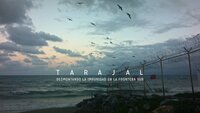
Aquesta gradació de les fronteres, des de les més llunyanes i permeables fins a les que ara actuen com subcontracta violenta de la frontera principal, desemboca abruptament en la línia abismal, la línia de tall entre les zones del ser i del no ser. Allí les persones deixen de ser, les històries i els recorreguts perden tot sentit. Una vida no és una vida. Tarajal: Desmuntant la impunitat a la frontera sud , mostra aquesta brutalitat de la frontera i deconstrueix els dispositius i relats institucionals que pugnen per donar-li cobertura funcional i finalment legal.
Però com recentment ens recordava Boaventura de Sousa, la línia del ser i del no ser ja no és fixa, sinó plenament mòbil, cada vegada s'apropa més al centre i ha acabat per cridar a les nostres portes. La frontera ha fet implosió i tendeix a ocupar la totalitat del territori i definir el sistema que l'administra. En Forst , un grup de refugiats a un bosc, ja no a la perifèria del sistema, sinó al centre d'Europa, relaten el seu procés de desaparició en la línia del no ser: “Quan vaig arribar, els de seguretat estaven esperant-me, em van portar dins, van agafar la meva petita borsa, es van posar uns guants de plàstic i van inspeccionar les meves coses, la quantitat de diners que portava, els nombres de la meva agenda, tot. És intimidació, assetjament i maltractament al mateix temps, aquest és l'estil d'aquest sistema. Han passat tres dies i ja no sóc jo (…)”
L'aparent i tranquil·la normalitat de la zona del ser oculta sota una capa de consum turístic el seu origen. Així el port de Barcelona que rep centenars de milers de consumidors arribats en creuers, té unes arrels que no mostra i que Port Trade Portrait ens recorda: el seu passat esclavista, i la seva mutació a l'era global.
Dilluns 23 de maig _ L'Oblit Colonial
Concerning Violence , Göran Hugo Olsson, Suècia, 2014, 85min. V.O.S.E.
Concerning Violence és un documental compost per imatges d'arxiu dels moments més arriscats en la lluita per l'alliberament del Tercer Món i, alhora, una anàlisi dels mecanismes de descolonització a través de fragments de Els condemnats de la terra de Frantz Fanon. L'emblemàtic llibre de Fanon, escrit fa més de 50 anys, és encara un referent per entendre el neocolonialisme existent avui dia, i la violència i les reaccions que suscita.
La frontera com a centre , Toni Serra / Abu Ali
"M'és complicat explicar com és possible que la societat suposadament civilitzada a la qual has fugit per protegir-te sigui tan brutal" (1)
Les fronteres com a nusos i talls del poder, com a llocs d'acumulació repressiva, control i selecció, estan patint una enorme mutació, ja que no només s'estenen i fortifiquen, sinó que també fan implosió en centenars i milers de dispositius interns: CIEs, o Centres d'Internament d'Estrangers, centres de refugiats, oficines i agències de tota mena que ara es reprodueixen i funcionen com a fronteres interiors. Dispositius de control que es desplacen com escàners que escombren l'interior dels territoris i ciutats, contagiant la seva lògica repressiva al conjunt de la societat. Es converteixen així no només en llocs d'internament de migrants, sinó molt fonamentalment en laboratori i punta de llança de nous règims totalitaris.
En aquesta època d'estímul a la màxima mobilitat, els turistes, els homes i dones de negoci poden travessar les fronteres i se senten per això privilegiats, no obstant això han d'afrontar els filtres i rituals de control que les configuren, i en fer-ho validen automàticament aquests dispositius, la seva lògica i el seu exercici. Creuen, és cert, però arriben a alguna part o més aviat desplacen amb ells aquestes fronteres, portant-les fins a l'interior de les societats que visiten?
El tema de la migració es va desvetllant com una de les claus que qüestionen en major profunditat la cultura i la societat contemporànies. Aquest qüestionament es fa a diferents nivells, no només el polític, social i econòmic, sinó també el cultural, simbòlic i imaginari. S'obren així les portes d'una transformació profunda: el que aquesta es doni i la direcció que agafi marcarà la deriva del conjunt de la nostra cultura.
Dimarts 24 de maig_ Cap a la Frontera
Sahara Chronicl e , Ursula Biemann, Suïssa, 2007, 50 min., V.O.S.E.
Una col·lecció de vídeos curts que explora en el post-colonialisme i documenta l'actual èxode subsaharià cap a Europa, on s'analitza la política de mobilitat i contenció que existeix en la geopolítica global actual. S'examinen les modalitats i la logística del sistema de migració al Sahara.
El material d'aquesta obra ha estat recollit durant tres visites sobre el terreny a les portes principals de la xarxa migratòria trans-Sahariana al Marroc, Níger i Mauritània. Sahara Chronicle reflecteix aquesta xarxa migratòria dins de la interconnexió i la geografia àmplia de la zona. Inclou documents sobre Agadez a Níger, capital dels Tuareg i porta de la zona sahariana per a les rutes de migració principals que arriben de l'Àfrica occidental; Nouadhibou, port del nord de Mauritània, des d'on els migrants es van amb vaixell cap a les illes Canàries; Oujda al costat de la frontera algeriana, per on els migrants del desert entren al Marroc; i Laayoune, al Sahara occidental, punt de sortida per als vaixells que van a Espanya.
Sahara Chronicle no intenta construir una narrativa homogènia o contemporània d'un fenomen que té arrels a l'Àfrica colonial, diversa i fràgil en la seva actual organització social i experiència humana. En aquest treball, no es fa servir una veu autoritària o un altre dispositiu narratiu per fer la connexió, més aviat és l'espectador qui produeix el significat, que ha d'extreure dels intersticis entre els vídeos. En dispersar el punt de vista, es reconeix al mateix temps el procés múltiple i cooperatiu del coneixement produït en el camí.
Dimecres 25 de maig_ La Frontera com a Zona de no ser
Tarajal: Desmuntant la impunitat a la frontera sud , Xavier Artigas i Xapo Ortega, Metromuster i Observatori DE

Rigid things can always be moved about is an investigation in three films and many gazes. The films are Notes on an African Orestie by Pasolini, Images of the world and inscription of war by Farocki and Sans Soleil by Chris Marker. The film is based on the idea of an intervention and on the idea of a discussion that comes to terms with the problems of using and misusing archive material. It also tries to transfer an academic context back to the filmic medium. With three different approaches of appropriating these filmic works the film explores the means and concerns of the cinematic image. It is a study of essay film using the means of the essayistic itself.
Virtual camera navigation was used to create narrative inside a computer model of a ghostly interior.