Nino and Dudu are young male prostitutes working in the "electricity garden" in downtown Tel-Aviv. The film follows their lives for a year, revealing the intricacies of their daily lives, the way their reality is transformed and their friendship evolves. Both youths experienced abuse at the hands of family members, both found themselves on the streets, prostituting for a living. Nino and Dudu are both survivors, and their intelligence, wit and a strong will make them the "elite" of the garden's young prostitutes. Nino and Dudu lead the narrative of the film. They met in 2002 in a street fight. The two lead characters share a remarkable story of friendship that exposes not only a harsh reality of teen-aged prostitution but also illuminates the complexity of being a Palestinian, an Arab-Israeli and an immigrant in Israel. They are always on the run...
A web site designed for the American army by Southern California University ICT. Technology and propaganda supported by a combination of corporations, university research departments and the army's futuristic projections (Future Combat Systems). In this section, through the filter of propaganda, we see future recruits and the process of immersion in army culture. A catalogue of psycho-emotional jabs to create the ideal soldier. www.goarmy.com
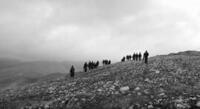
UntitledIn the summer of 1984, mountain climber Reinhold Messner climbed two of the highest peaks in the world back to back. A film about stark and austere inner landscapes, and what compels these climbers.
American documentary filmmaker James Longley travelled to the Gaza Strip in January of 2001, planning to stay for two weeks and collect preliminary material for a film about the Palestinian intifada. He threw away his return ticket and stayed for another 3 months, shooting over 75 hours of material throughout the Gaza Strip. GAZA STRIP follows a range of people and events following the election of Israeli Prime Minister Ariel Sharon, including the first major armed incursion into "Area A" by IDF forces during this intifada. The film is filmed almost entirely in a verite style, presented without narration and with little explanation, focusing on ordinary Palestinians rather than politicians and pundits.
UntitledGaza, War in Media presents a series of interviews that challenge the official Spanish media account of Israel's Operation Cast Lead, in which 1,400 Palestinians died and 5,000 people were wounded, most of them civilians. According to this version, Israel was “defending itself” from the launch of Qassam rockets by Hamas, by massive bombardments to destroy the “infrastructure” of this “terrorist” group. In reality, the bombardments and the ground offensive by the Israeli army targetted the civilian population of the Gaza Strip, as shown by the Goldstone report commissioned by the UN Human Rights Council.
A film that recounts the situation in Gaza in the wake of Operation Cast Lead. As the filmmakers explain, “We came to Gaza the day after the start of the war and discovered the extent of the Gaza-strophy.”
Apartments, castles, artificial islands: on state visit in micro-nations, made out of rebellion or pure amusement, as a serious way of living or just an interim solution. What is this matter called State? Where does it start, where does it end and why do we live in states? Self-made monarchs and presidents give a political report on the daily routine of their living room autonomy. And who knows, utopia may already be right in our middle...
Consideration of how and when girls and boys become true to their own sex (and how little we have progressed from the stiff 50s). "The Home Economics Story" tells us that "making food is almost applied chemistry" and the wife of Mike, who is a photographer, quits her job to solve the little problems that arise in a couple when both parties have a career.
At the beginning of the 70s, Jean Genet is in Tangier, he is in his sixties and he no longer writes. He lives in the El Minza hotel, a palace, where he spends entire days reading, smoking and sleeping (he takes Nembutal, a barbiturate used as a sleeping pill). He only goes out at the beginning of the afternoon to have a coffee with milk in one of the bars of Petit Socco. He sometimes meets the young Moroccan writer Mohamed Choukri there. Their discussion is banal, friendly. Sometimes they talk about literature. Genet no longer writes, but is still inhabited by it.
Untitled