Showing 78 results

Archival description
73 results with digital objects Show results with digital objects
Winter’s End
ES ES-OVNI CTX-S020 · Series · 2020
Part of Non-Identified Video Observatory (OVNI)

Observatory Archives 2020

/ CONTEXT 1994 - 2020

Observatory Archives 2020

Founded in 1994, OVNI (Observatorio de Video No Identificado) is a video-based research project that focuses on the analysis and critique of a significant part of contemporary culture. Created by video makers rather than cultural managers or curators, OVNI has always shunned the stereotype of the competitive festival and new releases. It is a project run by creators about creators who use the medium of independent video, in which creative practice has always been imperative. With the birth of the Observatory Archives in 1999 as one of its milestones, OVNI has witnessed three crucial decades, observing the birth of the internet, the transition from analogue to digital, and the tectonic shifts in the political and spiritual strata of contemporary culture. All of which have been reflected in its archives.

In 2020, OVNI offers a collectively mapped itinerary through this period. Under the title “ WINTER'S END ”, it presents four sessions of video-reverie, in a programme that subtly speaks of being adrift in the present moment and of memory. The title refers to a notion that is evocative, but also, more specifically, given the dates of the sessions, to the last days of winter and the transition to lightness. A concreate reference in overly volatile times, an evocation in times of loss.

Winter's End is held in memory of Toni Serra-Abu Ali, who met with death on 21 November 2019. Co-founder of OVNI and author of an important and extensive video oeuvre, the OVNI 2020 programme is guided by some of his works: each session begins and ends with one of his videos, in line with the thematic thread of each day’s programming. But it also includes many of his lesser-known titles, some made under a pseudonym, others anonymously.

Winter 's End- OVNI 2020, is not a retrospective or a representative survey of the Observatory Archives: that would be entirely impossible given the extent of the collection. However, at a moment in its history very much marked by Toni’s death, twenty-seven years after its foundation the Observatory is taking its extensive collection as a starting point for a particular reading. A look at fundamental questions and fragments, witnesses, and landscapes from these decades, which connect and establish a dialogue with a chaotic present presided by loss.

Without focusing on a clearly defined theme, Winter's End contemplates the drifting of the present in a programme marked by loss, in a space of time of attentive reading and of slowness, based on a desire to recover an intimate relationship with images.

Sensing the Twilight (day 1)

The first session of OVNI 2020 presents video portraits from the 1980s and 1990s, video diaries, people who talk to and with the camera on their own, in the low resolution and slower pace of analogue times. We observe video as it was then, more naïve, and therefore with a greater sense of freedom in relation to the media, through works made in pre-digital times, when the explosive spread of social media was still undreamt of. Pieces like Iñaki Álvarez’s El Dolor (1996), in which a group of people talk about their notion of pain, alone except for the camera; Xavier Hurtado’s Interview Agency (1992), a project in post-Olympic Barcelona that reveals the tension between the interviewer-cameraman and the interviewee, between transparency and manipulation, ideology and neutrality. Works that were particularly significant at the time, also in OVNI programmes in the 1990s, as was Ardele Lister’s Split (1981), in which a teenager talks about running away from home, and It Happens to the Best of Us (1989) in which she looks back on the episode as a young woman eight years later.

Crossing Mirages (day 2)

The second day of OVNI 2020 is a session that moves between loss and oblivion, illusion, and, finally, recognition in the essence. It includes important works like Marcos on Media (1996), which addresses the role of the independent media in the decade of globalisation; Una Cruz en la Selva (2006), a look back at colonised Guinea through historical archival materials, and Now I Become Death (2012), a reconsideration of Openheimer’s words after the first nuclear test, both edited by Toni Serra under a pseudonym. This second session swings between dreamlike moments and more concrete references situated in specific historical and geopolitical realities. But they all lead to the dissolution of materiality in Satsanga, en compañía de la realidad (2012), Toni Serra’s study on the non-dualistic nature of reality based on archival footage of Sri Nisargadatta Maharaj. This fundamental questioning of experience and its origin in unity is one of the core themes of the research at the heart of the Observatory Archives over the years.

Arriving at Memory (day 3)

A third session rounds off the main section of the End of Winter trilogy of programmes: a spectrum ranging from the notion of the personal relationship with the image, the media versus intimacy, and the days of “analogue naivety”, to the period of the consolidation of globalisation and the digital boom, by way of the true nature of reality and the exploration beyond the drifting moment in which we all find ourselves in one way or another, individually or collectively. On this third day, works like Toni Serra’s 7 Contemplaciones (2016), Till Passo’s Mast Qalandar (2005), and Dee Dee Halleck’s Bronx Baptism perhaps share a sense of devotion, community in unity, and contemplation as the path to becoming the other.

There is a fourth programme that we like to call the “Opening” session. Perhaps an opening up to times and spaces that will come in our interaction and continuity with the world. In any case, it is a session dedicated to Toni Serra-Abu Ali, with his works Al Barzaj (2010) and En el Camino de las Abejas (2018), which was his last video, made for the exhibition Beehave at the Fundació Joan Miró, OVNI 2020 Opening also presents two special titles in the archive, Xavier Hurtado’s Pi'txi (Acompañante) (2010) and Keith Sanborn’s For the Birds (2000).

OVNI Archives – Observatorio de Vídeo No Identificado

Rosa Llop, Simona Marchesi, Joan Leandre.

Where is my tribe?
ES ES-OVNI DIF-S005 · Series · 2016
Part of Non-Identified Video Observatory (OVNI)

Theory and practice of care

"Loneliness is on the rise. "Mainstream discourse hides the fact that the ‘normal’ situation of a 40-hour working week, plus daycare, plus grandma for tricky times, does not just leave room for improvement, it is downright unacceptable.”

Carolina del Olmo, where is my tribe?

In Sweden – an extreme case of Western trends within the Protestant tradition –, over 50% of the population live alone. People also die alone, forgotten by everyone, after a lifetime of pursuing the desire for personal independence, adapting to social norms, comforts, and socialisation without physical contact. The dream of an independent life, free from community bonds and patriarchal family ties, has turned out to be a nightmare of loneliness, sadness, and existential emptiness.

We need to overcome the binary oppositions that lead us to choose between two almost equally bad options. We don’t have to go back to the old, strictly patriarchal family, but we shouldn’t have to settle for metropolitan solitude either. The idea is to create and experiment with other ways of living and loving.

"According to anthropologist and primatologist Sarah Blaffer Hrdy, female lab rats locked in cages with only their young for company started to behave in a manner very similar to 1950s American housewives, with their obsessions and their neuroses. But when observed in the wild, mothers and their offspring showed a wide range of different behaviours in all kinds of social contexts."

                                                                                                                                                             Carolina del Olmo, Where is My Tribe ?

In the documentary The Swedish Theory of Love , a Swedish social worker investigating the growing number of people who die abandoned, completely isolated, asks: “What does it matter if I have a million in the bank if I am not happy?” But it’s not just about achieving happiness, it’s about the immense somnambulant sadness washing over a decaying civilization, where life unfolds in the midst of the epiphany of a mountain of waste. “ Did you hear that? It is the sound of your world collapsing ,” say the Zapatistas. Individual independence is the catastrophic ideal of a world that is perfectly organised and efficient but cold as ice.

“ At the end of independence there is no happiness. At the end of independence there is the emptiness of life, the insignificance of life, and utter, unimaginable boredom.”

                                                                                                                       Zygmunt Bauman, interviewed in The Swedish Theory of Love

WAR, INSUBMISSION, ART
ES ES-OVNI EXP-S013 · Series · 2025
Part of Non-Identified Video Observatory (OVNI)

Project in Residency Falconetti Peña

/ Exhibition War, insubmission, art /

/ FILMOTECA DE CATALUNYA /

/ CRIPPLES OF WAR AND NORMALITY /

/ PATRIOTISM AND COLONIZATION /

/ YOU WILL DIE AS HEROES /

/ PAMPHLET AND REVOLUTION /

WAR, INSUBMISSION, ART

Project in Residency Falconetti Peña

In 1924, coinciding with the tenth anniversary of the end of World War I, Otto Dix published his work The War, composed of fifty engravings in which he denounced warmongering with a harshness that had not been seen until then. A century earlier, Goya, a painter who inspired Otto Dix, produced The Disasters of War. And now, one hundred years later, a cruel and senseless war is once again being fought in Europe.

Otto Dix is located between two times, Goya's and ours. The project for this exhibition/intervention is to take his engravings as a starting point for a journey through the art that has rebelled against war slogans.

Goya, Dix, Grosz, Arntz, Watkins and many other artists defied the prevailing aesthetic order by creating works of enormous relevance. To do so, they used modest formats, the engraving, the poster, the mimeographed magazine, the pamphlet, the false documentary, the only ones they could access in times of censorship and blockade. These are works that managed to last against all odds, as there were many who were interested in making them disappear.

Thanks to them, today we can follow the trail of those who in their day disobeyed the patriotic slogans, maintaining the flame of resistance to the war madness.

The project will cover various spaces and historical periods, combining different formats, pictorial, graphic and audiovisual.

The idea is to contrast them, face to face, with the messages of those who at the time bet on galvanizing the warrior ardor of the masses.

VISIONS OF AN EXPANDED TIME
ES ES-OVNI DIF-S021 · Series · 2024
Part of Non-Identified Video Observatory (OVNI)

VISIONS OF AN EXPANDED TIME

March 16th from 18:30h to 20:30h

Centre Cultural La Marineta, Mollet del Vallès

A dialogue between the works of videomakers Scott Barley and  Alessandro Quaranta , both of whom have in common an attitude of radical permanence when facing the experience of that which is observed and the vision delivered to the audience.

•    Incanto, by Alessandro Quaranta (2022). Italy. No dialogue. 12’

A little girl sleeps wrapped in her blankets. A lampshade that projects large areas of shadow is the source of a brightness that spreads from the inside of a room, like the circles generated by a stone thrown into the water, until it reaches the most distant places. What is manifested inside reverberates in the environment outside, because it is made of the same material. The video is a chant, a natural prayer in order to live as long as possible.

•    The Green Ray, by Scott Barley (2017). South Wales (UK). No dialogue. 12’

A Green Ray that never features. Instead, we sense it – seeing beyond our own eyes, beyond the hills – we sense it for an instant. We are plunged into the unknowable, beyond the horizon, beyond seeing altogether. In a single 11 minute take, the film takes us from lush sunsets, to beyond the green ray, and into the gloaming, into the heavy night's darkness, where we await the impending storm.

•    Lumen by Alessandro Quaranta (2006). Italy. No dialogue. 4’20”

The neutral surface of the screen is continuously traversed by luminous interferences. The surface, defined by the screen, is traversed by a beam of light in multiple directions, revealing bodies of different nature and identity. Light, as a technical resource, names the object and, in its incessant movement, establishes a play of correspondences. Light is the eye that forms a singularity from the whole.

Light is the language that isolates from the indistinct noise of sounds.

•    Womb, by Scott Barley (2017). South Wales (UK). No dialogue. 16’

The Mouth screams. Like a shadow, it looms on the event horizon. It swells, hunting the night like a snake in the dark. The laceration tears through the stars, devouring its meal. Within the nothing swims something of a memory of movement. Far beyond, something out of the black reveals itself. In the infinite womb, limbs drift suspended, like flies in a giant spider web. An infinite sea of pale flesh. Bodies without organs. Death's renewal awaits, as the bodies pass through the void.

•    I testimoni si liberano al tramonto della luce , by Alessandro Quaranta (2023). Italy. No dialogue. 5’45”

What happens when a place is abandoned by humans?

Thereby, where for a long time there have been temporary settlements of marginalised, rejected, undocumented communities in tents or dilapidated dwellings made from the waste materials of our welfare civilisation, when they are forcibly displaced, it is nature that takes their place.

Here, the gaze moves in a forest on the outskirts of a city, which grew up where only twenty years earlier there was a Roma camp.

Only at nightfall is it possible to glimpse the testimonies of these tenures, which emerge as remnants one cannot retain, like absurd intuitions that disappear as soon as one thinks have understood them.

•    Retirement by Scott Barley 2013. South Wales (UK). No dialogue. 3’

A solitude found in the distant storm.

•    Soglie, by Alessandro Quaranta (2016). Italy. No dialogue. 14’

There are many protagonists in this video: the woods, above all, and different types of animals, natural light effects, installations by various artists (these were installed along the pathway in a Piedmont Valley in the North West of Italy as a result of a production of material in the field occurred during the project “La collera delle lumache” [The Snails’ Wrath]) , the stream, the sky, and other landscapes.

Each of these elements, from time to time, can ‘take over the scene’ of Soglie (Thresholds ), becoming the momentary protagonist of the work, totally without any pre-established hierarchies.

An intangible entity that was possible to document only by evoking it with this composition of images and sounds, all of which are absolutely authentic and not treated in any way during post-production.

One could define Soglie (Thresholds ) as an epic of the events of those days, that which was seen by the invisible eyes of the woods and narrated by the forest itself. I repeatedly dreamed of it over the long term that I devoted myself to the choice of images and sounds, and to their transformation, and now tell my dream to everyone who sees this video work.

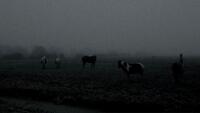
•    The Ethereal Melancholy Of Seeing Horses In The Cold by Scott Barley 2012. South Wales (UK). No dialogue. 4’

A silent short, focusing on the beauty and melancholia of seeing horses in the cold fog, and the metaphors that manifest, as time passes.

•    Les animaux de Stella, by Alessandro Quaranta (2019). Italy. No dialogue. 15’

ES ES-OVNI DIF-S016 · Series · 2023
Part of Non-Identified Video Observatory (OVNI)

Unidentified Video Observatory Constellations

Presentation at the MACBA 2023-2024 IEP

Una eina per a explorar

L'Observatori de Vídeo No Identificat és una potent eina per a la incursió entre els «oasis» que resisteixen a l'extensió del desert. Incursió en el sentit d'exploració i viatge, alhora físic i iniciàtic, obertura a l'encontre amb l'inaudit que mai deixa igual.

«Tornar a obrir el camp de l'experimentació»

A la seva manera modesta, situada, funambulista amb la Institució — una de les pràctiques que ovni ha perseguit des del principi ressona amb aquesta veu indígena que es va alçar amb força, en la mateixa meitat dels '90, des del cor de la selva: Veu de les comunitats sense veu, que no ha cessat, veu emmascarada, on la màscara es torna una manera de comparèixer que subverteix des del principi la unificació global tecnocapitalista i els seus «mecanismes per a separar aquesta cria de la terra de la seva mare» (Ailton Krenak) (1). Aquesta pràctica consisteix a «tornar a obrir el camp de l'experimentació» — tornar a recuperar l'obertura, l'incisiu, la proximitat i la commoció crítica que havia tingut el vídeo en els seus inicis. Tornar a portar el documental independent, el testimoniatge, la visió poètica, el treball d'arxiu (2).

Per tant, el treball d'ovni–desorg va més enllà de les consideracions banals sobre el vídeo i l'audiovisual, la diferència amb el cinema o les qüestions tècniques. El projecte és una eina brutal perquè al llarg dels anys es torna més i més evident que el vídeo, l'arxiu, la imatge són, en la societat de la imatge en què vivim, eines fonamentals que ajuden a pensar el present . — Pensar, deia DH Lawrence, no consisteix, com es creu, a recuperar dades obsoletes i extreure conclusions falses. Pensar consisteix en un descobriment, que es fa amb tot el cos i el començament del qual és generalment dolorós (3). Descobriment dolorós quan trenca l'aparent normalitat unívoca, la closca que ens tanca i ens encega, esquerda (4) — íntima i poètica o política i comunitària— que obre a formes més vitals, més amables, més reparadores i més riques d'habitar, els «oasis» (5).

Vivim una època de guerra sense fi. Una guerra l'objectiu de la qual és perpetuar-se i perpetuant-se imposar un «eix temporal global» unificat, com deia Kader Attia al final de la seva conferència (6). O dit amb les paraules de Ailton Krenak: «Mentre la humanitat va distanciant-se del seu lloc, un munt d'astutes corporacions va ensenyorint-se de la Terra. Nosaltres, la humanitat [que ens han dit que som, aïllant-nos d'aquest organisme del qual som part, la Terra] viurem en ambients artificials produïts per les mateixes corporacions que devoren selves, muntanyes i rius.» (7)

Però a l'interior d'aquest procés es produeixen ruptures (8), ruptures que a vegades ocorren, que trenquen el temps lineal, el temps d'una repetició normalitzada que es vol eterna. Ruptures que pleguen el temps de la subjectivitat i de les coses, ruptures intempestives i insospitades que obren el camp del possible — i deixen advenir veus d'Egipte, Líban, el Marroc o el poble Palestí en l'exili (9), veus de la selva i els ancestres, testimoniatges i visions des de l'Índia o des de Gènova o l'Argentina en la revolta, veus de la Frontera i de les Colònies, cosmovisions indígenes o africanes, Aymara o Quítxua o del Senegal— veus, presències i experiències de ruptura que també emergeixen aquí, a Barcelona, decolonials, feministes, o de pura revolta contra el capital i el seu món.

Una constel·lació contra l'oblit

Com a projecte de recerca i creació, l'Observatori és en el sentit més profund un arxiu de les ruptures i, per tant, quan l'arxiu és —com s'inclou en els debats contemporanis— una eina de la història i la història l'escriuen els vencedors, com deia Walter Benjamin,  l'Observatori és també una ruptura dels arxius (10), doncs, com també deia Benjamin, «Ni tan sols els morts estaran fora de perill si l'enemic venç… I aquest enemic no ha cessat de vèncer» (11). Ovni és així una constel·lació contra l'oblit — és una invitació a prosseguir —de manera artística, poètica o experimental— el que s'ha obert en les ruptures de l'època — que són també moments de bifurcació de continents perceptius — on la realitat està en joc.

És el que vèiem l'altre dia amb l'Elvira Espejo Ayca (12), on enfront del tipus de «saber» occidental, que contínuament "talla" o separa (emoció i raó, art i ciència, naturalesa i cultura) per a situar-se des de dalt com a domesticació i dominació de l'ésser humà, ens presentava la potència de la «criança mútua» com a desplegament de «interconnectivitats» i «cura i atenció màxima», on s'aprèn a través de la retina, el tacte, la sensació de tot el cos, donant lloc a una sensibilitat i una manera de viure on ja no ets «tu» l'important, sinó que la vitalitat de la Terra és l'important —«The Earth» de la qual parlava Achille Mbembe a partir d'ontologies Yoruba i Dogon (13)— cuidar el que et cuida, protegir el que et protegeix, mutar amb el que muta, atendre al que contínuament emergeix...

Ovni és una constel·lació contra l'oblit perquè els moments de ruptura o les fulguracions visionàries tornen a tancar-se sota la inèrcia de la normalitat, però queden traces, petjades, veus. I si des d'algun lloc val la pena continuar pensant és des d'aquests moments que esquerden el continuum de la història recent, des de l'experiència més alta.

Una invitació a l'encontre

Pensar avui és pensar no sols amb paraules, és pensar amb la gestualitat del cos i amb els cossos sonors, és pensar amb imatges que ens fereixen o ens encoratgen, o amb purs enigmes del temps, és convocar als espectres en el llindar de la nostra participació en el món. Pensar avui és pensar des de l'escolta i des de l'obertura a l'encontre amb l'inaudit no sols humà. Com a amic i col·laborador extern de desorg.org , veig que una dimensió fonamental del projecte, que jo he trobat en el seu centre, està en la invitació a l'encontre — com a manera de continuar el que s'obre amb la ruptura — que està en el cor del pensar, del delirar, del tractar de portar endavant pràctiques de llibertat.

Invitació a trobar-se que començava amb projectes d'autoria —també anònima o sense-identificar— que enviaven coses per a projectar des de molts llocs, pròxims i llunyans, i que seguia amb la invitació a l'encontre amb el que s'anava a buscar i que ressonava amb el que arribava. Invitació a l'encontre amb les veus i projectes que a Barcelona emergien en ruptura o en dissonància amb la monoforma, amb l'«eix temporal global» on «There is no alternative». Des d'Espai en Blanc a la Confraria Sufí senegalesa dels Baye Fall, 15M bcnTV o el grup de «Ciutat Morta». — L'objectiu exotèric no era capturar-los per a neutralitzar-los en la Institució Cultural , sinó, des dels seus marges, tibar la Institució per a fer sortir de polleguera la seva tendència a tancar-se sobre si mateixa i tornar-se irrespirable, sota la seva epistemologia d'experts i els seus procediments entre el management i la burocràcia. — Però l'objectiu no quedava només allí, no era per a res exterior. L'objectiu esotèric era i continua sent el viatge mateix de la recerca i de la trobada, prosseguir i ampliar la conversa, i l'experimentació. Com deia Hölderlin: «La vida de l'esperit entre amics, el pensament que es forma en l'intercanvi de paraula per escrit i de viva veu són necessaris als que busquen. Fora d'això som per nosaltres mateixos sense pensament. Pensar pertany a la figura sagrada que junts figurem» (14).

— Paradoxalment la possibilitat dels encontres és més intensa com més desllorigat està el temps, com més gran és la interrupció i l'alteració del temps lineal homogeni. No obstant això, el viatge continua, els llaços segueixen aquí.

— Arxiu de les ruptures, no sols com a testimoniatge d'aixecaments radicals i comunitaris, sinó també de disrupcions de la percepció i la sensibilitat, de la presència ín

Une Jeunesse Allemande
ES ES-OVNI DIF-S006 · Series · 2017
Part of Non-Identified Video Observatory (OVNI)

Une Jeunesse Allemande

Une Jeunesse Allemande by Jean-Gabriel Périot, tells the history of the Rote Armee Fraktion - RAF (or Red Army Faction, a German revolutionary terrorist group from the 1970s founded notably by Andreas Baader and Ulrike Meinhof) as well as the images generated by this story. The film is entirely produced by editing preexisting visual and sound archives and aims to question viewers on the significance of this revolutionary movement during its time, as well as its resonance for today’s society.

In the 1960s, the young democracy of West Germany was embarrassed by its Nazi past, and ingrown in its role as imperialist and capitalist outpost faced by its communist double. The postwar generation, in direct conflict with their fathers, was trying to find its place. The student movement exploded in 1966. The pas de deux between students and the government deteriorated, and radicalized those involved in a gradual escalation of violence and reprisals. From this seething youth emerged the journalist Ulrike Meinhof , filmmaker Holger Meins, students Andreas Baader and Gudrun Ensslin, as well as the lawyer Horst Mahler. When the student movement collapsed at the end of ’68, they remained isolated in their radicalism, and desperately sought ways to continue the revolutionary struggle.

The RAF (Red Army Faction) was founded in 1970, its militants disappearing into hiding. Both the government and sympathizers appeared cautious. Initial RAF acts, along with police responses, involved a certain amount of improvisation. Then came 1972, and the irreparable break: in less than a week, the RAF committed five major attacks, resulting in many victims. The government reacted by taking a hardline stance in its conflict with the terrorist movement. Casualties grew on all sides, including the RAF (both outside and in prison), government (police officers but also politicians and officials), and especially anonymous civilians. Voices questioning both the political and moral implications of the RAF’s combat, as well as the federal government’s choice for total repression, were progressively drowned out.

The autumn of ’77 marked the bloody finale to this story, which was also a war of images. The government refused to capitulate to the demands of both the RAF— which sought the release of its imprisoned members in exchange for Schleyer, the kidnapped president of the Employer Union—as well as the Palestinian commandos who, won over to the RAF cause, had hijacked a plane of German tourists. That same night, the plane was taken by storm at the Mogadishu airport, and the hostages were freed, while in Germany the final founding members of the RAF who were still alive “committed suicide” in prison, and Schleyer was killed by his abductors.

http://www.local-films.com/

http://www.local-films.com/

Trinomials of the Form
ES ES-OVNI EXP-S016 · Series · 2026
Part of Non-Identified Video Observatory (OVNI)

From unity to Dispersion

ACCUMULATION OF GESTURES

BLACK SKIN, WHITE MASKS

Trinomials of the Form

From unity to Dispersion

In linguistics, a trinomial of the form X, Y, and Z (also called a tricolon or tripartite expression) is a set phrase composed of three coordinated elements, usually joined by "and" or "or," which are similar in structure, meaning, or rhythm. A trinomial (in linguistic terms) is a fixed or semi-fixed expression consisting of three parallel or semantically related words or phrases, often used together to emphasize, create rhythm, or achieve a stylistic effect.

We propose a series of four prototypes developed within the context of the Unidentified Video Observatory or in its immediate vicinity. These materialize as four publications on this website and four sessions at the Santa Mònica in Barcelona .

The series is structured around four derivations based on videographic materials preserved in the Archive 94-20 , in dialogue with short-duration modules specially produced to facilitate interpretation. This proposal is centered on feedback with the Observatory’s past contexts —a practice that the project periodically reactivates as an exercise in reflection and continuity.

Each module in the cycle, Trinomials of Form , proposes a dialogue between two historical pieces from the Archive 94-20 and a contemporary short piece produced by the Observatory. This triple relationship functions as a node of recontextualization and reconsideration : it seeks to recover meanings preserved in one of the project’s archives, bring them into play from the present and open up new interpretations , while also stimulating the Observatory’s current production and reinforcing its dimension as an authorial project .

Trinomials of Form focuses on specific—perhaps illusory, perhaps disorienting—aspects of our present. In a drift of uncertainties, the reflections of the common and memory as recollection become blurred. When visions open up, confession turns into ritual, and the archive that contains them collapses into a mere memory; then the experience becomes an endless loop.

This four-session cycle reveals an unexpected map , tracing a reading from unity to dispersion , and from the visible to the invisible . Forms of emptiness within apparent absurdities: a breath that concentrates, unfolds, and dissolves bubbles in the air. Suspended in their reflections of sunlight, they induce thought and, once again, shape a passage that exists only in moments of veiled reality .

TRANS_FORM
ES ES-OVNI DIF-S014 · Series · 2023
Part of Non-Identified Video Observatory (OVNI)

22 February from 19:00 to 21:00

CRA'P - Mollet del Vallés

A video programme about India and the celebration every 12 years of the Kumbh Mela. This festival is considered as the "world's largest congregation of religious pilgrims". Kumbh Mela means an "assembly, meet, union" around "water or nectar of immortality".

  • Reflexiones de Babashivananda , Alberto Martos, 2003. India, Spain, 10 min, VO Spanish.

Varanasi, 6 a.m. 2nd week. Among the narrow streets of this sacred city, someone invites me to conduct an interview. I don’t understand what he says, but I follow him.

  • Kings With Straw Matts , Ira Cohen , 1998. USA, India, 70 min, VOSE

A documentary about the Kumbh Mela in India. Edited from over 60 hours of footage shot in 1986 and edited in 1998 at Mystic Fire Video.

Limited places, early booking: info@cra-p.org / 666 763 504

CRA'P - pràctiques de creació i recerca artística ( creation practices and artistic research )

Anselm Clavé 67, 3r - 08100 Mollet del Vallès

Toni Serra *) Abu Ali
ES ES-OVNI TS-S002 · Series · 2019
Part of Non-Identified Video Observatory (OVNI)

Toni Serra *) Abu Ali

/ VIDEO ESSAY 2001-2016 /

/ THE BLACK TAPES / TV CODE /

/ EL HAMDULILLAH TAPES * PIRATE UTOPIAS & EUROPEAN RENEGADOES /

/ THE RAIN IN DUAR MSUAR /

Entre el Agora y la Frontera

Toni Serra *) Abu Ali

/ TONI SERRA *) ABU ALI

The sheaves of wheat hide the thorns of the jujube... drops of blood are sown in the dust

the woman's belly enters full moon... announcing a still-distant October

the harvest is a time of Remembrance, of gratitude.

Times to Come
ES ES-OVNI EXP-S015 · Series · 2025
Part of Non-Identified Video Observatory (OVNI)

Nobody could see beyond.

/ THE SEARCH OF LIGHT /

/ THE SEARCH OF FIRE /

Nobody could see beyond.

We propose a series of four prototypes developed within the framework of the Observatory of Unidentified Video or in its immediate proximity, which are materialized in four publications on this website and four sessions at Santa Mònica in Barcelona. The series focuses on a clear commitment to openness in the work-in-progress, dialogue, and contextualization, through a close and proximate staging.

This study, whether self-produced or in collaboration, focuses on specific aspects of our present that may be illusory, perhaps disorienting. It seeks to intuit solutions or, at the very least, to create a useful context from which progress becomes possible.