

In 2003, the government headed by ex-president Gonzalo Sánchez de Lozada and Carlos Mesa (Bolivia's current president) passed a new Income Tax act, provoking a police riot that was subsequently repressed by the armed forces. The citizen protests that took to the streets were also repressed by the military and snipers. The documentary is made up of radio audio, TV images and newspaper archives from the main Bolivian newspapers.
UntitledIndigena
54 Archival description results for Indigena
Public security and the imposition of the Mexican armed forces in different parts of Chiapas: Nazareth (San Manuel), La Galeana, La Garrucha...
UntitledMany of the indigenous communities in Chiapas have no access to potable water. Water and Autonomy looks at this serious problem and how the Zapatista communities are solving it. Through solidarity and training from internationals many communities are now building their own water systems. Members of the communities speak about ways the water project fits into their autonomous process, helps fight sickness, has provided a means of reflection for how to protect existing water sources and represents another means of resistance to globalization projects like the Plan Puebla Panama.
UntitledWanja is a documentary about “the Block”, through the eyes of Auntie Barb and the life of Wanja, her blue heeler dog, recently deceased. The community on the Block's many and varied stories of Wanja reflect on the issues affecting this indigenous community in the heart of Sydney. Auntie Barb is an elder of Redfern's community: Wanja was an integral part of the community, known to all for her ability to sniff out the police -in uniform and undercover- “the Block's guardian angel”. Through Wanja, Aunty Barb and the community's memories of this tenacious, loyal, smart and loving dog tell of the early days on the Block when there were elders and families, good housing and a strong sense of community. The stories of Wanja tell us how the tension between the community and police escalated, why the housing has continued to deteriorate and largely been demolished, and why the strength of the community - it's elders, moved on. Aunty Barb was one of the last elders forced off the Block. In spite of this, Aunty Barb continues to call the Block her community and home.
The Ancla2 Photography Cooperative, with the Venezuelan filmmaker and documentarian Rafael Lacau, carry out photography workshops in rural areas of South America, especially with children who have never had contact with a camera. The experience documented here is that of the youngest inhabitants of Tuñame, a town in the Venezuelan Andes. In this production, the children express how they see their community, how they understand problems - especially environmental problems - and what they feel about their reality and the solutions to face it. This documentary is part of the series "Venezuela seen by its children", presented on public television in that country.
Non-Identified Video Observatory (OVNI)The Ancla2 Photography Cooperative, with the Venezuelan filmmaker and documentarian Rafael Lacau, carry out photography workshops in rural areas of South America, especially with children who have never had contact with a camera. The experience documented here is that of the youngest inhabitants of Tuñame, a town in the Venezuelan Andes. In this production, the children express how they see their community, how they understand problems - especially environmental problems - and what they feel about their reality and the solutions to face it. This documentary is part of the series "Venezuela seen by its children", presented on public television in that country.
UntitledThe CCIODH (International Civil Human Rights Watch Commission) travelled to Oaxaca-Mexico between the 16th of December 2006 and the 20th of January 2007, and interviewed 420 people involved in the conflict. The Commission has recorded 23 deaths since the 16th of May 2006. This video documents the Commission's visit through interviews with prisoners, authorities and activists who have no choice but to go underground.
UntitledFive women's stories are interlaced with scenes of work and the resplendent festivities, music, poetry and paintings of the region. They show how economic independence, community, friendship, cultural pride and respect for "women's work" not only give a woman self-esteem and a sense of purpose in life, but contribute to the well-being of whole society. 6th Independent Vídeo & Interactive Phenomena Show
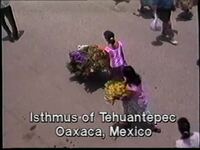
Dances and masks, secret bodies .
UntitledFor more then 500 years indigenous people in Chiapas have been struggling to regain ownership of their lands. Until the Zapatista uprising in 1994, most indigenous people in Chiapas existed by working on large plantations for rich landowners. “The Sacred Land” describes what life was like on these plantations. It includes stories that go back four generations about slavery-like conditions in which people worked for the rancheros. Produced in the autonomous municipality of "November 17th" and edited by indigenous video makers, The Sacred Land helps provide a context for the events of 1994 through unique insight into the past. Community members reflect on how life has changed since 1994 and express their hopes and dreams for their collective future.
Untitled