How can we learn ecological solutions from an ancient Culture? Ladakh, or Little Tibet, is a wildly beautiful desert land high in the western Himalayas. Although it has few natural resources and an extreme climate, it has been home to a thriving culture for over a thousand years. A tradition of frugality and cooperation coupled with an intimate and location-specific knowledge of the environment enabled the Ladakhis not only to survive, but also to prosper. Until development arrived.
UntitledIndia
10 Archival description results for India
Neti Neti Films embarks on a quest to India to capture the essence of Nisargadatta Maharaj at the place where he first transmitted his teachings to the world. The narrator, Dr Stephen Wolinsky, compares Nisargadatta's teachings with those of some of the world's most extraordinary gurus and masters. For the first time, Nisargadatta's most profound teachings are discussed in depth, including his idea that who we are is prior to the I Am and even prior to and beyond Consciousness itself. This extraordinary statement has the power to propel a seeker into the Eternal Absolute, the Primordial Advaita that can only be realized when when Consciousness itself is grasped as neither this nor that.
In Death and Eternity, Papaji speaks about the blessings that derive from sitting with a realized being. He says that, among other things, close association with an awakened teacher will remove the fear of death. He advises students to nourish the desire to be free and to “come with empty hands” and minds to the teacher. He goes on to explain that any concept, including the concept of birth and death, stands as an obstacle to awakening. He encourages devotees to always aspire for that which lies beyond birth and death, what he calls “the Changeless,” which abides in the cave of the heart.
UntitledThe theme that runs throughout this compilation (extracts from several satsangs) is “Silence.” Papaji states, and demonstrates, that Silence is one's real, and permanent, nature. He goes on to say that Silence is the ground and substance of everything in existence. He also answers the question, “Can one be silent while being active in the world'
UntitledNats - the traditional street entertainers of India - are Jack's of all performing trades. Follow their children down the chaotic streets of Kolkata as they act, sing and dance to pay off their parents' debts. Filmed over a six year period, this poignant documentary explores a poor family's desperate efforts to support themselves in the midst of a rapidly changing India.
UntitledMaya is “all that is and all that is not"...the complete illusion in imagination.” And with total, absolute, 100% watchfulness, it is possible to see Maya for what it truly is. With this awareness, with this attention onto the experiencer – without reliance on any practice, any method, or to any past or future achievements, you will discover in this split-second, who you really are. The secret of true happiness is revealed in this knowledge. “To cross this ocean of suffering called samsara you must have a raft; Satsang is this raft. Once you are on this raft, you need do nothing and nothing can bother you.” The secret of Satsang is revealed in this split-second. All desires are fulfilled – not abandoned – but fulfilled. Nothing more is desired. You have it all.
UntitledShort Cut to Nirvana is a film about the Kumbh Mela, the biggest gathering of people in the history of humanity – although few in the West have ever heard of it. More than 70 million pilgrims attend this spiritual festival which has been held every twelve years near Allahabad, India, for over two millennia.
UntitledSince I Am That was released in 1973, Sri Nisargadatta Maharaj, along with Sri Ramana Maharshi, has been recognized as one of the 20th Century's most profound voices of Advaita Vedanta. The Lost Satsang depicts Maharaj in the most authetic way and directly transmits the overwhelming power of this remarkable sage.
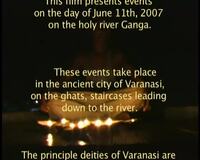
UntitledThe Last Rites of the Honourable Mr. Rai is a film about the cremation of a longtime resident of the holy city of Varanasi. This film, made at the request of the Rai family, is possibly the most detailed and respectful study of the Hindu rites of cremation on the sacred banks of the river Ganga.
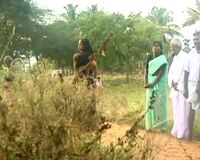
UntitledThe PoojariŽs Daughter opens with flashbacks to South Indian priestess Rajathiammal “cutting the goat” and having her head ritually shorn. The year is 2001, the place, Madurai, Tamilnadu. These two moments fulfil the two most profound wishes of the priestess: to be filmed while performing the annual goat sacrifice to the Saivite god Paandi that was once carried out by her father, and to renounce family life altogether. Using experimental film techniques that recall the work of Trinh Minh Ha, The Poojari's Daughter weaves dramatic footage of these rituals and of temple life at Paandi Kooyil with Rajathiammal's moving account of her process, interviews with close relatives, and brief voiceovers by the filmmaker. Together, these create a vivid and unforgettably intimate portrait of the devotional worlds of this remarkable woman and of South Indian Hinduism.
Untitled