Tells of the horrific forced journey undertaken by thousands of prisoners who surrendered to America's Afghan allies after the siege of Konduz. Bundled into containers, the lucky ones were shot within minutes. The rest suffered an appalling road trip lasting up to four days, clawing at the skin of their fellow prisoners as they licked perspiration and even drank blood from open wounds. Up to 3,000 now lie buried in a mass grave, but this was NOT a simple matter of Afghans killing Afghans. This documentary tells of how American special forces took control of the operation, re-directed the containers carrying the living and dead into the desert and stood by as survivors were shot and buried. And it details how the Pentagon lied to the world in order to cover up its role in the greatest atrocity of the entire Afghan War. This is the documentary they did not want you to see. The documentary was produced over ten months in extremely dangerous circumstances: eyewitnesses were threatened, the film crew went into hiding and our researcher was savagely beaten to within an inch of his life.
UntitledGuerra
6 Archival description results for Guerra
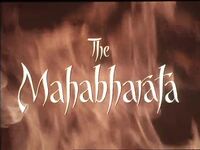
After the reflections from the Bhagavad Gita, the war begins: a tragedy that pits brother against brother and sucks up whole families, people of great courage. It is a war of devastating consequences, which does not just threaten the survival of one of the two sides, but the continuity of life on earth. “Even the blades of grass tremble in fear.” A battle in which the clashing sides do not hesitate to use the ultimate weapons. Vishnu himself exclaims: “Now I am become Death, the destroyer of worlds.” This is a war that is also played out inside every human being.
UntitledHaving been tricked by Power and humiliated by the arrogance of those who now wield it, the Pandavas are forced into exile even though they still harbor a desire for justice. They face twelve years of banishment in the wilderness, and a further year during which they must live in disguise and avoid being discovered. The Mahabharata, portrays this exile as a period of extreme hardship in which death is always present – but so is the growing awareness of its opposite. To abandon the palace and swap the city for nature also leads them to renew direct contact with life, embark on a search for knowledge, start a process of cleansing and strengthen the bond of brotherhood. Nevertheless, this strengthening seems to lead back towards war. Part two ends with the famous reflections of the Baghavad Gita in which Krishna responds to the doubts of Arjuna.
Untitled“By late 1964 Harold Wilson’s newly elected Labour Government had already broken its election manifesto to unilaterally disarm Britain, and was in fact developing a full-scale nuclear weapons programme, in spite of wide-spread public protest. There was a marked reluctance by British TV at the time to discuss the arms race, and there was especially silence on the effects of nuclear weapons - about which the large majority of the public had absolutely no information. I therefore proposed to the BBC that - using one small corner of Kent in southeastern England to represent a microcosm - I make a film showing the possible effects, during an outbreak of war between NATO and the USSR, of a nuclear strike on Britain.” The BBC panicked when they first saw the film, and sought government consultation re showing it. They subsequently denied this, but the sad fact remains that the BBC violated their own Charter of Independence, and on September 24, 1965, secretly showed The War Game to senior members of the Home Office, the Ministry of Defence, the Post Office (in charge of telecommunications), a representative of the Military Chiefs of Staff, and Sir Burke Trend, Secretary to Harold Wilson’s Cabinet. Approximately six weeks later, the BBC announced that they were not going to broadcast the film on TV - and denied that their decision had anything to do with the secret screening to the government". Peter Watkins
UntitledHe asked me: “Ms Ziadah, don’t you think that everything would be resolved if you would just stop teaching so much hatred to your children? (...). Pause. I look inside me for strength to be patient but patience is not at the tip of my tongue as the bombs drop over Gaza. Patience has just escaped me. Pause. Smile. We teach life, sir! (...) These are not two equal sides: occupier and occupied. And a hundred dead, two hundred dead, and a thousand dead. (...) Is anybody out there? Will anyone listen? I wish I could wail over their bodies. I wish I could just run barefoot in every refugee camp and hold every child, cover their ears so they wouldn't have to hear the sound of bombing for the rest of their life the way I do. (...) Today my body was a TV’d massacre. We teach life, sir. We Palestinians wake up every morning to teach the rest of the world life, sir.”
UntitledSimon decided to record Barry delivering a monologue exploring US imperialism and the project for the new American century. This speech became the focal point around which animation was constructed. "what Barry says" is very much a response to Simon witnessing his peer's apparent lack of interest in the anti-war marchers between the attack on Afghanistan and the second gulf war. Many young Londoners seemed to feel that they could do nothing to stop the attack on Iraq, so why bother
Untitled