France

Elements area

Taxonomy

Code

Scope note(s)

    Source note(s)

      Display note(s)

        Hierarchical terms

        France

          Equivalent terms

          France

            Associated terms

            France

              8 Archival description results for France

              8 results directly related Exclude narrower terms
              Zoos Humains
              ES ES-OVNI CTX-S011-SS003-0002 · Item · 2002
              Part of Non-Identified Video Observatory (OVNI)

              Between 1877 and 1930, governments and private entrepreneurs organized in several European and American cities real Human Zoos, in which men and women of other races and cultures were exhibited in cardboard sets, separated by moats and fences, suffering a humiliating climate and conditions. They are the possessions of the Empire. The success is enormous, the public crowds to see face to face the "other" turned into an object.

              Untitled
              ES ES-OVNI CTX-S011-SS004-0007 · Item · 2006
              Part of Non-Identified Video Observatory (OVNI)

              Rene Vautier, Brittany, 1928, studied at the “Institut des Hautes Etudes Cinématographiques”. Author of several works denouncing Colonialism, including: Afrique 50, Un homme est mort, Une nation, l'Algerie, L'Algerie en Flammes, Hirochirac,... René Vautier appears to be the archetypal socially committed filmmaker: his militant films are held up by a flexible rigorousness and formal ingenuity that help him overcome the practical problems arising from his "social intervention" works. In his own words, his motto could be: "Write history in images, immediately". In 1950, disgusted by the French censors who confiscated many of his reels, he managed to finish Afrique 50, the first French anti-colonial film. His social commitment as a filmmaker leads to 13 charges against him, and a jail sentence. At the price of many years in jail and a hunger strike, René Vautier's struggle against all kind of oppression - political, economic and cultural – will endure.

              Paris Couleurs
              ES ES-OVNI CTX-S011-SS005-0009 · Item · 2005
              Part of Non-Identified Video Observatory (OVNI)

              Paris Couleurs, a compilation of archival film material, deals with the image of the migrant in cinema and television throughout the century. From ”Zoos Humains” to the mythical ”Black-Blanc-Beur” of the year 1998, the film follows a history of representation, clichés and stereotypes. With this film Pascal Blanchard and Eric Deroo present a new audiovisual version of their research program “from the native to the immigrant” and their point of view of the relation between colonial history and the history of immigration.

              Untitled
              Moi, un Noir
              ES ES-OVNI CTX-S011-SS001-0005 · Item · 1958
              Part of Non-Identified Video Observatory (OVNI)

              Treichville is a poor suburb of Abidjah, the capital of Ivory Coast and the destination of the two protagonists in this docudrama by Jean Rouch. The two men in question are originally from Nigeria, and they call themselves Eddie Constantine and Edward G. Robinson, clear indications of who their heroes are. The perpetual conflict between traditional ways of life and new Western imports comes up several times as the two men continue on their daily rounds and reveal a little about their hopes for the future.

              Untitled
              Le Malentendu Colonial
              ES ES-OVNI CTX-S014-SS001-0102 · Item · 2004
              Part of Non-Identified Video Observatory (OVNI)

              Le Malentendu Colonial is a courageous voyage into Africa's “German past,” looking at European attempts to colonise Africa through religion and trade. Filmmaker Jean Marie Tenor revisits the role of missionaries in laying the foundations for colonialism in countries like Togo, Cameroon, Namibia and South Africa. The genocidal wars waged by the Germans against the Herrero in Namibia (1904-1907), in which thousands of people were locked up in concentration camps or driven into the desert and forced to scatter in order to survive the genocide, was a practice ground for the later crimes perpetrated by the Nazi army. Through interviews with experts from Germany and Africa, Teno paints a picture of a deeply unsettling period of history that was relatively short but nevertheless horrific.

              Untitled
              La Guerre d'Algérie
              ES ES-OVNI CTX-S011-SS002-0002 · Item · 1972
              Part of Non-Identified Video Observatory (OVNI)

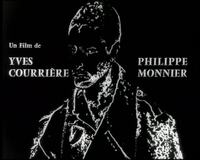
              On the first of November 1954, “Bloody All Saints Day” exploded in a series of attacks throughout Algeria carried out by what would later become the National Liberation Front. It was the start of the Algerian war. The first film made about this conflict became the first indispensable documentary about the Algerian war. It includes unforgettable testimonies and archives to that allow us to “dare to look at the truth head on". In the rigorous search for historical truth, the authors committed themselves to understanding the different parts of the conflicts, such as the "pieds-noirs", the career soldiers, the Harkis, the Fellaghas, the civil population... Yves Couriere, writer and journalist, has followed all the major stages of the Algerian drama, on the field, between 1958 and 1963. Before making this film, from 1967 to 1971, he published a four-volume history, the first, of the Algerian war.

              Untitled
              ES ES-OVNI CTX-S011-SS002-0010 · Item · 2002
              Part of Non-Identified Video Observatory (OVNI)

              We follow the director's camera into the kitchens and living rooms of a community of Moroccan women. inside the walls of their apartment in Casablanca's old Medina, the women cook, clean, take care of their families and help each other. With their hands in the dough, in the soap whilst washing the laundry, doing the house chores, in the market or at the hammam, between laughter and tears ("We are housewives, that's all. ... Our sport? House cleaning!"). These courageous women, proud of their role, talk about their miserable lives with a great sense of awareness, but without self-pity. They show a surprising vitality, curiosity for life and solidarity. These house-proud housewives may not all know how to read, but they know exactly what would improve their lives: equal rights for women and men, more money, and a better future for their children so they wouldn't have to emigrate to support the family. A sense of hope and the possibility of change radiate out of the everyday lives of these heroines ("batalett").

              Afrique 50
              ES ES-OVNI CTX-S011-SS004-0013 · Item · 1950
              Part of Non-Identified Video Observatory (OVNI)

              An anticolonial film about colonial repression on the Ivory coast. A virulent attack on the French colonial system after the second world war that has been banned in France for half a century.