An intimate dialogue with Soha Bechara, ex-Lebanese National Resistance fighter, in her Paris dorm room. The interview was taped during the last year of the Israeli occupation, one year after her release from captivity in El-Khiam torture and interrogation center (South Lebanon) where she had been detained for 10 years—six in isolation. Revising notions of resistance, survival, and will, the overexposed image of the survivor speaks quietly and directly to the camera—not speaking of the torture, but of separation amd loss; of what is left behind and what remains.
UntitledFrance
16 Archival description results for France
Having been tricked by Power and humiliated by the arrogance of those who now wield it, the Pandavas are forced into exile even though they still harbor a desire for justice. They face twelve years of banishment in the wilderness, and a further year during which they must live in disguise and avoid being discovered. The Mahabharata, portrays this exile as a period of extreme hardship in which death is always present – but so is the growing awareness of its opposite. To abandon the palace and swap the city for nature also leads them to renew direct contact with life, embark on a search for knowledge, start a process of cleansing and strengthen the bond of brotherhood. Nevertheless, this strengthening seems to lead back towards war. Part two ends with the famous reflections of the Baghavad Gita in which Krishna responds to the doubts of Arjuna.
UntitledAfter the reflections from the Bhagavad Gita, the war begins: a tragedy that pits brother against brother and sucks up whole families, people of great courage. It is a war of devastating consequences, which does not just threaten the survival of one of the two sides, but the continuity of life on earth. “Even the blades of grass tremble in fear.” A battle in which the clashing sides do not hesitate to use the ultimate weapons. Vishnu himself exclaims: “Now I am become Death, the destroyer of worlds.” This is a war that is also played out inside every human being.
UntitledGrief and mass media in Algeria.
UntitledOctober 17th, 1961. The war in Algeria is in progress. In Paris, Algerians took to the streets to protest the curfew. The demonstrators are persecuted and a peaceful demonstration ends in a bloodbath. When he went to the film in Cannes, the room was evacuated by police at the last minute and kidnapped copies. Half a century later, in October 2011, project for the first time in Paris.
UntitledHiroshima 1914-2006
UntitledThose who suffer from the melancholy of eternity are called eternals. Convinced that death cannot take their lives, they believe they are condemned to wander around waiting for the day when they will be released from their existence. This film is a tale of wanderings and escapes, on the borders of Nagorno-Karabakh, an Armenian enclave in Azerbaijan. Inhabited by the ghosts of the genocide and by the war that has been raging there for more than twenty years, the characters who traverse this film carry within them the melancholy of the eternal.
UntitledWhen independence came, the owners of the big boats decided to sell up, so many small-scale fishermen soon found themselves out of work. Their wives decided to pool their gold rings and sell them to buy new boats.
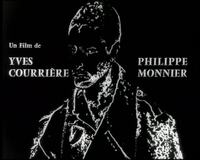
On the first of November 1954, “Bloody All Saints Day” exploded in a series of attacks throughout Algeria carried out by what would later become the National Liberation Front. It was the start of the Algerian war. The first film made about this conflict became the first indispensable documentary about the Algerian war. It includes unforgettable testimonies and archives to that allow us to “dare to look at the truth head on". In the rigorous search for historical truth, the authors committed themselves to understanding the different parts of the conflicts, such as the "pieds-noirs", the career soldiers, the Harkis, the Fellaghas, the civil population... Yves Couriere, writer and journalist, has followed all the major stages of the Algerian drama, on the field, between 1958 and 1963. Before making this film, from 1967 to 1971, he published a four-volume history, the first, of the Algerian war.
Untitled