France

Elements area

Taxonomy

Code

Scope note(s)

    Source note(s)

      Display note(s)

        Hierarchical terms

        France

          Equivalent terms

          France

            Associated terms

            France

              20 Archival description results for France

              20 results directly related Exclude narrower terms
              ES ES-OVNI RSC-1350 · Item · 2001
              Part of Non-Identified Video Observatory (OVNI)

              An intimate dialogue with Soha Bechara, ex-Lebanese National Resistance fighter, in her Paris dorm room. The interview was taped during the last year of the Israeli occupation, one year after her release from captivity in El-Khiam torture and interrogation center (South Lebanon) where she had been detained for 10 years—six in isolation. Revising notions of resistance, survival, and will, the overexposed image of the survivor speaks quietly and directly to the camera—not speaking of the torture, but of separation amd loss; of what is left behind and what remains.

              Untitled
              Une Jeunesse Allemande
              ES ES-OVNI RSC-4192 · Item · 2015
              Part of Non-Identified Video Observatory (OVNI)

              Une Jeunesse Allemande tells the history of the Rote Armee Fraktion (or Red Army Faction, a German revolutionary terrorist group from the 1970s founded notably by Andreas Baader and Ulrike Meinhof) as well as the images generated by this story. The film is entirely produced by editing preexisting visual and sound archives and aims to question viewers on the significance of this revolutionary movement during its time, as well as its resonance for today’s society. In the 1960s, the young democracy of West Germany was embarrassed by its Nazi past, and ingrown in its role as imperialist and capitalist outpost faced by its communist double. The postwar generation, in direct conflict with their fathers, was trying to find its place. The student movement exploded in 1966. The pas de deux between students and the government deteriorated, and radicalized those involved in a gradual escalation of violence and reprisals. From this seething youth emerged the journalist Ulrike Meinhof, filmmaker Holger Meins, students Andreas Baader and Gudrun Ensslin, as well as the lawyer Horst Mahler. When the student movement collapsed at the end of ’68, they remained isolated in their radicalism, and desperately sought ways to continue the revolutionary struggle. The RAF (Red Army Faction) was founded in 1970, its militants disappearing into hiding. Both the government and sympathizers appeared cautious. Initial RAF acts, along with police responses, involved a certain amount of improvisation. Then came 1972, and the irreparable break: in less than a week, the RAF committed five major attacks, resulting in many victims. The government reacted by taking a hardline stance in its conflict with the terrorist movement. Casualties grew on all sides, including the RAF (both outside and in prison), government (police officers but also politicians and officials), and especially anonymous civilians. Voices questioning both the political and moral implications of the RAF’s combat, as well as the federal government’s choice for total repression, were progressively drowned out. The autumn of ’77 marked the bloody finale to this story, which was also a war of images. The government refused to capitulate to the demands of both the RAF— which sought the release of its imprisoned members in exchange for Schleyer, the kidnapped president of the Employer Union—as well as the Palestinian commandos who, won over to the RAF cause, had hijacked a plane of German tourists. That same night, the plane was taken by storm at the Mogadishu airport, and the hostages were freed, while in Germany the final founding members of the RAF who were still alive “committed suicide” in prison, and Schleyer was killed by his abductors.

              Untitled
              Techniquement si simple
              ES ES-OVNI RSC-4348 · Item · 1971
              Part of Non-Identified Video Observatory (OVNI)

              A cooperative technician recalls his "technical work" when, during the Algerian conflict, he was installing mines that still kill many civilians. A preliminary essay to the filming of Avoir vingt ans dans les Aurès: a fiction built from testimonies of conscripted soldiers in Algeria.

              Peuple en marche
              ES ES-OVNI RSC-4342 · Item · 1963
              Part of Non-Identified Video Observatory (OVNI)

              In 1962, René Vautier, together with some Algerian friends, organized an audiovisual formation center to encourage a “dialogue in images” between the two factions. A film was edited from that experience, but the French police partially destroyed it. The images that were saved represent an unprecedented historical document: They tell of the Algerian War and the history of the ALN (National Liberation Army), as well as showing life after the war and, particularly, the reconstruction of the cities and the countryside after the war of Independence. It is the first film from independent Algeria Dirección y fotografía | Réalisation et image | Directors and cinematographers René Vautier Ahmed Rachedi Nacer Guenifi Héléna Sanchez Sidi Boumédienne Mohamed Guennez Allal Yahiaoui Mohamed Bouamari André Dumaître Taïbi Mustapha Bellil

              Mémoire d'un territoire
              ES ES-OVNI CTX-S014-SS001-0093 · Item · 2008
              Part of Non-Identified Video Observatory (OVNI)

              Yamina Benguigui turns her camera on a multi-ethnic region on the outskirts of Paris. These 'backyards' of Paris - suburban industrial ghettos filled with poor immigrants - are a breeding ground for social problems in the midst of an eclectic mix of conflicting cultures and identities.

              Untitled
              Les anneaux d’or
              ES ES-OVNI RSC-4339 · Item · 1956
              Part of Non-Identified Video Observatory (OVNI)

              When independence came, the owners of the big boats decided to sell up, so many small-scale fishermen soon found themselves out of work. Their wives decided to pool their gold rings and sell them to buy new boats.

              Les ajoncs
              ES ES-OVNI RSC-4345 · Item · 1969
              Part of Non-Identified Video Observatory (OVNI)

              An unemployed Algerian worker leaves Paris hitchhiking. He soon reaches Brittany and, captivated by the beauty of the wild gorse, ends up setting himself up as a gorse vendor. But because of parking issues with his small cart, he has a rough run‑in with a policeman, who reacts violently and overturns the cart, scattering the flowers. The intervention of some factory workers, and the warm solidarity they show him, saves him from despair. A poetic and humorous fable in which an Algerian immigrant travels across Brittany in search of work. He finds a cart and begins selling gorse in a small town. When a policeman violently knocks over his cart, the flowers spill onto the ground. At the factory gates, the women workers, as a sign of solidarity, pick them up one by one and buy them from him. The film won the Anti‑Racist Film Award granted by the Amicale of Immigrant Workers’ Associations in Europe in 1970.

              Le remords
              ES ES-OVNI RSC-4349 · Item · 1975
              Part of Non-Identified Video Observatory (OVNI)

              This short film, taken from the feature La Folle de Toujane, brings to the foreground a political event almost separate from its main storyline. René Vautier plays a “committed” director-producer who has just witnessed the brutal beating of an “Arab” by the police in the street, right in front of the café where he's having lunch. The scene deeply shocks him; he doesn't react in the moment, but promises himself he will one day make a film about what he saw. This scene, which refers to the massacre of Algerians in Paris (October 17, 1961), powerfully symbolizes the importation of the criminal mindset that fueled the French army’s intervention in Algeria. It reminds us of the reality of extreme violence, still present in collective memory and yet never acknowledged by a France that continues to deny its responsibility. A denunciation of the self-censorship of French filmmakers in the 1960s and ’70s when facing the reality of state racism.

              La Guerre d'Algérie
              ES ES-OVNI CTX-S011-SS002-0002 · Item · 1972
              Part of Non-Identified Video Observatory (OVNI)

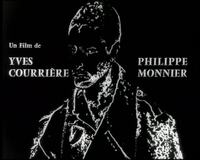
              On the first of November 1954, “Bloody All Saints Day” exploded in a series of attacks throughout Algeria carried out by what would later become the National Liberation Front. It was the start of the Algerian war. The first film made about this conflict became the first indispensable documentary about the Algerian war. It includes unforgettable testimonies and archives to that allow us to “dare to look at the truth head on". In the rigorous search for historical truth, the authors committed themselves to understanding the different parts of the conflicts, such as the "pieds-noirs", the career soldiers, the Harkis, the Fellaghas, the civil population... Yves Couriere, writer and journalist, has followed all the major stages of the Algerian drama, on the field, between 1958 and 1963. Before making this film, from 1967 to 1971, he published a four-volume history, the first, of the Algerian war.

              Untitled