
Happy Birthday to the National Front! For a long time, driven by the need to establish a dialogue around the Algerian War, René Vautier recorded the testimonies of Algerian independence activists, French conscripts and reservists, generals of the French army, historians... Thus, Mohamed Moulay, Ali Rouchaï, Mohamed Loulli, Germaine Tillion, Paul Teitgen, Pierre Vidal-Naquet, Colonel Antoine Argoud, General de Bollardière, and General Jacques Massu, among others, gave their testimony before Vautier’s camera. A documentary long unseen that reminds us where the National Front comes from, which changed its name and gained some respectability after Jean-Marie Le Pen’s leadership. Warning: The film is a rescued copy. The technical quality is degraded, but that is only a detail... The Man with Bloody Hands (by René Vautier) I had embarked on a historical project: recording on video tapes the “memories” of witnesses of the Algerian War, so that one day young students from France and Algeria could write together, in images, a common history of the relations between the two peoples. I was told about a man, in Saint-Eugène, who, despite having been tortured, had trouble asserting his pension rights because he had never been a member of the FLN. I interviewed him somewhat by chance: he told me about his tortures, and how, between sessions of “gégène” (electric torture) and “bathtub” (immersion torture), his torturers had pushed his thumbs into his eye sockets: “as if they wanted to make my eyes pop out.” Then I did what I always did: showed him a series of photos of paratrooper officers, to ask if he recognized his torturers. Very dignifiedly, he told me he could no longer see... but he added: “I have a paper from Mr. Mayor (the mayor of Algiers at the time was Jacques Chevalier, former Minister of Defense under Mendès-France) where the name of the paratrooper lieutenant is written.” That’s how I saw that the name he couldn’t read — he had gone blind due to the tortures — was that of Lieutenant Le Pen. I had Jacques Chevalier’s signature authenticated by his family members and people who had worked with him; I checked documents from the time — there was no doubt. Apparently, there is a law in France forbidding the use of testimonies about atrocities committed during the Algerian War. Let’s not be ridiculous: Austrians are suspected of putting at the head of their republic a man accused of having “covered up” tortures, and yet we should hide from the French documents that the whole world will feast on during the presidential elections? Because no law can prevent the whole world — except France! — from knowing that we will have a candidate not only with delirious statements but with bloody hands. This article was published in L’Humanité on September 29, 1987.
France
16 Archival description results for France
16 results directly related
Exclude narrower terms
ES ES-OVNI RSC-4356
·
Item
·
1988
Part of Non-Identified Video Observatory (OVNI)

ES ES-OVNI CTX-S012-SS006-0007
·
Item
·
2005
Part of Non-Identified Video Observatory (OVNI)
A military helicopter circles in the sky like an evil wasp. Chaos on the ground after the attack. A fast-paced sequence - bleeding people, burning cars and confused soldiers. Subheading: From Beirut - with Love. A cinematic postcard-greeting, so bitter and cynical, it can only come from a city at war with itself. The only dialogue in the film reveals a surprising connotation: Beirut is Paris, or Madrid, or any other metropolis. The scene is set: youth without a future, bomb attacks, drugs, arms, soldiers. The postcard has arrived.
Untitled
ES ES-OVNI CTX-S014-SS001-0070
·
Item
·
1938
Part of Non-Identified Video Observatory (OVNI)
In 1938, the novelist, intellectual and politician André Malraux directed his only film, ‘Espoir/Sierra de Teruel' , a valuable testimony to the experiences of the Republicans during the Spanish Civil War. Shot in Barcelona and Montserrat, the film was banned during Franco's dictatorship and was not released in Spain until 1978. The film looks at the vicissitudes of a large group of Republican fighters, and their determination to stop the advance of the Fascist troops by blowing up a bridge on the Zaragoza road, near the town of Linás. In close collaboration with local farmers, the squad of soldiers try to keep their spirits up and manage to get through the non-stop bombings and the harsh, continuous attacks of their powerful enemy.
Untitled
ES ES-OVNI CTX-S012-SS007-0072
·
Item
·
2006
Part of Non-Identified Video Observatory (OVNI)
France, the summer of 1944. The public punishment of women accused of having affairs with Germans during the war.
Untitled
ES ES-OVNI CTX-S014-SS001-0018
·
Item
·
2010
Part of Non-Identified Video Observatory (OVNI)
A film that recounts the situation in Gaza in the wake of Operation Cast Lead. As the filmmakers explain, “We came to Gaza the day after the start of the war and discovered the extent of the Gaza-strophy.”
ES ES-OVNI RSC-4289
·
Item
·
2022
Part of Non-Identified Video Observatory (OVNI)
In military terminology, inner lines are escape routes which are located near opposing lines. They provide a way of passing undetected and fleeing. Around Mount Ararat, in Turkey and Armenia, messengers and their carrier pigeons travel along these parallel paths to meet up with communities in the grip of war. During their wanderings, they encounter Yezidis who have fled from the atrocities committed by Daesh and found refuge in transit camps in Turkey. They stand beside the last living survivors of the Armenian genocide. They travel around war-torn Nagorno-Karabakh, to accompany and support the bereaved families there. Throughout the story, men and women bear witness to what they have endured, to their shattered lives, to life, fighting off death. Above all, their words tell a tale of violence inflicted by men on other men, a violence that seems everlasting and obstinate.
ES ES-OVNI CTX-S011-SS002-0002
·
Item
·
1972
Part of Non-Identified Video Observatory (OVNI)
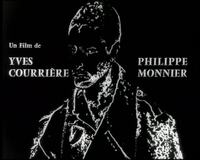
On the first of November 1954, “Bloody All Saints Day” exploded in a series of attacks throughout Algeria carried out by what would later become the National Liberation Front. It was the start of the Algerian war. The first film made about this conflict became the first indispensable documentary about the Algerian war. It includes unforgettable testimonies and archives to that allow us to “dare to look at the truth head on". In the rigorous search for historical truth, the authors committed themselves to understanding the different parts of the conflicts, such as the "pieds-noirs", the career soldiers, the Harkis, the Fellaghas, the civil population... Yves Couriere, writer and journalist, has followed all the major stages of the Algerian drama, on the field, between 1958 and 1963. Before making this film, from 1967 to 1971, he published a four-volume history, the first, of the Algerian war.
Untitled
ES ES-OVNI RSC-4339
·
Item
·
1956
Part of Non-Identified Video Observatory (OVNI)
When independence came, the owners of the big boats decided to sell up, so many small-scale fishermen soon found themselves out of work. Their wives decided to pool their gold rings and sell them to buy new boats.
ES ES-OVNI RSC-4290
·
Item
·
2017
Part of Non-Identified Video Observatory (OVNI)
Those who suffer from the melancholy of eternity are called eternals. Convinced that death cannot take their lives, they believe they are condemned to wander around waiting for the day when they will be released from their existence. This film is a tale of wanderings and escapes, on the borders of Nagorno-Karabakh, an Armenian enclave in Azerbaijan. Inhabited by the ghosts of the genocide and by the war that has been raging there for more than twenty years, the characters who traverse this film carry within them the melancholy of the eternal.
Untitled
ES ES-OVNI CTX-S012-SS007-0019
·
Item
·
2007
Part of Non-Identified Video Observatory (OVNI)
Hiroshima 1914-2006
Untitled