The director travels with a group of young Moroccan women who are going to visit their families. A story about migration, reunion, and loss.
UntitledFrance
15 Archival description results for France
Anya displays a double trajectory. On one side, an exploration of the imagined frontier that makes up the Bosphorus, and on the other a tale, recounted offscreen, of a young Iraqi woman waiting for a visa for Australia during 12 years. A waiting time made of hope, disappointments and forced perseverance.
We follow the director's camera into the kitchens and living rooms of a community of Moroccan women. inside the walls of their apartment in Casablanca's old Medina, the women cook, clean, take care of their families and help each other. With their hands in the dough, in the soap whilst washing the laundry, doing the house chores, in the market or at the hammam, between laughter and tears ("We are housewives, that's all. ... Our sport? House cleaning!"). These courageous women, proud of their role, talk about their miserable lives with a great sense of awareness, but without self-pity. They show a surprising vitality, curiosity for life and solidarity. These house-proud housewives may not all know how to read, but they know exactly what would improve their lives: equal rights for women and men, more money, and a better future for their children so they wouldn't have to emigrate to support the family. A sense of hope and the possibility of change radiate out of the everyday lives of these heroines ("batalett").
Parallel testimonies of Youssoupha, a rap artist and Thomas. Evocation of rap as an object of censorship, often criminalised by successive governments, and as a weapon of political struggle, far removed from the clichés of commercial rap.
UntitledThe social treatment of poverty is progressively replaced by repression. The poor, sometimes immigrant, being a victim to start with, becomes a potential criminal. The director observes the social violence and the stigmatisation which keep a whole social class in oblivion. He discovers, far remote from EU's democracy, the reality and the functioning of a social apartheid.
Tarek and Nordin narrate the history and struggles of their organisation. In the midst of the election campaign, their memories of the constant lies and failures of different governments over the last thirty years are put into perspective, somewhat tinged with resentment.
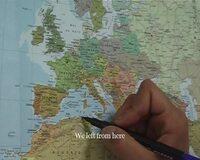
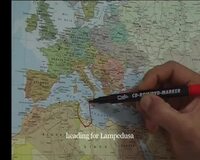
A series of videos that trace the routes of several African immigrants through Italy to France where they have ultimately joined the French Foreign Legion. An emigrant draws on a map of the world the route he has followed. In this way, creates a bridge between the feelings of an emigrant being tossed back and forth and the superficiality of a geographical map.
UntitledA series of videos that trace the routes of several African immigrants through Italy to France where they have ultimately joined the French Foreign Legion. An emigrant draws on a map of the world the route he has followed. In this way, creates a bridge between the feelings of an emigrant being tossed back and forth and the superficiality of a geographical map.
Yamina Benguigui turns her camera on a multi-ethnic region on the outskirts of Paris. These 'backyards' of Paris - suburban industrial ghettos filled with poor immigrants - are a breeding ground for social problems in the midst of an eclectic mix of conflicting cultures and identities.
UntitledOver the last twenty five years, Maghrebian immigrants living in France have brought their families to join them. Many of them lived in shanty towns before moving to working class suburbs. Their children were sent to school and grew up in France. Now their grandchildren cannot move forward, because they have lost their historical memory. This community of two million people, of whom a third have French nationality, are weighted down by double silence: the silence of their parents, and the silence of the public institutions. Mémoires d'immigrés, l'héritage maghrébin is an inside look at this community scattered throughout the four corners of French territory. Benguigui constructs her documentary by intercutting the personal and moving stories of three groups of interviewees: the fathers, the mothers, and the children.
Untitled