In spite of an uprising during the second Republic, the promised agrarian reform never took place and now, seventy years after Franco's coup d'etat, andalusian farmers are still subject to the arbitrariness of the major landowners. But after Franco's death, some farmers organised themselves, conquered land under the control of the big landowners, founded agricultural municipalities and created co-operatives. In Marinaleda, according to slogans painted on the walls, the egalitarian utopia is under way.
France
267 Archival description results for France
The story of a failed encounter between two cultures with different sensitivities and fantasies. This led to colonisation - one marked by brutality - despite the fact that wars, chaos and destruction could have been avoided. Based on archive footage, the film sends a chant echoing infinitely through time and space: "France is our homeland".
UntitledLa France est un Empire is a fresco on the grandeur of France. A film that proudly recounts the history of the creation of the French empire in less than a century (from 1814 to 1912). Propaganda with a clear conscience in regards to how France embarked on the civilizing mission that it had imposed on itself, and all the benefits that ensued from the colonisation of the “natives.” In this sense, it is an almost ethnographic testimony on how France saw itself on the eve of WWII. Seventy years on, the illusion has not dissipated, which is why Sandrine Lemaire's lucid analysis is so important in terms of restoring the truth about this adventure.
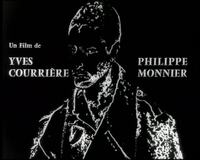
UntitledOn the first of November 1954, “Bloody All Saints Day” exploded in a series of attacks throughout Algeria carried out by what would later become the National Liberation Front. It was the start of the Algerian war. The first film made about this conflict became the first indispensable documentary about the Algerian war. It includes unforgettable testimonies and archives to that allow us to “dare to look at the truth head on". In the rigorous search for historical truth, the authors committed themselves to understanding the different parts of the conflicts, such as the "pieds-noirs", the career soldiers, the Harkis, the Fellaghas, the civil population... Yves Couriere, writer and journalist, has followed all the major stages of the Algerian drama, on the field, between 1958 and 1963. Before making this film, from 1967 to 1971, he published a four-volume history, the first, of the Algerian war.
UntitledThe Law of Silence, a graduation documentary from La Fémis by Moïra Chappedelaine-Vautier, Nadia Zibat, and Raoul Seigneur, explores the 1963 Amnesty Law and its consequences on research conducted about the Algerian War. It features interviews conducted in 2002 with Henri Alleg, director of the Alger Républicain newspaper from 1951 to 1955, and Pierre Vidal-Naquet, historian and essayist. The film also includes striking statements from General Massu and lawyers who dismantle the legal defenses of figures like Jean-Marie Le Pen. Moïra not only gives voice to her father, René Vautier, but also reuses footage he shot forty years earlier. A very compelling documentary that reminds us, among other things, that amnesty is not forgiveness, but the erasure of both the sentence and the crime itself.
Parallel testimonies of Youssoupha, a rap artist and Thomas. Evocation of rap as an object of censorship, often criminalised by successive governments, and as a weapon of political struggle, far removed from the clichés of commercial rap.
UntitledIn a world where the economy is no longer at the service of mankind but precisely the opposite, productivity targets and management methods are pushing workers to the very limits of their endurance. Illness, industrial accidents and physical and psychological suffering are at unprecedented levels. The stories that men and women tell their doctor or psychologist, workplace inspectors and industrial tribunals show that there is an urgent need to rethink the way we work.
Untitledtranslate
The social treatment of poverty is progressively replaced by repression. The poor, sometimes immigrant, being a victim to start with, becomes a potential criminal. The director observes the social violence and the stigmatisation which keep a whole social class in oblivion. He discovers, far remote from EU's democracy, the reality and the functioning of a social apartheid.