Ecuador

Elements area

Taxonomy

Code

Scope note(s)

    Source note(s)

      Display note(s)

        Hierarchical terms

        Ecuador

          Equivalent terms

          Ecuador

            Associated terms

            Ecuador

              10 Archival description results for Ecuador

              10 results directly related Exclude narrower terms
              Texaco
              ES ES-OVNI CTX-S011-SS006-0118 · Item · 2003
              Part of Non-Identified Video Observatory (OVNI)

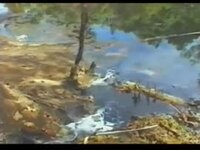
              Texaco began operating in Ecuador over 30 years ago, when it was given 400,000 hectares to exploit. The company drilled 339 oil wells and left a wake of contamination and incalculable damage. All of this within the stunning setting of the Amazon jungle, where many ethnic groups had lived in harmony since time immemorial. There is a legal process pending against Texaco for damages, in Ecuador and the U.S.

              ES ES-OVNI CTX-S011-SS003-0012 · Item · 2003
              Part of Non-Identified Video Observatory (OVNI)

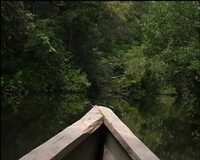
              Soy Defensor de la Selva relates how the Sarayaku community struggles against CGC when this oil company enters Sarayaku territory in order to carry out seismic prospecting, without the consent of the community. The video shows how the Sarayaku community confronts the oil company crews in order to stop them. The conflict intensifies when the military intervenes, reaching body-to-body confrontations. The women are the main protagonists of the video. Men, women, and children go out to guard the traditional limits of the community. The film shows the life in our Camps for Peace and Life, and contains the testimonies of our elders, as well as traditional music as background. This is the story of a small community struggling to save its space of life.

              Untitled
              Nawpa [0.1]
              ES ES-OVNI CTX-S012-SS003-0010 · Item · 2004
              Part of Non-Identified Video Observatory (OVNI)

              In Ecuador, the indigenous movement has one of the longest and most intense traditions of resistance in the history of modern Latin America. César Pilataxi, a Kichwa man from the Andean region, explains the reasons behind the confrontation between his community and Western interests.

              Maldita Ley y Zona libre
              ES ES-OVNI CTX-S013-SS004-0010 · Item · 2008
              Part of Non-Identified Video Observatory (OVNI)

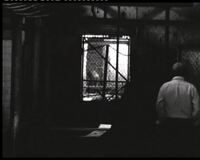
              Twenty videos filmed secretly in several prisons in Quito, Ecuador, over a three year period. Far from simply idealising participative mechanisms, the method used in this audiovisual project ensures that the inmates' point of view remains. Whether this point of view is mediated by learning techniques on graphics, or the inmates pose before the camera like actors, they are always fully aware of the work to be done and, at the same time, of the motivations behind this project. The clandestine nature of the camera and the non-hierarchical production process created emotional bonds that, in one case, went beyond the prison and were reproduced on the outside, affecting relatives and friends.

              Untitled
              Levantamiento Indígena 1990
              ES ES-OVNI CTX-S011-SS006-0096 · Item · 1990
              Part of Non-Identified Video Observatory (OVNI)

              The 1990 indigenous uprising in Ecuador represented two things: the end of the tutelage of the left and the theology of liberation in the indigenous struggle, and the indigenous people's recovery of their own identity, and of their history of resistance since the Spanish conquest.

              La Resistencia del maiz
              ES ES-OVNI CTX-S010-SS001-0002 · Item · 2003
              Part of Non-Identified Video Observatory (OVNI)

              What is the extent of the FTAA plan? Who does it affect and who gains the most benefits? The application of the FTAA regional plan, or, if it fails, the Free Trade Agreements between individual countries, has tragic consequences for many poor urban and rural (mostly indigenous) people, that is, for the majority of the population in these South American countries.

              Camal
              ES ES-OVNI CTX-S010-SS007-0052 · Item · 2000
              Part of Non-Identified Video Observatory (OVNI)

              A poetic and penetrating look at the old slaughterhouse in Quito, and the work routine. When you go to Quito's slaughterhouse you can see the emotional detachment with which living animals are turned into meat for mass consumption. At the end of the day its a job like any other, a routine. The smell of the place is tepid and penetrating, the noise is loud, the colour red dominates. And in this place, which to the naive observer is terrifying and nauseating, hundreds of people come, including entire families, to earn a living. Couldn't so much effort, so much death, have an ulterior motive?.

              ES ES-OVNI CTX-S013-SS007-0092 · Item · 2005
              Part of Non-Identified Video Observatory (OVNI)

              In the aggressive search for the “black gold” that drives Western economies, multinational corporations are working to extract billions of dollars of oil reserves from beneath Ecuador's rainforest. Between Midnight and the Rooster's Crow investigates the operations of the EnCana Corporation, a firm that, despite proud public declarations of its social responsibility, is shown to be answerable for widespread environmental contamination and human rights violations.

              Untitled