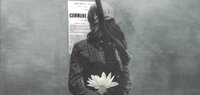
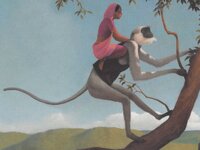
Liberated spaces / OVNI 2009
/ CONTEXT 1994 - 2020
Liberated spaces / OVNI 2009
OVNI Rhizomes lays bare the subterranean, rhizomatic points of contact between worlds and experiences that seem very different from each other. The remembered image is that of a rhizome (1), or rhizomes, it doesn't matter which because it is both at once, the singular and plural do not affect it.
“Advice, slogans: follow the plants” (2). In a world of concrete and asphalt we see different plant species living in cracks in the most unlikely places, gathering rain and seeking out soil that has been banished. At other times, these same plants, or the roots of trees, create the cracks and buckle the asphalt. We have also seen plants cover entire buildings, opening walls and destroying them; but so have we seen them holding together the ruins of immemorial knowledge, ancient temples in the jungle, in a strange union that seems to complete them. Like the cobra that saw Buddha meditating and instead of biting him, decided to cover him and shelter him from the rain. An image that perhaps renews a forgotten pact: to awaken to the smooth continuity between nature and human, between nature and knowledge, a continuum that hovers over words to remind us of the essential unity and manifest multiplicity of all things.
Plants also show us diverse systems. Along with the centralised and hierarchical organisation of the roots of trees, there are the spidery roots of shrubs and bushes, the rhizome of certain species (grass, reeds, ginger, mangroves...) creates "an acentred, nonhierarchical and nonsignifying system without a General and without an organizing memory or central automation, defined solely by a circulation of states" (3).
We screen videos like visions that connect and interrelate these states and realities, producing rhizome in space, but also in time, given that the first two principles of the rhizome are connection and heterogeneity: any of its points can and must be connected to anything else. This is not the case with trees and roots, which always fix a point, a particular order. Thus, like a violently smothered echo, the Black Panthers’ "all power to the people” resonates in the possibility of immigrant communities, in the “banlieues" of the world. The anti-Vietnam war protests and the underground that derived from them emit lines that break the sad, or even complicit, silence around the occupation of Palestine, Iraq, Afghanistan... or around the wars "subcontracted" by big corporations in Africa. (4)
Indigenous peoples are part of a rhizome that includes the earth, plants and animals, forms of knowledge that derive from their forms of survival and celebration, and wakefulness and dreams. They see this multiplicity as a substantive, not an accumulation: another of the principles of rhizomes. They know that an attack against any one of their realities is unavoidably a prelude to other acts of violence. This is why a Yaqui Indian explains that those responsible for the genocide against his people also exterminated wild animals, domesticated others, imprisoned the survivors of his people in reserves. It is also like the indigenous community in Peru that dreams up a different kind of schools, and creates them with urgency on awakening; because they seen how the official educational system teaches their children to be enemies of their own traditions, of their own environment. They warn us, they are not isolated points on the outside of the “other”, they are lines of alert, for ourselves (5).
In Europe, the warning came from Exarchia, a neighbourhood in Athens. The death of 15 year old Alexis, shot by a policeman, triggered a new awareness, the occupying of spaces, the issuing of communiqués in which teenagers sorrowfully condemned the submissiveness of many of their parents, the conformism instilled by the schools of consumption and production;... the impossibility of imagining, together, another form of existence:
“We want a better world. Help us. We are not “terrorists”, nor “hooded ones", nor the "known-unknowns". We are your children, they are the known-unknowns... We have dreams, don’t destroy them We are alive, don’t stop us Remember, you were also young once Today you run after money, you only worry about “appearances” You’ve grown fat, you’re bald You’ve forgotten We hoped for your support We hoped for your concern We wanted you to make us proud for once. But it was in vain. You lives are nothing but lies, you have bowed down You’ve dropped your pants and you are waiting to die You don’t imagine, You don’t fall in love You don’t create You only buy and sell Materialism everywhere, Love nowhere, Truth nowhere (6).
Dark roots, prisons opposite factories, maps and imaginaries that don't include us as life, neighbourhoods in ruins, third-generation migrants – forever migrants? - bombed hospitals, hundreds of dead birds by a lake, torn rhizomes.
But unlike the cuts that isolate other kinds of structures, a rhizome can be torn and cut off at any part. Rhizomes can be broken or cut without causing any harm (7), because rhizomes are made up of ruptures, they can keep functioning and even thrive in spite of these “ruptures”. This is how other nomadic maps begin, inspired by roaming cats, in the non-useful areas of cities: where abandoned sites create space for communities of cats and, and room for the dreams of the people who feed them, humans adopted by feline tribes; in urban micro deserts, jungles and ruins. Where squatted abandoned buildings become hybrid, mingling with other distant memories, scorned by speculation. Liberated spaces that come back to life, that break the Totality (8).
“What is the Totality? It is the high residue of hazardous and potentially lethal chemicals inside your fat cells. It is you shopping when you are depressed. It is you sitting inside and turning on the television or computer on a beautiful day. It is feeling you get that something is missing. It is the headache that won't go away. It is the bleeding in your intestines from years of pain alleviating drug use. It is the drugs you have take when you need an escape. The bulldozer that destroyed the woods you might have known so well. It is the towering skyscraper that makes you feel forever tiny and powerless. It is your prison, sometimes with bars, sometimes without. It is all your fears. It is the thing that has categorised you. It is the ache in your back. It is your adrenaline. The tears that pour down your face after a sad movie. It is your longing for a dramatic romance with a happy ending. It is the extinct species. It is the dying world. It is polluted air. It is the farmer killing her/himself with the pesticides that were going to make life better. It is the feeling of superiority, which supplies the reason to destroy all else.” (9)
A Totality that is always aimed at the conquest of the other. And the result is a society based on competition, on commodification and global expansion. A society that doesn’t contemplate any logic other than growth (10). A society made up of masses of solitary individuals.
Dominant thought can be recognised in power that is directed outwards. But this outward-focus does not mean that this form of power is only exercised on material forms and surfaces. Rather, it causes and forces everything that is inwardly focused – anonymous, hidden, insignificant – to flow towards the surface, be reduced to the external, reveal itself, publicise itself, to end up becoming nothing more than the outside. This is the only way that it can impose its full cartography, group and produce its identities... so that it can allocate its experts and target its goods. This outwardly-directed power necessarily dominates and subjugates the other – whether beings, territories or forms of knowledge – but also to constantly produces it, through the exhibition of images and attitudes, the unceasing creation of politica