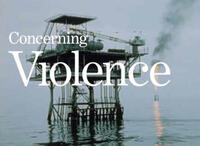
Una pel•lícula de Göran Hugo Olsson basada en Els condemnats de la terra de Frantz Fanon. Narrada per Lauryn Hill Prefaci de Gayatri Chakravorty Spivak. Amb aparicions de Thomas Sankara, Amílcar Cabral, Tonderai Makoni, Robert Mugabe, el FRELIMO i el MPLA. Concerning Violence és un documental compost d'imatges d'arxiu dels moments més arriscats en la lluita per a l'alliberament del Tercer Món i, alhora, una anàlisi dels mecanismes de descolonització a través de fragments d’Els condemnats de la terra de Frantz Fanon. L'emblemàtic llibre de Fanon, escrit fa més de 50 anys, segueix sent un referent per entendre el neocolonialisme existent avui dia i la violència i les reaccions que genera. En plena Guerra Freda, diversos realitzadors radicals suecs van decidir documentar de primera mà els moviments africans d'alliberament antiimperialista. El director Göran Hugo Olsson va trobar aquest metratge de 16 mm als arxius de la televisió pública sueca i el va utilitzar per crear una història visual d'Àfrica amb imatges de la lluita per la llibertat, la Guerra Freda i Suècia. Els realitzadors suecs, solidaris amb les lluites antiimperialistes i socialistes d'aquell moment, van crear imatges i històries que segueixen sent vigents i que poden canviar i enriquir la nostra visió del món globalitzat en què vivim. La gent gravada per aquests realitzadors va lluitar per la seva llibertat i la d’altres jugant-s’hi la vida. Aquestes imatges d’arxiu inèdites inclouen un atac nocturn del Moviment Popular per a l’Alliberament d’Angola i entrevistes a guerrillers del Front d’ Alliberament de Moçambic, a Thomas Sankara, Amílcar Cabral i altres revolucionaris africans. El material és impressionant: pel•lícules clares, nítides i úniques que transmeten la sensació d’urgència i compromís que van caracteritzar els moviments de descolonització. «Alliberament nacional, renaixement nacional, restitució de la nació al poble; siguin quines siguin les rúbriques emprades o les noves fórmules introduïdes, la descolonització és sempre un fenomen violent». A través d'imatges, entrevistes i una narració que guia l'espectador mitjançant les paraules de Frantz Fanon, Concerning Violence explica la història de la gent i les idees presents darrere una de les lluites per a la llibertat i el canvi més constrenyedores del segle XX. La seva estructura en nou capítols connecta idees abstractes amb imatges concretes i amb gent de carn i ossos que humanitza i fa avançar la història. Amb un estil únic que barreja assaig documental i material d'arxiu, Concerning violence recupera la visió humanista i postcolonial de Fanon al llarg d'un viatge cinematogràfic que ens mostra la gent per a la qual els escrits de Fanon no eren només retòrica sinó una realitat. En solapar el text de Fanon amb imatges d'arxiu, grafismes i música contemporània, el realitzador Göran Hugo Olsson ofereix a una nova generació d'espectadors una anàlisi de la maquinària colonialista que hi ha al darrere de molta de la violència que veiem esclatar en l'actualitat en certes parts del món. Sobre la història i la producció Concerning Violence combina imatges fascinats d’una època decisiva amb el mític text de Frantz Fanon publicat el 1961. Fanon, un psiquiatra de Martinica que va participar activament a la lluita per a l’alliberament d’Algèria, va ser un dels principals intel•lectuals que van donar suport a les lluites contra la colonització sorgides a partir de la Segona Guerra Mundial. Els seus textos van ser fonamentals per a la formació del pensament africà, que estaven gestant visionaris de les noves nacions africanes en aquella època convulsa pel continent. Alguns del quals apareixen en el material d’arxiu de la pel•lícula. La lectura d’Els condemnats de la terra segueix sent una experiència alhora fascinant i pertorbadora per l'exactitud amb què va predir el món actual. El llibre explica perfectament la dinàmica destructiva entre els rics i el tercer món (terme encunyat en la traducció a l'anglès). Amb una precisió absoluta, Fanon descriu un mecanisme abstracte que regeix la relació entre el colonitzador i el 'nadiu', així com entre les empreses estrangeres i la gent que viu de la terra, els recursos naturals dels quals volen explotar les esmentades empreses—una situació que segueix sent a l'ordre del dia. Fanon afirmava que la descolonització s'ha de realitzar en les dues direccions: tant el colonitzat com el colonitzador necessiten ser descolonitzats. Com a psiquiatre, era conscient de les profundes repercussions que tindria i dels enormes ajustaments que serien necessaris. També sabia que no es produiria sense una tremenda lluita que podia adoptar moltes formes, inclosa la que ell denominava, no sense polèmica, "violència terapèutica". En un gest de complicitat al prefaci de Jean-Paul Sartre a Els condemnats de la terra, la pel•lícula se situa en el context històric i social contemporani a través d'un prefaci audiovisual a càrrec de Gayatri Chakravorty Spivak, una de les principals teòriques de la consciència postcolonial que Fanon va contribuir a despertar, marcada actualment pels avenços dels quals ell, en la seva curta vida, no va poder ser testimoni. Concerning violence, en essència, és un documental sobre l'enrevessada relació entre l'Àfrica "tercermundista" i Europa (que en la forma moderna de neoimperialisme inclou els Estats Units, la Xina i els països del Golf) i tot el mal i les injustícies que està provocant . És un intent d'entendre la profunda hipocresia dels valors occidentals en què es basa l'ordre mundial actual. El llibre aprofundeix en els efectes de la pobresa i l'opressió sobre la ment humana i en els motius pels quals una persona exposada a l'explotació i la violència acaba esclatant amb allò que a nosaltres, des de la distància, ens pot semblar una reacció irracional. En aquests temps de globalització, resulta molt interessant examinar l'extraordinària violència de la colonització, tant ideològica com física, i comprovar que, en el context d'aquest llegat, moltes de les tensions actuals van tenir el seu origen fa molt temps. L'esclat de violència i els conflictes contemporanis a Àfrica i altres llocs eren, potser, totalment predictibles. A la pel•lícula el text de Fanon és narrat per Lauryn Hill, una artista respectada i compromesa amb les causes socials capaç d'arribar a una nova generació que viu en un món postcolonial.