
Del Olvido

Elements area

Taxonomy

Code

Scope note(s)

    Source note(s)

      Display note(s)

        Hierarchical terms

        Del Olvido

          Equivalent terms

          Del Olvido

            Associated terms

            Del Olvido

              29 Archival description results for Del Olvido

              29 results directly related Exclude narrower terms
              ES ES-OVNI CTX-S015-SS007-0027 · Item · 2011
              Part of Non-Identified Video Observatory (OVNI)

              He asked me: “Ms Ziadah, don’t you think that everything would be resolved if you would just stop teaching so much hatred to your children? (...). Pause. I look inside me for strength to be patient but patience is not at the tip of my tongue as the bombs drop over Gaza. Patience has just escaped me. Pause. Smile. We teach life, sir! (...) These are not two equal sides: occupier and occupied. And a hundred dead, two hundred dead, and a thousand dead. (...) Is anybody out there? Will anyone listen? I wish I could wail over their bodies. I wish I could just run barefoot in every refugee camp and hold every child, cover their ears so they wouldn't have to hear the sound of bombing for the rest of their life the way I do. (...) Today my body was a TV’d massacre. We teach life, sir. We Palestinians wake up every morning to teach the rest of the world life, sir.”

              Untitled
              Urban Rhizomes-Taller
              ES ES-OVNI CTX-S015-SS006-0005 · Item · 2012
              Part of Non-Identified Video Observatory (OVNI)

              Urban Rhizomes is a workshop exploring the ambivalence of the natural world and social movements. Through an examination of certain trees and plants that contain both productive and destructive elements, we question political tendencies that reduce discourse to good/bad dichotomies. We can learn from and utilize natural forces in order to build the world we want to live in today without waiting for the collapse-in-progress to arrive in full force.

              ES ES-OVNI DIF-S016 · Series · 2023
              Part of Non-Identified Video Observatory (OVNI)

              Unidentified Video Observatory Constellations

              Presentation at the MACBA 2023-2024 IEP

              Una eina per a explorar

              L'Observatori de Vídeo No Identificat és una potent eina per a la incursió entre els «oasis» que resisteixen a l'extensió del desert. Incursió en el sentit d'exploració i viatge, alhora físic i iniciàtic, obertura a l'encontre amb l'inaudit que mai deixa igual.

              «Tornar a obrir el camp de l'experimentació»

              A la seva manera modesta, situada, funambulista amb la Institució — una de les pràctiques que ovni ha perseguit des del principi ressona amb aquesta veu indígena que es va alçar amb força, en la mateixa meitat dels '90, des del cor de la selva: Veu de les comunitats sense veu, que no ha cessat, veu emmascarada, on la màscara es torna una manera de comparèixer que subverteix des del principi la unificació global tecnocapitalista i els seus «mecanismes per a separar aquesta cria de la terra de la seva mare» (Ailton Krenak) (1). Aquesta pràctica consisteix a «tornar a obrir el camp de l'experimentació» — tornar a recuperar l'obertura, l'incisiu, la proximitat i la commoció crítica que havia tingut el vídeo en els seus inicis. Tornar a portar el documental independent, el testimoniatge, la visió poètica, el treball d'arxiu (2).

              Per tant, el treball d'ovni–desorg va més enllà de les consideracions banals sobre el vídeo i l'audiovisual, la diferència amb el cinema o les qüestions tècniques. El projecte és una eina brutal perquè al llarg dels anys es torna més i més evident que el vídeo, l'arxiu, la imatge són, en la societat de la imatge en què vivim, eines fonamentals que ajuden a pensar el present . — Pensar, deia DH Lawrence, no consisteix, com es creu, a recuperar dades obsoletes i extreure conclusions falses. Pensar consisteix en un descobriment, que es fa amb tot el cos i el començament del qual és generalment dolorós (3). Descobriment dolorós quan trenca l'aparent normalitat unívoca, la closca que ens tanca i ens encega, esquerda (4) — íntima i poètica o política i comunitària— que obre a formes més vitals, més amables, més reparadores i més riques d'habitar, els «oasis» (5).

              Vivim una època de guerra sense fi. Una guerra l'objectiu de la qual és perpetuar-se i perpetuant-se imposar un «eix temporal global» unificat, com deia Kader Attia al final de la seva conferència (6). O dit amb les paraules de Ailton Krenak: «Mentre la humanitat va distanciant-se del seu lloc, un munt d'astutes corporacions va ensenyorint-se de la Terra. Nosaltres, la humanitat [que ens han dit que som, aïllant-nos d'aquest organisme del qual som part, la Terra] viurem en ambients artificials produïts per les mateixes corporacions que devoren selves, muntanyes i rius.» (7)

              Però a l'interior d'aquest procés es produeixen ruptures (8), ruptures que a vegades ocorren, que trenquen el temps lineal, el temps d'una repetició normalitzada que es vol eterna. Ruptures que pleguen el temps de la subjectivitat i de les coses, ruptures intempestives i insospitades que obren el camp del possible — i deixen advenir veus d'Egipte, Líban, el Marroc o el poble Palestí en l'exili (9), veus de la selva i els ancestres, testimoniatges i visions des de l'Índia o des de Gènova o l'Argentina en la revolta, veus de la Frontera i de les Colònies, cosmovisions indígenes o africanes, Aymara o Quítxua o del Senegal— veus, presències i experiències de ruptura que també emergeixen aquí, a Barcelona, decolonials, feministes, o de pura revolta contra el capital i el seu món.

              Una constel·lació contra l'oblit

              Com a projecte de recerca i creació, l'Observatori és en el sentit més profund un arxiu de les ruptures i, per tant, quan l'arxiu és —com s'inclou en els debats contemporanis— una eina de la història i la història l'escriuen els vencedors, com deia Walter Benjamin,  l'Observatori és també una ruptura dels arxius (10), doncs, com també deia Benjamin, «Ni tan sols els morts estaran fora de perill si l'enemic venç… I aquest enemic no ha cessat de vèncer» (11). Ovni és així una constel·lació contra l'oblit — és una invitació a prosseguir —de manera artística, poètica o experimental— el que s'ha obert en les ruptures de l'època — que són també moments de bifurcació de continents perceptius — on la realitat està en joc.

              És el que vèiem l'altre dia amb l'Elvira Espejo Ayca (12), on enfront del tipus de «saber» occidental, que contínuament "talla" o separa (emoció i raó, art i ciència, naturalesa i cultura) per a situar-se des de dalt com a domesticació i dominació de l'ésser humà, ens presentava la potència de la «criança mútua» com a desplegament de «interconnectivitats» i «cura i atenció màxima», on s'aprèn a través de la retina, el tacte, la sensació de tot el cos, donant lloc a una sensibilitat i una manera de viure on ja no ets «tu» l'important, sinó que la vitalitat de la Terra és l'important —«The Earth» de la qual parlava Achille Mbembe a partir d'ontologies Yoruba i Dogon (13)— cuidar el que et cuida, protegir el que et protegeix, mutar amb el que muta, atendre al que contínuament emergeix...

              Ovni és una constel·lació contra l'oblit perquè els moments de ruptura o les fulguracions visionàries tornen a tancar-se sota la inèrcia de la normalitat, però queden traces, petjades, veus. I si des d'algun lloc val la pena continuar pensant és des d'aquests moments que esquerden el continuum de la història recent, des de l'experiència més alta.

              Una invitació a l'encontre

              Pensar avui és pensar no sols amb paraules, és pensar amb la gestualitat del cos i amb els cossos sonors, és pensar amb imatges que ens fereixen o ens encoratgen, o amb purs enigmes del temps, és convocar als espectres en el llindar de la nostra participació en el món. Pensar avui és pensar des de l'escolta i des de l'obertura a l'encontre amb l'inaudit no sols humà. Com a amic i col·laborador extern de desorg.org , veig que una dimensió fonamental del projecte, que jo he trobat en el seu centre, està en la invitació a l'encontre — com a manera de continuar el que s'obre amb la ruptura — que està en el cor del pensar, del delirar, del tractar de portar endavant pràctiques de llibertat.

              Invitació a trobar-se que començava amb projectes d'autoria —també anònima o sense-identificar— que enviaven coses per a projectar des de molts llocs, pròxims i llunyans, i que seguia amb la invitació a l'encontre amb el que s'anava a buscar i que ressonava amb el que arribava. Invitació a l'encontre amb les veus i projectes que a Barcelona emergien en ruptura o en dissonància amb la monoforma, amb l'«eix temporal global» on «There is no alternative». Des d'Espai en Blanc a la Confraria Sufí senegalesa dels Baye Fall, 15M bcnTV o el grup de «Ciutat Morta». — L'objectiu exotèric no era capturar-los per a neutralitzar-los en la Institució Cultural , sinó, des dels seus marges, tibar la Institució per a fer sortir de polleguera la seva tendència a tancar-se sobre si mateixa i tornar-se irrespirable, sota la seva epistemologia d'experts i els seus procediments entre el management i la burocràcia. — Però l'objectiu no quedava només allí, no era per a res exterior. L'objectiu esotèric era i continua sent el viatge mateix de la recerca i de la trobada, prosseguir i ampliar la conversa, i l'experimentació. Com deia Hölderlin: «La vida de l'esperit entre amics, el pensament que es forma en l'intercanvi de paraula per escrit i de viva veu són necessaris als que busquen. Fora d'això som per nosaltres mateixos sense pensament. Pensar pertany a la figura sagrada que junts figurem» (14).

              — Paradoxalment la possibilitat dels encontres és més intensa com més desllorigat està el temps, com més gran és la interrupció i l'alteració del temps lineal homogeni. No obstant això, el viatge continua, els llaços segueixen aquí.

              — Arxiu de les ruptures, no sols com a testimoniatge d'aixecaments radicals i comunitaris, sinó també de disrupcions de la percepció i la sensibilitat, de la presència ín

              ES ES-OVNI CTX-S015-SS007-0006 · Item · 1965
              Part of Non-Identified Video Observatory (OVNI)

              “By late 1964 Harold Wilson’s newly elected Labour Government had already broken its election manifesto to unilaterally disarm Britain, and was in fact developing a full-scale nuclear weapons programme, in spite of wide-spread public protest. There was a marked reluctance by British TV at the time to discuss the arms race, and there was especially silence on the effects of nuclear weapons - about which the large majority of the public had absolutely no information. I therefore proposed to the BBC that - using one small corner of Kent in southeastern England to represent a microcosm - I make a film showing the possible effects, during an outbreak of war between NATO and the USSR, of a nuclear strike on Britain.” The BBC panicked when they first saw the film, and sought government consultation re showing it. They subsequently denied this, but the sad fact remains that the BBC violated their own Charter of Independence, and on September 24, 1965, secretly showed The War Game to senior members of the Home Office, the Ministry of Defence, the Post Office (in charge of telecommunications), a representative of the Military Chiefs of Staff, and Sir Burke Trend, Secretary to Harold Wilson’s Cabinet. Approximately six weeks later, the BBC announced that they were not going to broadcast the film on TV - and denied that their decision had anything to do with the secret screening to the government". Peter Watkins

              Untitled
              ES ES-OVNI CTX-S015-SS003-0003 · Item · 1989
              Part of Non-Identified Video Observatory (OVNI)

              Having been tricked by Power and humiliated by the arrogance of those who now wield it, the Pandavas are forced into exile even though they still harbor a desire for justice. They face twelve years of banishment in the wilderness, and a further year during which they must live in disguise and avoid being discovered. The Mahabharata, portrays this exile as a period of extreme hardship in which death is always present – but so is the growing awareness of its opposite. To abandon the palace and swap the city for nature also leads them to renew direct contact with life, embark on a search for knowledge, start a process of cleansing and strengthen the bond of brotherhood. Nevertheless, this strengthening seems to lead back towards war. Part two ends with the famous reflections of the Baghavad Gita in which Krishna responds to the doubts of Arjuna.

              Untitled
              ES ES-OVNI CTX-S015-SS004-0001 · Item · 1989
              Part of Non-Identified Video Observatory (OVNI)

              After the reflections from the Bhagavad Gita, the war begins: a tragedy that pits brother against brother and sucks up whole families, people of great courage. It is a war of devastating consequences, which does not just threaten the survival of one of the two sides, but the continuity of life on earth. “Even the blades of grass tremble in fear.” A battle in which the clashing sides do not hesitate to use the ultimate weapons. Vishnu himself exclaims: “Now I am become Death, the destroyer of worlds.” This is a war that is also played out inside every human being.

              Untitled
              ES ES-OVNI CTX-S015-SS002-0003 · Item · 1989
              Part of Non-Identified Video Observatory (OVNI)

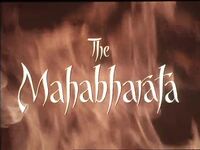
              The Mahabharata is one of the world’s greatest books. It is also the longest poem ever written. It was written in Sanskrit, and is about fifteen times the length of the Bible. “Maha” in Sanskrit means “great” or “complete”, “Bharata” is primarily the name of a legendary character, then that of a family or clan. So the title can be understood as “The Great history of the Bharatas”. However in a extended meaning “Bharata” can mean “Hindu”, and, even more generally “Man”. So the Mahabharata could be translated as “The Great history of Mankind”. According to most scholars, the events recounted in The Mahabharata probably have a historical source. Others maintain that the correct interpretation of the poem lies entirely in the direction of myth. Yet others point out the importance of the teaching books in the epic - political, social, moral and religious - and see The Mahabharata as a long treatise of government initiation “As far as we were concerned, this immense poem, which flows with the majesty of a great river, carries an inexhaustible richness which defies all structural, thematic, historic and psychological analysis. Doors are constantly opening which lead to other doors. It is impossible to hold the Mahabharata in the palm of your hand. Layers of subtext, sometimes contradictory, follow upon one another and are interwoven without losing the central theme. The theme is a threat: we live in a time of destruction - everything points in the same direction. Can this destruction be avoided?” Jean-Claude Carrière In our interview with Carrière, he talked about what he sees as the core of the Mahabharata: it is a poem on oblivion. Mankind seems to constantly forget the source of its true nature. Indian tradition says: “Everything in the Mahabharata is elsewhere. What it is not there is nowhere”. Part one, "The Game of Dice", shows us a growing confrontation between two sides battling for power. One side is clearly closer to the idea of dharma than the other, which barely bothers to respect it. To avoid direct hostilities, they decide to play a game of dice; but the game is rigged. Playing with power is a rigged game.

              Untitled
              The Mahabharata
              ES ES-OVNI CTX-S015-SS007-0011 · Item · 1989
              Part of Non-Identified Video Observatory (OVNI)

              The Mahabharata is one of the world’s greatest books. It is also the longest poem written. It was written in Sanskrit, and is about fifteen times the length of the Bible. “Maha” in Sanskrit means “great” or “complete”, “Bharata” is primarily the name of a legendary character, and then that of a family or clan. So the title can be understood as “The Great history of the Bharatas”. However in an extended meaning “Bharata” can mean “Hindu”, and, even more generally “Man”. So the Mahabharata could be translated as “The Great history of Mankind”. According to most scholars, the events recounted in The Mahabharata probably have a historical source. Others maintain that the correct interpretation of the poem lies entirely in the direction of myth. Yet others point out the importance of the teaching books in the epic - political, social, moral and religious - and see The Mahabharata as a long treatise of government initiation. “As far as we were concerned, this immense poem, which flows with the majesty of a great river, carries an inexhaustible richness which defies all structural, thematic, historic or psychological analysis. Doors are constantly opening which lead to other doors. It is impossible to hold the Mahabharata in the palm of your hand. Layers of subtext, sometimes contradictory, follow upon one another and are interwoven without losing the central theme. The theme is a threat: we live in a time of destruction - everything points in the same direction. Can this destruction be avoided?” Jean-Claude Carrière. In our interview with Carrière, he pointed out what he thinks is the core of the Mahabarata: it is a poem on oblivion. Mankind seems to constantly forget the source of their truly nature. Indian tradition says: “Everything in the Mahabharata is elsewhere. What it is not there is nowhere”.

              Untitled
              ES ES-OVNI CTX-S015-SS007-0012 · Item · 1968
              Part of Non-Identified Video Observatory (OVNI)

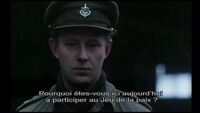
              The Gladiators is a bleak satire set in the near future, in which the major powers of the world, East and West, aligned and non-aligned, recognize the possibility of a major world war within our lifetime and try to forestall it by channelling man’s aggressive instincts in a more controllable manner. They do this by forming an International Commission along the lines of the United Nations, dedicated to fighting a series of contests between teams of selected soldiers from each country. These competitions, which can be fought to the death, are called “Peace Games”, and are broadcast on global television via satellite - complete with sponsors and commercials. The film follows Game 256... The international group of officers watching Game 256 decide to eliminate a man and a woman from opposing teams who reach out to each other, because they decide that such forms of communication would be the gravest threat of all to the stability of the existing world-system.

              Untitled
              ES ES-OVNI CTX-S015-SS007-0026 · Item · 2011
              Part of Non-Identified Video Observatory (OVNI)

              The precarious housing and employment conditions of the immigrant population in Barcelona's El Raval neighbourhood are simply a reflection of the conditions that our Spanish parents and grandparents - also migrants - experienced during the post-war period.

              Untitled