decolonial

Elements area

Taxonomy

Code

Scope note(s)

    Source note(s)

      Display note(s)

        Hierarchical terms

        decolonial

          Equivalent terms

          decolonial

            Associated terms

            decolonial

              15 Archival description results for decolonial

              ES ES-OVNI CTX-S011-SS002-0015 · Item
              Part of Non-Identified Video Observatory (OVNI)

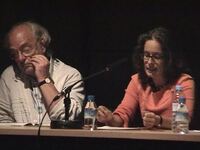
              Round table: Colonialisism and images: an anthropological vision. Participants: Josep Lluís Mateo Dieste (anthropologist – Universitat Autònoma de Barcelona) Alberto López Bargados (anthropologist – Universitat de Barcelona) Lluís Mallart i Guimerà (ethnologist – Laboratoire d'ethnologie et de sociologie comparée, Paris X – CNRS) Moderator: Nadja Monnet, anthropologist – Contraplano LAD. A reflection on the role of images in the colonial system and their impact, given that, as we know, images played and continue to play and important role in spreading ideologies, in particular colonial ideology in the 20th century.

              Untitled
              Entretien avec René Vautier
              ES ES-OVNI RSC-4337 · Item · 2012
              Part of Non-Identified Video Observatory (OVNI)

              In 2012, on the occasion of the fiftieth anniversary of Algerian independence and the theatrical re-release of the restored version of the film "Avoir 20 ans dans les Aurès", René Vautier looks back on his career as a filmmaker involved in anti-colonial struggles.

              Untitled
              Presents Incomodes
              ES ES-OVNI TS-S002-SS002-0003 · Item
              Part of Non-Identified Video Observatory (OVNI)

              El ciclo De lo imaginado a lo tangible, propone presentar ideas abstractas que nos ayuden a reflexionar sobre la realidad donde vivimos, inmediata, concreta y material. Toni Serra, codirector de los Archivos OVNI, presenta diferentes piezas de las más de 2000 que este archivo audiovisual ha reunido a lo largo de 21 años, ofreciéndonos una visión incómodo del siglo donde vivimos, pero también los sueños y deseos de unas sociedades que no se ven reflejadas en el imaginario de los medios corporativos.

              ES ES-OVNI RSC-4188 · Item · 2016
              Part of Non-Identified Video Observatory (OVNI)

              The cycle From the Imagined to the Tangible, proposes to present abstract ideas that help us to reflect on the reality where we live, immediate, concrete and material. Toni Serra, co-director of the OVNI Archives presents different pieces of the more than 2000 that this audiovisual archive has gathered over 21 years, offering us an uncomfortable vision of the century where we live, but also the dreams and desires of societies that do not see each other reflected in the imaginary of corporate media. Museum of World Cultures, Barcelona. 4th October 2016.

              REWEND
              ES ES-OVNI EXP-S004 · Series · 2022
              Part of Non-Identified Video Observatory (OVNI)

              Practical information

                         A presentation of Kurdish films by the Rojava Kurdistan Film Commune (Northern Syria)

              OVNI has collaborated with the Rojava Film Commune in a project aimed at researching, screening, and promoting their work in Spain, Italy, and France. A process of investigation through videos, texts, and meetings, in order to listen to their voices and understand their struggle together. We have created a website that you can visit link.

              Komîna fîlm a Rojava (Rojava Film Commune) is a collective of filmmakers founded in 2015, based in the autonomous Rojava region in the Federation of Northern and Eastern Syria. The Commune is actively working in the region to rebuild and reorganise filmmaking and film education infrastructures.

              The Rojava Film Commune was established to promote local film culture by organising film screenings, facilitating discussions on the role of film within society, producing new films, and setting up a Film Academy. Following the 1960 fire in Rojava’s only cinema in the city of Amude—which saw the death of 298 children trapped inside—the Commune aims to reclaim film as a central space for reimagining society, by democratising and revolutionising the imagination itself.

              The Commune has educated a new generation of Rojava filmmakers, organized screenings in cities and villages, and produced new films. It seeks to represent the values and ideals of the Rojava Revolution, but also to mediate and depict the daily struggles in the Syrian civil war and Rojava’s collective attempt to build a new society.

              The Rojava Film Academy provides education for aspiring filmmakers in Northern Syria. Founded in 2015, it offers one-year programmes, with courses on international film history, Kurdish film history, film theory, photography, cinematography, script writing, editing, and sound design, taught by local and international film professionals.

              The Academy is self-organized and non-hierarchical, encouraging students to participate in every aspect of its organization. Exchange networks have also been set up with other academic, media, and news platforms, and with civil society organizations, in order to engage in broad discussions and create screening possibilities. Considering the influx of foreign filmmakers and journalists to Rojava, it is important for the Commune to reclaim the representation and imagination of the revolution.

              After decades of oppression of Kurdish language and culture, the Rojava Film Academy aims to revitalize local film culture, reclaiming the power to narrate and imagine one’s dreams and realities. After the Syrian Civil War started, the predominantly Kurdish northern region declared the Autonomy Administration, creating structures based on grassroots democracy, women’s liberation, and cultural diversity.

              The Academy bases its methodology on ‘revolutionary realism’, i.e. a realism that does not merely reveal the current reality in a new way, but also restructures the reality of the possible . As well as finding forms to express things as-they-are, it creates the opportunity to imagine the not-yet-present, the ‘eternal becoming’ that is the revolution itself.

              https://rewend.desorg.org/

              https://rewend.desorg.org/

              Right to Move
              ES ES-OVNI DIF-S003 · Series · 2016
              Part of Non-Identified Video Observatory (OVNI)

              De fronteres internes i externes a col·laboracions, línies de fuga i perspectives

              Programa de vídeo d 'OVNI - Observatori de Vídeo No Identificat

              La Frontera en la seva asimetria esdevé línia abismal, línia de tall entre les zones del ser i del no ser. Segons de quin costat i segons amb quins documents ens apropem a ella, serem desplaçats a una zona o a una altra i rebrem el reconeixement del nostre ésser o la seva completa absència.

              El programa que aquí es proposa a manera de viatge, comença per recordar un primer i decisiu oblit: l'oblit colonial. La pràctica totalitat del discurs mediàtic i institucional obvia el passat colonial d'aquells que van establir les fronteres i que ara marquen les condicions per creuar-les. I imposa l'oblit de l'ocupació de territoris, l'explotació de recursos naturals i humans i els seus corresponents genocidis i epistemicidis. Els antics colons mai van ser migrants i solament van trobar aborígens i indígenes a les terres que “descobrien” per als seus interessos. Anys després les persones que ara arriben d'aquestes antigues colònies no troben aborígens europeus, sinó que són ells els migrants. Sempre etiquetes adhesives que bàsicament apunten a ocultar i reduir la seva humanitat per desplaçar-los així a la zona del no ser. Concerning Violence està recorregut per aquest espectre colonial, els textos de Frantz Fanon reflexionen sobre el seu nucli violent, creuen aquesta desolació i tenen encara la força de proposar-nos una possibilitat de vida.

              Cap a la frontera, a les profunditats del desert del Sahel es tanquen micro-acords, es defineixen línies de fuga, es tracen zones, es creuen els primers límits. Sahara Chronicles ens mostra aquest inici de viatge per a uns, caravanserrall per altres. Travessar el no-res sota el control dels drons, vivint la progressiva densitat d'una frontera després d'una altra, cada vegada més espessa, més agressiva i excloent.

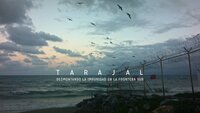
              Aquesta gradació de les fronteres, des de les més llunyanes i permeables fins a les que ara actuen com subcontracta violenta de la frontera principal, desemboca abruptament en la línia abismal, la línia de tall entre les zones del ser i del no ser. Allí les persones deixen de ser, les històries i els recorreguts perden tot sentit. Una vida no és una vida. Tarajal: Desmuntant la impunitat a la frontera sud , mostra aquesta brutalitat de la frontera i deconstrueix els dispositius i relats institucionals que pugnen per donar-li cobertura funcional i finalment legal.

              Però com recentment ens recordava Boaventura de Sousa, la línia del ser i del no ser ja no és fixa, sinó plenament mòbil, cada vegada s'apropa més al centre i ha acabat per cridar a les nostres portes. La frontera ha fet implosió i tendeix a ocupar la totalitat del territori i definir el sistema que l'administra. En Forst , un grup de refugiats a un bosc, ja no a la perifèria del sistema, sinó al centre d'Europa, relaten el seu procés de desaparició en la línia del no ser: “Quan vaig arribar, els de seguretat estaven esperant-me, em van portar dins, van agafar la meva petita borsa, es van posar uns guants de plàstic i van inspeccionar les meves coses, la quantitat de diners que portava, els nombres de la meva agenda, tot. És intimidació, assetjament i maltractament al mateix temps, aquest és l'estil d'aquest sistema. Han passat tres dies i ja no sóc jo (…)”

              L'aparent i tranquil·la normalitat de la zona del ser oculta sota una capa de consum turístic el seu origen. Així el port de Barcelona que rep centenars de milers de consumidors arribats en creuers, té unes arrels que no mostra i que Port Trade Portrait ens recorda: el seu passat esclavista, i la seva mutació a l'era global.

              Dilluns 23 de maig _ L'Oblit Colonial

              Concerning Violence , Göran Hugo Olsson, Suècia, 2014, 85min. V.O.S.E.

              Concerning Violence és un documental compost per imatges d'arxiu dels moments més arriscats en la lluita per l'alliberament del Tercer Món i, alhora, una anàlisi dels mecanismes de descolonització a través de fragments de Els condemnats de la terra de Frantz Fanon. L'emblemàtic llibre de Fanon, escrit fa més de 50 anys, és encara un referent per entendre el neocolonialisme existent avui dia, i la violència i les reaccions que suscita.

              La frontera com a centre , Toni Serra / Abu Ali

              "M'és complicat explicar com és possible que la societat suposadament civilitzada a la qual has fugit per protegir-te sigui tan brutal" (1)

              Les fronteres com a nusos i talls del poder, com a llocs d'acumulació repressiva, control i selecció, estan patint una enorme mutació, ja que no només s'estenen i fortifiquen, sinó que també fan implosió en centenars i milers de dispositius interns: CIEs, o Centres d'Internament d'Estrangers, centres de refugiats, oficines i agències de tota mena que ara es reprodueixen i funcionen com a fronteres interiors. Dispositius de control que es desplacen com escàners que escombren l'interior dels territoris i ciutats, contagiant la seva lògica repressiva al conjunt de la societat. Es converteixen així no només en llocs d'internament de migrants, sinó molt fonamentalment en laboratori i punta de llança de nous règims totalitaris.

              En aquesta època d'estímul a la màxima mobilitat, els turistes, els homes i dones de negoci poden travessar les fronteres i se senten per això privilegiats, no obstant això han d'afrontar els filtres i rituals de control que les configuren, i en fer-ho validen automàticament aquests dispositius, la seva lògica i el seu exercici. Creuen, és cert, però arriben a alguna part o més aviat desplacen amb ells aquestes fronteres, portant-les fins a l'interior de les societats que visiten?

              El tema de la migració es va desvetllant com una de les claus que qüestionen en major profunditat la cultura i la societat contemporànies. Aquest qüestionament es fa a diferents nivells, no només el polític, social i econòmic, sinó també el cultural, simbòlic i imaginari. S'obren així les portes d'una transformació profunda: el que aquesta es doni i la direcció que agafi marcarà la deriva del conjunt de la nostra cultura.

              Dimarts 24 de maig_ Cap a la Frontera

              Sahara Chronicl e , Ursula Biemann, Suïssa, 2007, 50 min., V.O.S.E.

              Una col·lecció de vídeos curts que explora en el post-colonialisme i documenta l'actual èxode subsaharià cap a Europa, on s'analitza la política de mobilitat i contenció que existeix en la geopolítica global actual. S'examinen les modalitats i la logística del sistema de migració al Sahara.

              El material d'aquesta obra ha estat recollit durant tres visites sobre el terreny a les portes principals de la xarxa migratòria trans-Sahariana al Marroc, Níger i Mauritània. Sahara Chronicle reflecteix aquesta xarxa migratòria dins de la interconnexió i la geografia àmplia de la zona. Inclou documents sobre Agadez a Níger, capital dels Tuareg i porta de la zona sahariana per a les rutes de migració principals que arriben de l'Àfrica occidental; Nouadhibou, port del nord de Mauritània, des d'on els migrants es van amb vaixell cap a les illes Canàries; Oujda al costat de la frontera algeriana, per on els migrants del desert entren al Marroc; i Laayoune, al Sahara occidental, punt de sortida per als vaixells que van a Espanya.

              Sahara Chronicle no intenta construir una narrativa homogènia o contemporània d'un fenomen que té arrels a l'Àfrica colonial, diversa i fràgil en la seva actual organització social i experiència humana. En aquest treball, no es fa servir una veu autoritària o un altre dispositiu narratiu per fer la connexió, més aviat és l'espectador qui produeix el significat, que ha d'extreure dels intersticis entre els vídeos. En dispersar el punt de vista, es reconeix al mateix temps el procés múltiple i cooperatiu del coneixement produït en el camí.

              Dimecres 25 de maig_ La Frontera com a Zona de no ser

              Tarajal: Desmuntant la impunitat a la frontera sud , Xavier Artigas i Xapo Ortega, Metromuster i Observatori DE

              The Colonial Dream
              ES ES-OVNI CTX-S011 · Series · 2006
              Part of Non-Identified Video Observatory (OVNI)

              Autonomous Zones _ OVNI 2006

              Colonial dream - Autonomous zones Archive

              / CONTEXT 1994 - 2020

              Autonomous Zones _ OVNI 2006

              The Colonial Dream_ Autonomous Zones

              Colonialism and Eurocentrism are often discussed as though they were things of the past, fortunately overcome. But in life under globalisation, the reality seems to be just the opposite: the occupation and destruction of other worlds and cultures, systematic exploitation of their resources... and also aggressions at the local level, real-estate violence, colonial tourism, migra...

              Autonomy and no-zones: other ways of perceiving and creating community-based external realities and subjective inner ones. Autonomous ways of living and thinking, zones without limits, no-zones.

              After the OVNI 2005 program Resistances (1), we thought it was necessary to deepen the critical intent of the Observatory Archives through documents that reflect upon some of the roots of the situation we are currently living in. Many situations described in the videos that we screened can be traced back to the colonial pulse, either implicitly or explicitly. Similarly, Eurocentrism and the idea that all progress - even revolutionary progress- must pass through the European experience or take it as an unavoidable reference, are still present in conservative thought, and also, in a worrying and paradoxical way, in dissidence. We also wanted to go beyond the negativity that taking a position of resistance necessarily entails, and to show and share the communal and personal affirmations that are being produced in many societies and cultures, and all around us.

              The Colonial Dream*Autonomous Zones sets out on a search that was already implicit in the Archives under different names, an undertaking that will naturally be conditioned by our limitations in the face of such an enormous and complex subject. This first approximation that we share with you now would not have been possible without the many contributions and collaborations that we've received - help in locating particular documents and also finding a direction within the search. In any case, our aim is not to build up a collection of historical documents, or provide a catalogue of specific events, tasks that we would be unsuited for. Rather, given the nature of the Observatory Archives, we want to offer a selection that provides some of the keys and fractals of the subject. This selection is complemented by presentations from some of the people and collectives who have shared the investigation with us or are fundamental points of reference within it, such as the ContraPlano - LAD working group, Michael Taussig (Lecturer at Columbia University and author of Mimesis and Alterity, Shamanism, Colonialism and the Wild Man ...), Serra Ciliv (!f.Istanbul Festival) and René Vautier ( Afrique 50, Algeria in Flames, Hirochirac. ..).

              Our search for contemporary news and promotional materials (from 1930 to 1965) that are key to understanding how the imaginary of the time was constructed led us to some of the major audiovisual archives in the world (storehouses of the colonial legacy). Through our contact with them we came to understand the workings of something that is part of the collective memory of mankind, and how such places are managed. "Management" that is largely governed by the criteria of financial gain. Ignoring such things as non-profit, educational, etc criteria, offensive rates are applied to the extent, for example, of charging up to twenty thousand euros for screening 30 minutes of material (2). Private archives, public archives managed by private companies, or public bodies that are run according to similar criteria prevent free access, or any access, to the audiovisual material that, in this particular case, adds up to a catalogue of evidence against Europe's supposedly civilizing impulse; and a "bank" of the arguments that are still applied even now to current crises. The discovery of how difficult it is to access this material made us aware of the urgency of demanding and defending public access to these archives, which, as we said, form part of the collective memory of mankind. And to prevent the same thing happening in future with the material that is contemporary to us now.

              We don't claim objective truth for the government and corporate documents, or from those by independent authors or groups - "Film is not now nor has it ever been the technology of truth. It lies at a speed of 24 frames per second. Its value s not as a recorder of history, but simply as a means of communication, a means by which meaning is generated. The frightening aspect of the documentary film is that it can generate rigid history in the present in the same manner that Disney can generate the colonial meaning of the culture of the Other. Whenever imploded films exist simultaneously as fiction and nonfiction they stand as evidence that history is made in Hollywood" (3). In reality, what we're showing are not historical events, but images. And even then, the images can't be pared back to the documentary value of the imaginary they create, images that are real in themselves and not in relation to what they represent. "Imaginary" realities - but not any less real for it. Rather than responding to the criteria of true or false, these images respond to the who, how and for what they were imagined.

              In his 1951 film Afrique 50 against savagery, colonialism and exploitation, René Vautier breaks with the complicity of most documentaries and news reports filmed in Africa at the time, full of "greedy lies and fraudulent complacencies". In his words: "Look what lies in store for the people of Africa: we're in Palaka, in northern Ivory Coast. The village couldn't pay the colonial taxes: 3700 francs! On February 27, 1949 at 5 am the troops came, surrounded the village, fired, burned, murdered (...) On this African ground four bodies, three men and one woman, were murdered in our name. In the name of the French people! It's mind blowing: burnt houses, massacred townspeople, dead cattle rotting in the sun. Friends, colonialisation here is just like anywhere else, its run by vultures." These reflections led to 13 lawsuits, a year in jail and the film being banned in one way or another for 50 years.

              In a different way, in Les Maîtres Fous Jean Rouche shows us how there are other ways of conspiring against colonial domination, when direct confrontation isn't possible. Or in Moi, un Noir , how a group of Nigerien migrants would rather return to the "poverty" of their country than struggle to survive in the "wealth" of the colonial paradise.

              First Contact shows archival images of the first time the indigenous tribes of an area of New Guinea came into contact with white man, and contrasts these images with the situations taking place now.

              In Les Statues meurent Aussi, Alain Resnais and Chris Marker look at how difficult it is to dialogue or simply understand other countries from a Eurocentric position, and how other cultures are subjugated to the "colonial" gaze.

              The colonial imaginaries, made up of images filmed by the colonial powers as a testament to their work and their value, are also reflected in the material on the ex-Spanish colony of Equatorial Guinea that was made available to us by the Filmoteca de Catalunya and reflects the obsessions of the times: the task of Christianisation, the idyllic idea of bringing progress to new lands, the enthusiastic hunt for wild animals, the felling of trees, the militarization of life. Vincent Monnikendam also deals with these and other more complex issues in Mother Dao , one of the most enlightening and poetic visions of colonial realities, constructed entirely from images filmed by the Dutch colonisers in Indonesia.

              The spectacular directions of this vision already appear on the European continent at the end of the 19th and start of the 20th centuries, with the Colonial Exhibitions that t