control

Elements area

Taxonomy

Code

Scope note(s)

    Source note(s)

      Display note(s)

        Hierarchical terms

        control

          Equivalent terms

          control

            Associated terms

            control

              18 Archival description results for control

              18 results directly related Exclude narrower terms
              #YesWeWork
              ES ES-OVNI RSC-4265 · Item · 2020
              Part of Non-Identified Video Observatory (OVNI)

              (...) Without scruples, on 28 February, in the midst of the Coronavirus emergency – in five days 110 cases had been officially confirmed in the area, which was out of control – the Italian employer’s federation, Confindustria, launched a social media campaign with the hashtag #YesWeWork. “We need to tone it down, make public opinion understand that things are returning to normal, that people can go back to living the way they used to,”  the president of Confindustria Lombardy, Marco Bonometti, told the media. The message of the promotional video for international partners was absurd: “Coronavirus cases have been diagnosed in Italy, but it is no different to many other countries,” they downplayed the situation. And they lied: “The risk of infection is low”. They blamed the media for unwarranted scaremongering, and they showed workers in their factories while boasting that all their factories would remain “open and at full capacity, as always.” Just five days later, the huge outbreak of infections and deaths arrived. It would end up being the largest in Italy and Europe. Even then, Confindustria did not withdraw the campaign, much less consider closing the factories (...) Article excerpt: Bergamo, the massacre that the employers chose not to prevent The part of Italy that was hardest hit by Covid-19 is a major industrial hub. It was never declared a danger zone due to lobbying by employers. The human cost was catastrophic. Alba Sidera Roma , 10/04/2020  

              Welcome to Interzona: CD-ROM
              ES ES-OVNI RSC-1910 · Item · 1995
              Part of Non-Identified Video Observatory (OVNI)

              "We want to be near our customers and although currently there is some discontinuity in the market, we are proud to offer the best products and the best prices."  A journal of a insane adiction, a journey into the dawn of internet and lingo desert. Cd rom_interactive 1995_1998 Barcelona. Collaborations: IUA Pompeu Fabra, Oigo Voces, Joan Leandre, J M Palmeiro R, Xavi Hurtado.

              Violence
              ES ES-OVNI DIF-S010-SS002 · Subseries
              Part of Non-Identified Video Observatory (OVNI)

              In front of a vision of the multiculturalism as a space, predefined and consensual by power, institutions and violence, the "other" is enclosed in allotments.

              VideoLabyrinth
              ES ES-OVNI RSC-1264 · Item · 1999
              Part of Non-Identified Video Observatory (OVNI)

              The "Pirate Utopias and European Archives Renegades" present a silent report on CCTV-security cameras. A catalog of tragedies and ideas for the future.

              Une Jeunesse Allemande
              ES ES-OVNI DIF-S006 · Series · 2017
              Part of Non-Identified Video Observatory (OVNI)

              Une Jeunesse Allemande

              Une Jeunesse Allemande by Jean-Gabriel Périot, tells the history of the Rote Armee Fraktion - RAF (or Red Army Faction, a German revolutionary terrorist group from the 1970s founded notably by Andreas Baader and Ulrike Meinhof) as well as the images generated by this story. The film is entirely produced by editing preexisting visual and sound archives and aims to question viewers on the significance of this revolutionary movement during its time, as well as its resonance for today’s society.

              In the 1960s, the young democracy of West Germany was embarrassed by its Nazi past, and ingrown in its role as imperialist and capitalist outpost faced by its communist double. The postwar generation, in direct conflict with their fathers, was trying to find its place. The student movement exploded in 1966. The pas de deux between students and the government deteriorated, and radicalized those involved in a gradual escalation of violence and reprisals. From this seething youth emerged the journalist Ulrike Meinhof , filmmaker Holger Meins, students Andreas Baader and Gudrun Ensslin, as well as the lawyer Horst Mahler. When the student movement collapsed at the end of ’68, they remained isolated in their radicalism, and desperately sought ways to continue the revolutionary struggle.

              The RAF (Red Army Faction) was founded in 1970, its militants disappearing into hiding. Both the government and sympathizers appeared cautious. Initial RAF acts, along with police responses, involved a certain amount of improvisation. Then came 1972, and the irreparable break: in less than a week, the RAF committed five major attacks, resulting in many victims. The government reacted by taking a hardline stance in its conflict with the terrorist movement. Casualties grew on all sides, including the RAF (both outside and in prison), government (police officers but also politicians and officials), and especially anonymous civilians. Voices questioning both the political and moral implications of the RAF’s combat, as well as the federal government’s choice for total repression, were progressively drowned out.

              The autumn of ’77 marked the bloody finale to this story, which was also a war of images. The government refused to capitulate to the demands of both the RAF— which sought the release of its imprisoned members in exchange for Schleyer, the kidnapped president of the Employer Union—as well as the Palestinian commandos who, won over to the RAF cause, had hijacked a plane of German tourists. That same night, the plane was taken by storm at the Mogadishu airport, and the hostages were freed, while in Germany the final founding members of the RAF who were still alive “committed suicide” in prison, and Schleyer was killed by his abductors.

              http://www.local-films.com/

              http://www.local-films.com/

              ES ES-OVNI CTX-S018 · Series · 2016
              Part of Non-Identified Video Observatory (OVNI)

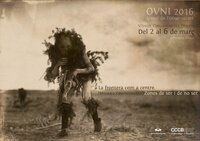
              [ migra and coloniality ] / OVNI 2016

              The Center as the Border. Zones of Being and not Being

              / CONTEXT 1994 - 2020

              [ migra and coloniality ] / OVNI 2016

              PROGRAMA CASTELLANO PDF

              Videos Talks Debates.

              The border has a tendency to spread: it explodes into outsourcing to third countries, and implodes as domestic borders, control devices, detentions and disappearances...; in other words, it tends to occupy the entire system, becoming centre. In the shadows of the border-as-system, where control is out of control, the prototype of a totalitarian society is assembled.

              Around the subject of migration there are a series of crucial lapses or ‘forgettings’, which not only hinder in-depth reflection but also fuel exclusionary visions There first of these is the colonial lapse – we have forgotten the close ties between migration and coloniality, and its global mutation. The second lapse springs from limiting our reflections on migration to the spheres of politics, policing, economics, demographics and humanitarian action... but rarely considering it in terms of knowledge and wisdom, of which we are truly in need. A third lapse consists of labelling people “immigrants”, creating the corresponding imaginary and confining them within it... failing to remember that all of us in fact migrate between different territories, spaces, times, and forms of knowledge.

              Centre de Cultura Contemporània de Barcelona

              Montalegre 5. 08001 Barcelona

              Taking Liberties
              ES ES-OVNI CTX-S014-SS001-0096 · Item · 2007
              Part of Non-Identified Video Observatory (OVNI)

              The shocking truth about the erosion of our fundamental civil liberties by Tony Blair's government. The Right to Protest, the Right to Freedom of Speech. The Right to Privacy. The Right not to be detained without charge, Innocent Until Proven Guilty. Prohibition from Torture. Taking Liberties will reveal how these six central pillars of liberty have been systematically destroyed by New Labour, and the freedoms of the British people stolen from under their noses amidst a climate of fear created by the media and the government itself. Irreverent but revelatory, outrageous but true, the program combines these real stories of the loss of liberty with never-before-seen footage, cheeky stunts and comment from leading politicians, celebrities, human rights organisations, academics and lawyers, which all add up to make Taking Liberties one of the most explosive and controversial films of the decade.

              Untitled
              Persons of Interest
              ES ES-OVNI CTX-S010-SS004-0006 · Item · 2003
              Part of Non-Identified Video Observatory (OVNI)

              After the Sept.11 terrorist attacks, more than 5,000 people, mainly non-U.S. nationals of South Asian or Middle Eastern origin, were taken into custody by the U.S. Justice Department and held indefinitely on grounds of national security. Muslim immigrants were subject to arbitrary arrest, secret detention, solitary confinement, and deportation. Many were denied access to legal representation and communication with their families.

              Untitled
              Memory of the Land
              ES ES-OVNI RSC-4316 · Item · 2017
              Part of Non-Identified Video Observatory (OVNI)

              Memory of the Land, is a reflection of the human condition under the yoke of different forms of violence, collective memory and identity as forms of resilience. Palestine. A body is trapped at a checkpoint; an essential mechanism of the Israeli occupation. The body is pierced by structural and physical violence, which is aggressive and arbitrary and prevents and attacks its free movement and existence.