
This short film, taken from the feature La Folle de Toujane, brings to the foreground a political event almost separate from its main storyline. René Vautier plays a “committed” director-producer who has just witnessed the brutal beating of an “Arab” by the police in the street, right in front of the café where he's having lunch. The scene deeply shocks him; he doesn't react in the moment, but promises himself he will one day make a film about what he saw. This scene, which refers to the massacre of Algerians in Paris (October 17, 1961), powerfully symbolizes the importation of the criminal mindset that fueled the French army’s intervention in Algeria. It reminds us of the reality of extreme violence, still present in collective memory and yet never acknowledged by a France that continues to deny its responsibility. A denunciation of the self-censorship of French filmmakers in the 1960s and ’70s when facing the reality of state racism.
Conflicto
100 Archival description results for Conflicto
100 results directly related
Exclude narrower terms
ES ES-OVNI RSC-4349
·
Item
·
1975
Part of Non-Identified Video Observatory (OVNI)

ES ES-OVNI CTX-S011-SS001-0010
·
Item
·
2004
Part of Non-Identified Video Observatory (OVNI)
The unfulfilled promise of the Agrarian Reform in Brazil. On weighing up three years of managing the country, Agrarian Reform is still one of the unfulfilled promises of the Lula government in Brazil. Lula's rise to power raised the hopes of the social movements that want to democratise the land and the occupation of large unproductive landholdings increased, but so did the violence of the paramilitary commandos that defend the interests of the landowners, with the collusion of the local legal authorities. Seventy three people died in rural conflicts in 2003, murdered by gunmen who act with impunity.
Untitled
ES ES-OVNI CTX-S010-SS006-0004
·
Item
·
2004
Part of Non-Identified Video Observatory (OVNI)
A video report on the occupation of lands by the Movimiento de Trabajadores Desocupados (Unemployed Workers Movement) on the 26th of June in La Matanza, on the outskirts of Buenos Aires. The story helps us to understand the methods of self-organisation used by unemployed workers from necessity, and how direct action can lead to a brutal confrontation with law enforcement forces. It also offers proposals for other ways to think about property, outside of the capitalist society.
Untitled
ES ES-OVNI RSC-2585
·
Item
·
2007
Part of Non-Identified Video Observatory (OVNI)
La rebelion de las Oaxaqueñas presents a group of women who come together in a social movement in order to change the unfair, oppressive situation in Oaxaca.. The women recount some of their experiences and reflections on being part of this grassroots rebellion. As a result of the popular movement in Oaxaca, thousands of women took to the streets to participate in the marches, the barricades... in the assemblies, on radio and television, in the forums and in all of the projects that the movement created for people's participation.
Untitled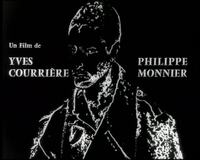
ES ES-OVNI CTX-S011-SS002-0002
·
Item
·
1972
Part of Non-Identified Video Observatory (OVNI)
On the first of November 1954, “Bloody All Saints Day” exploded in a series of attacks throughout Algeria carried out by what would later become the National Liberation Front. It was the start of the Algerian war. The first film made about this conflict became the first indispensable documentary about the Algerian war. It includes unforgettable testimonies and archives to that allow us to “dare to look at the truth head on". In the rigorous search for historical truth, the authors committed themselves to understanding the different parts of the conflicts, such as the "pieds-noirs", the career soldiers, the Harkis, the Fellaghas, the civil population... Yves Couriere, writer and journalist, has followed all the major stages of the Algerian drama, on the field, between 1958 and 1963. Before making this film, from 1967 to 1971, he published a four-volume history, the first, of the Algerian war.
Untitled
ES ES-OVNI CTX-S015-SS006-0009
·
Item
·
1999
Part of Non-Identified Video Observatory (OVNI)
We are now moving through a very bleak period in human history - where the convergence of postmodernist cynicism (eliminating humanistic and critical thinking from the education system), sheer greed engendered by the consumer society sweeping many people under its wing, human, economic and environmental catastrophe in the form of globalisation, massively increased suffering and exploitation of the people of the so-called Third World, as well as the mind-numbing conformity and standardization caused by the systematic audiovisualization of the planet have synergistically created a world where ethics, morality, human collectivity, and commitment (except to opportunism) are considered old fashioned. Where excess and economic exploitation have become the norm - to be taught even to children. In such a world as this, what happened in Paris in the spring of 1871 represented (and still represents) the idea of commitment to a struggle for a better world, and of the need for some form of collective social Utopia - which WE now need as desperately as dying people need plasma. The notion of a film showing this commitment was thus born.
Untitled
ES ES-OVNI CTX-S015-SS005-0007
·
Item
·
1999
Part of Non-Identified Video Observatory (OVNI)
We are now moving through a very bleak period in human history - where the convergence of postmodernist cynicism (eliminating humanistic and critical thinking from the education system), sheer greed engendered by the consumer society sweeping many people under its wing, human, economic and environmental catastrophe in the form of globalisation, massively increased suffering and exploitation of the people of the so-called Third World, as well as the mind-numbing conformity and standardization caused by the systematic audiovisualization of the planet have synergistically created a world where ethics, morality, human collectivity, and commitment (except to opportunism) are considered old fashioned. Where excess and economic exploitation have become the norm - to be taught even to children. In such a world as this, what happened in Paris in the spring of 1871 represented (and still represents) the idea of commitment to a struggle for a better world, and of the need for some form of collective social Utopia - which WE now need as desperately as dying people need plasma. The notion of a film showing this commitment was thus born.
Untitled
ES ES-OVNI CTX-S015-SS004-0004
·
Item
·
1999
Part of Non-Identified Video Observatory (OVNI)
We are now moving through a very bleak period in human history - where the convergence of postmodernist cynicism (eliminating humanistic and critical thinking from the education system), sheer greed engendered by the consumer society sweeping many people under its wing, human, economic and environmental catastrophe in the form of globalisation, massively increased suffering and exploitation of the people of the so-called Third World, as well as the mind-numbing conformity and standardization caused by the systematic audiovisualization of the planet have synergistically created a world where ethics, morality, human collectivity, and commitment (except to opportunism) are considered old fashioned. Where excess and economic exploitation have become the norm - to be taught even to children. In such a world as this, what happened in Paris in the spring of 1871 represented (and still represents) the idea of commitment to a struggle for a better world, and of the need for some form of collective social Utopia - which WE now need as desperately as dying people need plasma. The notion of a film showing this commitment was thus born.
Untitled
ES ES-OVNI CTX-S012-SS005-0007
·
Item
·
2006
Part of Non-Identified Video Observatory (OVNI)
Beirut, July 2006. Israeli bombings strike the city. While Beirut is still on fire, the filmmaker starts a journey across his native land. The film is not a documentary - although the images are burningly real - but an essay. Using two complementary techniques, 16 mm film and HDV, the artist questions the deep foundations of the documentary genre. The eye of the cameras goes through a country in a state of terror, it records the immediate effects of war when it touches civilians.
Untitled
ES ES-OVNI CTX-S013-SS007-0011
·
Item
·
2002
Part of Non-Identified Video Observatory (OVNI)
Jenin Jenin, directed and co-produced by Palestinian actor and director Mohamed Bakri, includes testimony from Jenin residents after the Israeli army's Defensive Wall operation, during which the city and camp were the scenes of fierce fighting. The operation ended with Jenin flattened and scores of Palestinians dead. Palestinians as well as numerous human rights groups accused Israel of committing war crimes in the April 2002 attack on the refugee camp. Jenin Jenin shows the extent to which the prolonged oppression and terror has affected the state of mind of the Palestinian inhabitants of Jenin.
Untitled