Colonialismo

Elements area

Taxonomy

Code

Scope note(s)

    Source note(s)

      Display note(s)

        Hierarchical terms

        Colonialismo

          Equivalent terms

          Colonialismo

            Associated terms

            Colonialismo

              115 Archival description results for Colonialismo

              115 results directly related Exclude narrower terms
              La Guerre d'Algérie
              ES ES-OVNI CTX-S011-SS002-0002 · Item · 1972
              Part of Non-Identified Video Observatory (OVNI)

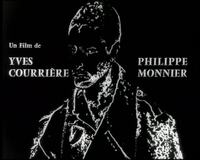
              On the first of November 1954, “Bloody All Saints Day” exploded in a series of attacks throughout Algeria carried out by what would later become the National Liberation Front. It was the start of the Algerian war. The first film made about this conflict became the first indispensable documentary about the Algerian war. It includes unforgettable testimonies and archives to that allow us to “dare to look at the truth head on". In the rigorous search for historical truth, the authors committed themselves to understanding the different parts of the conflicts, such as the "pieds-noirs", the career soldiers, the Harkis, the Fellaghas, the civil population... Yves Couriere, writer and journalist, has followed all the major stages of the Algerian drama, on the field, between 1958 and 1963. Before making this film, from 1967 to 1971, he published a four-volume history, the first, of the Algerian war.

              Untitled
              La loi du silence
              ES ES-OVNI RSC-4357 · Item · 2003
              Part of Non-Identified Video Observatory (OVNI)

              The Law of Silence, a graduation documentary from La Fémis by Moïra Chappedelaine-Vautier, Nadia Zibat, and Raoul Seigneur, explores the 1963 Amnesty Law and its consequences on research conducted about the Algerian War. It features interviews conducted in 2002 with Henri Alleg, director of the Alger Républicain newspaper from 1951 to 1955, and Pierre Vidal-Naquet, historian and essayist. The film also includes striking statements from General Massu and lawyers who dismantle the legal defenses of figures like Jean-Marie Le Pen. Moïra not only gives voice to her father, René Vautier, but also reuses footage he shot forty years earlier. A very compelling documentary that reminds us, among other things, that amnesty is not forgiveness, but the erasure of both the sentence and the crime itself.

              ES ES-OVNI CTX-S011-SS006-0038 · Item · 1947
              Part of Non-Identified Video Observatory (OVNI)

              Mecca. The new King of Iraq. For decades, Movietone was one of the major international news broadcasting agencies. It shaped the collective imaginary, created by the mass media, of a large cross-section of Americans and Europeans.

              ES ES-OVNI RSC-4343 · Item · 1969
              Part of Non-Identified Video Observatory (OVNI)

              In the early 1960s, in Salisbury (present-day Harare), in Southern Rhodesia (present-day Zimbabwe), the government of Ian Smith hanged three black revolutionaries who had been pardoned by the Queen of England. René Vautier, together with ZAPU (Zimbabwe African Party for Unity), denounced the assassination. Expelled by the Rhodesian police (who had received information from the French secret services), the filmmaker went to Algeria to shoot a film in the form of an allegation against colonial savagery. The film was initially banned in France, but was authorized in 1970, it seems that in England it was never authorized. A poem written by René Vautier (under the Algerian pseudonym Férid Dendeni), read by the future Senegalese filmmaker Djibril Diop Mambéty, paintings by the South African painter Gerard Sekoto, a soundtrack donated by members of the Black Panthers exiled in Algiers (a slow funeral march composed to accompany the funeral of a black man killed during the struggle for civil rights in the United States), masks and statuettes of black art. Unable to make his usual live-action film, Vautier improvised a magnificent filmic poem.

              Le Malentendu Colonial
              ES ES-OVNI CTX-S014-SS001-0102 · Item · 2004
              Part of Non-Identified Video Observatory (OVNI)

              Le Malentendu Colonial is a courageous voyage into Africa's “German past,” looking at European attempts to colonise Africa through religion and trade. Filmmaker Jean Marie Tenor revisits the role of missionaries in laying the foundations for colonialism in countries like Togo, Cameroon, Namibia and South Africa. The genocidal wars waged by the Germans against the Herrero in Namibia (1904-1907), in which thousands of people were locked up in concentration camps or driven into the desert and forced to scatter in order to survive the genocide, was a practice ground for the later crimes perpetrated by the Nazi army. Through interviews with experts from Germany and Africa, Teno paints a picture of a deeply unsettling period of history that was relatively short but nevertheless horrific.

              Untitled
              Le Mura di Sana
              ES ES-OVNI CTX-S011-SS004-0015 · Item · 1971
              Part of Non-Identified Video Observatory (OVNI)

              On Sunday October 18, 1970, the last day filming “Flower of the Arabian Nights” on location in Sanaa, the capital of Yemen, Pasolini decides to use some leftover rolls of film to make a documentary about the city and thus persuade Unesco to intervene to protect the beauty of this world heritage. ”With every passing day, one part of the Sanaa walls falls to pieces... One of my dreams is to save Sanaa and other cities – their historic centres. I will strive for my dream and endeavour for Unesco to intervene”, says Pasolini.

              Untitled
              Le Naufrage Negro-Liberal
              ES ES-OVNI CTX-S012-SS004-0016 · Item · 2006
              Part of Non-Identified Video Observatory (OVNI)

              Those in power, who see any original idea as a potential seed of disruption and subversion, do not encourage the discussion of ideas or the return to our own values in order to arrive at more humane forms of development. As I made this film, I realised the extent to which Africans ignore their intellectuals. For some time now, they've been warning us about the options being imposed from outside, whether it be international banking, the IMF or even the former colonial powers. It's as though Africa lacked all trust in its intellectuals. Dr. Bado is a typical example of this contempt and lack of understanding. Those in power, who see any original idea as a possible seed of disruption and subversion, don't do anything to encourage discussion of ideas. My intention was to record Dr Bado's ideas so that future generations with greater awareness can take into account the neeed for a return to our own values in order to arrive at more human forms of development.

              Untitled
              Le remords
              ES ES-OVNI RSC-4349 · Item · 1975
              Part of Non-Identified Video Observatory (OVNI)

              This short film, taken from the feature La Folle de Toujane, brings to the foreground a political event almost separate from its main storyline. René Vautier plays a “committed” director-producer who has just witnessed the brutal beating of an “Arab” by the police in the street, right in front of the café where he's having lunch. The scene deeply shocks him; he doesn't react in the moment, but promises himself he will one day make a film about what he saw. This scene, which refers to the massacre of Algerians in Paris (October 17, 1961), powerfully symbolizes the importation of the criminal mindset that fueled the French army’s intervention in Algeria. It reminds us of the reality of extreme violence, still present in collective memory and yet never acknowledged by a France that continues to deny its responsibility. A denunciation of the self-censorship of French filmmakers in the 1960s and ’70s when facing the reality of state racism.

              Lectura Encantada
              ES ES-OVNI CTX-S011-SS005-0008 · Item · 1932
              Part of Non-Identified Video Observatory (OVNI)

              A compilation of Columbian film heritage material relating to indigenous communities. Patrimonio Fílmico Colombiano.Colección Acevedo (1932 -1948) , Marco Tulio Lizarazo (Guerrillero Guadalupe Salcedo, 1953).

              Untitled