
Colonialismo

Elements area

Taxonomy

Code

Scope note(s)

    Source note(s)

      Display note(s)

        Hierarchical terms

        Colonialismo

          Equivalent terms

          Colonialismo

            Associated terms

            Colonialismo

              115 Archival description results for Colonialismo

              115 results directly related Exclude narrower terms
              ES ES-OVNI CTX-S018 · Series · 2016
              Part of Non-Identified Video Observatory (OVNI)

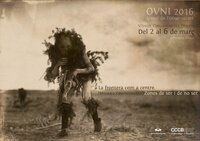
              [ migra and coloniality ] / OVNI 2016

              The Center as the Border. Zones of Being and not Being

              / CONTEXT 1994 - 2020

              [ migra and coloniality ] / OVNI 2016

              PROGRAMA CASTELLANO PDF

              Videos Talks Debates.

              The border has a tendency to spread: it explodes into outsourcing to third countries, and implodes as domestic borders, control devices, detentions and disappearances...; in other words, it tends to occupy the entire system, becoming centre. In the shadows of the border-as-system, where control is out of control, the prototype of a totalitarian society is assembled.

              Around the subject of migration there are a series of crucial lapses or ‘forgettings’, which not only hinder in-depth reflection but also fuel exclusionary visions There first of these is the colonial lapse – we have forgotten the close ties between migration and coloniality, and its global mutation. The second lapse springs from limiting our reflections on migration to the spheres of politics, policing, economics, demographics and humanitarian action... but rarely considering it in terms of knowledge and wisdom, of which we are truly in need. A third lapse consists of labelling people “immigrants”, creating the corresponding imaginary and confining them within it... failing to remember that all of us in fact migrate between different territories, spaces, times, and forms of knowledge.

              Centre de Cultura Contemporània de Barcelona

              Montalegre 5. 08001 Barcelona

              The Architecture of Mud
              ES OVNI RSC-1325 · Item · 1999
              Part of Non-Identified Video Observatory (OVNI)

              The Hadhramaut region in the south east of Yemen is well known for its mud brick architecture. Throughout the centuries, the population has developed very sophisticated building techniques and created a unique architectural environment. Spectacular structures such as ten-story mud brick tower houses rise up from the valley's floor. In interviews throughout the documentary, the masons describe their working techniques and the challenges they face with the introduction of new, imported building materials. The Architecture of Mud documents the vernacular architecture, the building craft and the society they belong to.

              Untitled
              ES ES-OVNI CTX-S013-SS002-0013 · Item · 2005
              Part of Non-Identified Video Observatory (OVNI)

              In 1963, shortly after the independence of Mali, the Tuareg population rose against the new government. Bloodily put down and followed by terrible droughts, this uprising led thousands of Tuareg from Mali and Niger to take refuge in Algeria and Libya. Teshumara, born out of the pain of exile, is a movement affirming Tuareg existence and the need for change. This is when the Tinariwen guitars started to resonate... This film is dedicated to my friend Amadou Aghali.

              Untitled
              Territoire Perdu
              ES ES-OVNI DIF-S010-SS002-0001 · Item · 2011
              Part of Non-Identified Video Observatory (OVNI)

              Drawing from stories of flight, exile, interminable waiting and arrest, and persecuted lives on both sides of the wall that divides the Western Sahara, Territoire perdu bears witness to the Sahrawi people, their land and their entrapment in other people’s dreams.  The film juxtaposes sonorous landscapes, black-and-white portraits and nomadic poetics.   

              Untitled
              Techniquement si simple
              ES ES-OVNI RSC-4348 · Item · 1971
              Part of Non-Identified Video Observatory (OVNI)

              A cooperative technician recalls his "technical work" when, during the Algerian conflict, he was installing mines that still kill many civilians. A preliminary essay to the filming of Avoir vingt ans dans les Aurès: a fiction built from testimonies of conscripted soldiers in Algeria.

              ES ES-OVNI CTX-S018-SS002-0001 · Item · 2016
              Part of Non-Identified Video Observatory (OVNI)

              Tarajal: Dismantling Impunity on the Southern Border is a documentary research project by the production company Metromuster, which previously produced the influential activist documentary Ciutat Morta. It has been commissioned by Observatori DESC, which is collaborating in the research process. Tarajal is based on statements from migration experts, journalists, lawyers, police spokespersons, and activists, as well as official declarations from the Interior Ministry, edited together to reveal the many contradictions in the accounts of the events leading to the death of 15 migrants at Tarajal. Above all, it suggests that the events may not have simply been a matter of police negligence, but part of a strategy designed for the application of migration control policies.

              ES ES-OVNI RSC-4278 · Item · 2018
              Part of Non-Identified Video Observatory (OVNI)

              The video departs from the idea of symbolizing the material, physical and emotional exploitation in which colonization was based and embedded by the robbery of the Alger’s port by The French Colonial troupes. Taking into an account the personal and subjective experience of the city of Algiers, a double narration is built by the artist and an Algerian collaborator (Ahmed Chaabi) weaving between both a portrait of personal and historical feelings of the place. A poem of love about domination and mistrust, about everything we want to know in depth but that we know impossible to understand in its entirety, what the Kasbah had represented yesterday and what it is today, its myths and its realities, and an uncertain future that we all share under the threat of globalization. More than any other district of Algiers, the Kasbah represents the “otherness”. Its winding streets are a labyrinth to the unknown where you want to get lost and where, at the same time, you are afraid of being lost. An unknown world, even for the Algerians, where the real plays to hide.

              Untitled
              Seffar
              ES ES-OVNI CTX-S010-SS007-0075 · Item · 2004
              Part of Non-Identified Video Observatory (OVNI)

              From the series Fez Ciudad Interior. Silences and wind in the olive trees, contemplation, labyrinths and dreams. Abdelfettah Seffar, a craftsman who lived in London for years and decided to return, talks about Fez, a veiled city, and reflects of the West and its conflicts.

              Untitled
              ES ES-OVNI CTX-S011-SS003-0012 · Item · 2003
              Part of Non-Identified Video Observatory (OVNI)

              Soy Defensor de la Selva relates how the Sarayaku community struggles against CGC when this oil company enters Sarayaku territory in order to carry out seismic prospecting, without the consent of the community. The video shows how the Sarayaku community confronts the oil company crews in order to stop them. The conflict intensifies when the military intervenes, reaching body-to-body confrontations. The women are the main protagonists of the video. Men, women, and children go out to guard the traditional limits of the community. The film shows the life in our Camps for Peace and Life, and contains the testimonies of our elders, as well as traditional music as background. This is the story of a small community struggling to save its space of life.

              Untitled