
La Ley del Silencio, documental de fin de estudios de la Fémis realizado por Moïra Chappedelaine-Vautier, Nadia Zibat y Raoul Seigneur, interroga la Ley de Amnistía de 1963 y las consecuencias que esta tuvo sobre los estudios realizados acerca de la guerra de Argelia. Reúne entrevistas realizadas en 2002 a Henri Alleg, director del diario Alger Républicain entre 1951 y 1955, y a Pierre Vidal-Naquet, historiador y ensayista. También incluye declaraciones sorprendentes del general Massu y de abogados que desmontan las defensas jurídicas de personas como Jean-Marie Le Pen. Moïra no solo hace hablar a su padre, René Vautier, sino que además reutiliza secuencias que él mismo filmó cuarenta años antes. Un reportaje muy interesante que recuerda, entre otras cosas, que la Amnistía no es un perdón, sino el borrado tanto de la pena como del propio crimen.
cine urgente
21 Descripción archivística resultados para cine urgente
21 resultados directamente relacionados
Excluir términos relacionados
ES ES-OVNI RSC-4357
·
Item
·
2003
Parte de Observatorio de Vídeo No Identificado (OVNI)
ES ES-OVNI RSC-4343
·
Item
·
1969
Parte de Observatorio de Vídeo No Identificado (OVNI)
A principios de los años 60, en Salisbury (actual Harare), en Rodesia del Sur (actual Zimbabue), el gobierno de Ian Smith ahorcó a tres revolucionarios negros que habían sido indultados por la reina de Inglaterra. René Vautier, junto con el ZAPU (Partido Africano de Zimbabue por la Unidad), denunció el asesinato. Expulsado por la policía de Rodesia (que había recibido información de los servicios secretos franceses), el cineasta se fue a Argelia para rodar una película en forma de alegato contra el salvajismo colonial. La película fue inicialmente prohibida en Francia, pero fue autorizada en 1970, parece que en Inglaterra nunca se autorizó. Un poema escrito por René Vautier (bajo el seudónimo argelino de Férid Dendeni), leído por el futuro cineasta senegalés Djibril Diop Mambéty, cuadros del pintor sudafricano Gerard Sekoto, una banda sonora donada por miembros de los Panteras Negras exiliados en Argel (una marcha fúnebre lenta compuesta para acompañar el funeral de un negro asesinado durante la lucha por los derechos civiles en Estados Unidos), máscaras y estatuillas del arte negro. Impedido de realizar su habitual película de acción directa, Vautier improvisó un magnífico poema fílmico.
ES ES-OVNI RSC-4345
·
Item
·
1969
Parte de Observatorio de Vídeo No Identificado (OVNI)
Un trabajador argelino en paro sale de París haciendo autostop. Pronto llega a Bretaña y, seducido por la belleza de las aliagas silvestres, acaba instalándose como vendedor de aliagas. Pero, debido a problemas de estacionamiento de su pequeño carro, tiene un duro encontronazo con un policía, que reacciona de forma violenta y vuelca su carro, haciendo caer las flores. La intervención de unas trabajadoras de fábrica, y la amable solidaridad que le muestran, lo salvará de la desesperación. Fábula poética y humorística en la que un inmigrante argelino recorre Bretaña en busca de trabajo. Encuentra un carro y comienza a vender aliagas en un pequeño pueblo. Cuando un policía le tira el carro con violencia, las flores quedan esparcidas por el suelo. A la salida de la fábrica, las obreras, en señal de solidaridad, las recogen una a una y se las compran. La película obtuvo el Premio al Film Antirracista otorgado por la Amicale de Asociaciones de Trabajadores Inmigrantes en Europa en 1970.
ES ES-OVNI RSC-4339
·
Item
·
1956
Parte de Observatorio de Vídeo No Identificado (OVNI)
En la época de la independencia de Túnez, los propietarios de grandes barcos decidieron venderlos, por lo que muchos pequeños pescadores se quedaron pronto sin trabajo. Sus esposas decidieron reunir sus anillos de oro para venderlos y volver a comprar barcos.
ES ES-OVNI RSC-4342
·
Item
·
1963
Parte de Observatorio de Vídeo No Identificado (OVNI)
En 1962, René Vautier organizó con unos amigos argelinos un centro de formación audiovisual para promover un “diálogo en imágenes” entre los dos campos. Se realizó una película a partir de esta experiencia, pero fue parcialmente destruida por la policía francesa. Las imágenes que consiguieron salvar constituyen un documento histórico sin par: relatan la guerra de Argelia y la historia del ALN (Ejército de Liberación Nacional), además de enseñar la vida en la posguerra, especialmente la reconstrucción de las ciudades y del campo después de la Independencia. Es la primera película de l'Algeria independiente. Dirección y fotografía | Réalisation et image | Directors and cinematographers René Vautier Ahmed Rachedi Nacer Guenifi Héléna Sanchez Sidi Boumédienne Mohamed Guennez Allal Yahiaoui Mohamed Bouamari André Dumaître Taïbi Mustapha Bellil
ES ES-OVNI RSC-4353
·
Item
·
2000
Parte de Observatorio de Vídeo No Identificado (OVNI)
Durante la entrega del Collar de la Hermine en Pontivy, en septiembre de 2000, René Vautier fue interpelado por Claudine Dupont-Tingaud, exconsejera regional del Frente Nacional y antigua militante de la OAS. Con mucho ingenio y sentido del humor, Vautier desmontó uno por uno sus argumentos, hasta que ella, abucheada por el público, no tuvo más remedio que salir de la sala.
ES ES-OVNI EXP-S004
·
Series
·
2022
Parte de Observatorio de Vídeo No Identificado (OVNI)
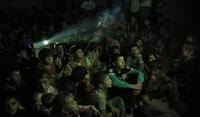
Muestra de cine Kurdo de la Comuna de Cine de Rojava Kurdistán (norte de Siria)
Ovni colabora con La Comuna de Cine de Rojava , para estudiar y promover sus producciones en España, Italia y Francia.
Una investigación hecha por videos, textos y encuentros. Para acercarnos a sus voces y entender mejor su lucha.
Hemos creado una web dedicada a este proyecto, puedes verla en este link .
La Comuna de Cine de Rojava, Komîna fîlm a Rojava es un colectivo de cineastas fundado en 2015, con sede en la región autónoma de Rojava en la Federación del Norte y Este de Siria. La comuna está trabajando activamente en la región para reconstruir y reorganizar las infraestructuras de cine y de la educación cinematográfica.
La comuna se estableció con el objetivo de estimular la cultura cinematográfica local organizando proyecciones de películas, facilitando debates sobre el papel del cine en la sociedad, produciendo nuevas películas y estableciendo la Academia de Cine. Tras el incendio de 1960 en el cine de la ciudad de Amude, la Comuna tiene como objetivo reclamar el cine como un espacio central para reinventar la sociedad, democratizar y revolucionar la imaginación misma.
La Comuna ha educado a una nueva generación de cineastas de Rojava, ha organizado proyecciones en ciudades y pueblos y ha producido películas. Funciona para representar los valores e ideales de la Revolución de Rojava, pero también para mediar y representar las luchas diarias en la guerra civil siria y el intento colectivo de Rojava de construir una nueva sociedad . La Academia de Cine de Rojava se dedica a ofrecer cursos para aspirantes a cineastas. Fundada en 2015, ofrece programas de un año con cursos de historia del cine internacional, historia del cine kurdo, teoría del cine, fotografía, cinematografía, escritura de guiones, edición y diseño de sonido, impartidos por profesionales del cine locales e internacionales.
La Academia se auto-organiza , estructurada de forma horizontal, anima a los estudiantes a participar en todos los aspectos de su organización. También se han establecido redes de intercambio con otros académicos, medios y plataformas de noticias y organizaciones de la sociedad civil para participar en una discusión amplia y crear posibilidades de proyección. Teniendo en cuenta la afluencia de cineastas y periodistas extranjeros a Rojava, es importante que la Comuna recupere la representación y la imaginación de la revolución. Después de décadas de opresión de la lengua y la cultura kurdas, la Academia de Cine de Rojava tiene como objetivo revitalizar la cultura cinematográfica local, reclamando el poder de narrar e imaginar los sueños y las realidades de uno . Después de que comenzara la Guerra Civil Siria, la región norte predominantemente poblada por kurdos declaró la Administración de Autonomía creando estructuras fundadas en la democracia de base, la liberación de la mujer y la diversidad cultural. La Academia basa su metodología en el 'realismo revolucionario', es decir, un realismo que no solo revela la realidad actual de una manera nueva, sino que reestructura la realidad de lo posible . No solo encuentra una forma para lo existente, sino que crea la posibilidad de imaginar lo que aún no está presente, el devenir permanente que es la revolución misma.
ES ES-OVNI RSC-4348
·
Item
·
1971
Parte de Observatorio de Vídeo No Identificado (OVNI)
Un técnico cooperante recuerda su "trabajo técnico" cuando, durante el conflicto argelino, instalaba minas que todavía matan a muchos civiles. Ensayo previo al rodaje de Avoir vingt ans dans les Aurès: una ficción construida a partir de testimonios de soldados reclutados en Argelia.
ES ES-OVNI RSC-4193
·
Item
·
2020
Parte de Observatorio de Vídeo No Identificado (OVNI)
Aliquam faucibus quam vel nulla sollicitudin vestibulum. Phasellus varius ante quis placerat mattis. Nam a libero ac elit ornare venenatis. Pellentesque eget est mi. Nunc blandit euismod blandit. Sed fringilla luctus auctor. Aenean dui lorem, eleifend tincidunt euismod at, convallis in dolor. Sed nisi diam, tincidunt sed sem bibendum, tempor suscipit metus. Suspendisse dapibus elit felis, non sodales lectus maximus non. Nulla sollicitudin eleifend quam, eu viverra neque scelerisque a. Mauris justo ligula, faucibus vitae elit ac, tempor auctor diam. Aenean sollicitudin orci ut diam rhoncus, nec blandit lectus rutrum. Ut interdum efficitur tempus. Etiam tincidunt sem id est molestie, id blandit justo commodo. Mauris euismod a ipsum at viverra. Ut in pulvinar est, vel mollis nulla. Maecenas vel sapien consectetur, tempus est sit amet, viverra magna. Aenean tellus arcu, aliquam at tellus quis, cursus imperdiet arcu. Suspendisse malesuada mi in ante interdum pharetra. Curabitur porta semper massa, tincidunt tempus lorem porta non.

ES ES-OVNI EXP-S009
·
Series
·
2023
Parte de Observatorio de Vídeo No Identificado (OVNI)
The Purple Meridians III
The Purple Meridians III
A lo largo de los últimos dos años, un total de 19 cineastas con base en los tres países se han reunido, tanto en línea como en persona, para discutir los obstáculos que enfrentan, como mujeres y personas no binarias en la industria audiovisual, intercambiar ideas y recursos, y crear juntas.
Los preparativos están en marcha en Italia, Turquía, Cataluña y el País Vasco para la tercera edición de The Purple Meridians 2023 , con el patrocinio de Igualdad de Género de Eurimages .
Este año, el proyecto tendrá su evento público principal en la Feria del Libro, la Música y el Cine de Durango , el 7 de diciembre . Durango es una ciudad del País Vasco, y ha sido elegida por los organizadores de The Purple Meridians para expandir aún más las conexiones entre las mujeres cineastas en Europa y más allá, como es el propósito de este proyecto.
La elección del País Vasco fue, por lo tanto, un desarrollo 'natural', ya que las cineastas vascas siguieron las dos primeras ediciones de The Purple Meridians aunque 'desde la distancia'.
El programa en el País Vasco será posible gracias a la colaboración con la Feria del Libro de Durango y Suargi Elkartea.
Dos temas principales serán el enfoque de este tercer evento:
las dificultades, respuestas y propuestas para las mujeres en la industria audiovisual para conciliar el trabajo y el trabajo de cuidados (maternidad, cuidado de hijos, cuidado de ancianos, cuidado de pareja/familiar enfermo, etc.) y para las mujeres con diversidad funcional.
Estos dos temas se discutirán en una conferencia de 2 sesiones en Durango que se llevará a cabo el 7 de diciembre de 2023 .
Las dos cineastas más directa y profundamente afectadas por esta situación liderarán la discusión, Lisa Çalan y Ahu Ozturk .
Ambas cineastas, ambas kurdas, trabajarán con cineastas vascos (que están explorando estos temas en sus películas y que este año presentarán un manifiesto sobre 'cuidado'), así como con otras cineastas de The Purple Meridians (de Italia y Cataluña), no solo exponiendo los problemas, sino también proponiendo respuestas, teniendo en cuenta que uno de los pilares del proyecto The Purple Meridians es crear redes entre mujeres cineastas de diferentes países.
Lisa Çalan , Ahu Öztürk (de Turquía, TPM), la actriz vasca premiada internacionalmente Itziar Ituño (La casa de papel), las directoras vascas Ainhoa Olaso (ganadora del programa Aukera) y Estibaliz Urresola (premiada en Berlín 2023), la directora catalana Lara Vilanova (TPM), la directora italiana Claudia Tosi (TPM), la guionista argentina radicada en Belfast Luciana de Mello , la directora libanesa Mary Jirmanus Saba , la directora kurda Sevinaz Evdike (Colectivo de mujeres cineastas Kezi) y la directora Elli (Post Collective - Buriatia, Greece, Syria, Belgium).
La jornada irá acompañada de la proyección en Irudienea (12.30h-13.30h) del corto de Estibaliz Urresola, Cuerdas y de un Work in Progress de Mary Jirmanus Saba.
A las 19:00h , las cineastas presentarán a la prensa un resumen del trabajo de la conferencia.
La rueda de prensa contará también con la intervención de una cineasta palestina.