
ES ES-OVNI CTX-S017-SS001
·
Subseries
·
2015
Part of Non-Identified Video Observatory (OVNI)
Centre de Cultura Contemporània de Barcelona
120 Archival description results for Centre de Cultura Contemporània de Barcelona
120 results directly related
Exclude narrower terms
ES ES-OVNI CTX-S009
·
Series
·
2003
Part of Non-Identified Video Observatory (OVNI)
Observatory Archives 2003
/ CONTEXT 1994 - 2020
Observatory Archives 2003
The screenings for this edition will be based on a selection from the 150 audiovisual documents that have been added to the Observatory Archives over the last 18 months.
Together, this material reflects some of the most serious issues of our time, using different media and languages such as video art, independent documentary, media archaeology....to reflect the process of Globalisation and the Resistance it generates, and conflicts such as Palestine, Argentina, September 11th, etc.
The difference is that these issues, which we are used to seeing in the news headlines, loose here their relationship to news because they are taken out of this context and approached through different formal means and points of view, in a constant exchange between the micro to the macro; from microworlds and subjective experience to collective and social visions.
The program of screenings in this edition is based on a dialogue between two interconnected archives; on one hand, the works created by individuals or collectives that form the nucleus of the Observatory Archives, and on the other, the contemporary media archaeology material that makes up the Babylon Archives 1999-2003.
Autonomedia Ed. NYC. [www.autonomedia.org]
New York-based Autonomedia is one of the most lucid publishers of books on radical media, politics and the arts. They have published more than 300 titles that have influenced and given voice to a generation of authors, thinkers and social collectives, and established a dialogue between seemingly unconnected critical voices. www.autonomedia.org Their publications include: Temporary Autonomous Zones , by Hakim Bey; Digital Resistance and Electronic Civil Disobedience, by Critical Art Ensemble; Hacktivism , by the Electronic Disturbance Theatre; Pirate Utopias and European Renegades, by Peter Lamborn Wilson.
Lectures: Jim Fleming, Lewanne Jones, Eric Goldhagen.
Negativland [www.negativland.com]
Negativland Through their musical and media experiments since the early eighties, Negativland have been exploring the limits between intellectual property and market tyranny, fair and illegitimate use of information, and especially the right to deconstruct and reinterpret fragments of the media we are all constantly bombarded with.
Steve Reinke [www.myrectumisnotagrave.com]
Steve Reinke In the late 90s, Canadian artist Steve Reinke embarked on a project that consisted of making 100 separate videos. The result is a portrait of places, confessions and characters, media monsters and also ruins, forming a complex map of distant lands that are just around the corner. The Hundred Videos is a kind of web in which everything is mixed together, from the personal to mass media usurpation. In OVNI 2003 Steve Reinke will present and talk about the 100 Videos and his subsequent projects.
Lecture: Steve Reinke
A contemporary media archaeology project that collects and compiles material from the dark side of our civilization. Promotionals from corporative, militar, pharma and digital industries. Many of these audiovisual documents were not produced to last, but rather to fulfill specific functions at a particular time: training, publicity, etc...this is why, when they are taken out of the context of their time or intended use, their meaning is revealed with surprising clarity even to those used to the constant publicity aimed at consumers. The result is a disturbing catalogue of intentions, aims and the means used to achieve them.
Documents from the dark side of the empire. Government and corporate promotional material from military, pharmaceutical, digital and other mega industries...promoting them and their unspoken interests.
Many of these materials were not intended to last, but were produced with very specific purposes in mind: educational, promotional, propaganda, etc. As such, when they are taken our of their temporal or corporate contexts, they take on a transparency of meaning that is astounding, even to those who are used to consumer advertising. The result is a disturbing compendium of intentions, objectives, and the means to achieve them.
The Babylon Archives are embedded in the program (see program).
There will be a public presentation of the copyleft edition of the DVD Archivos Babilonia - The Dark Side of Empire ( 1999- 2003) .
Thematical screenings
Hall and Auditorium.Simultaneous Screenings
Centre de Cultura Contemporània de Barcelona
Montalegre 5. 08001 Barcelona
Image: Apolinario Mabini . Autonomedia's Jubilee Saints Calendar
Autonomedia Ed. NYC. https://www.autonomedia.org/
ES ES-OVNI CTX-S019
·
Series
·
2018
Part of Non-Identified Video Observatory (OVNI)
/ CONTEXT 1994 - 2020
Path of Return / OVNI 2018
visions, silence, darkness
A few years ago – just after OVNI The Border as Centre (and perhaps as a consequence of it) – we entered a period of introspection. And in that inward-looking space, certain images from Bela Tarr’s film The Turin Horse (1) kept returning over and over again. In particular, three sequences:
In the first, an elderly man struggles to drive his horse and loaded cart through a fog-filled landscape. After a while, we begin to understand the need for so much effort: the driver is one-armed, and a cart intended for two horses is being pulled by just one. Something is missing in this soulless world. A profound lack of balance is causing it to crack and at the same time bringing it to a standstill. The mutilated substance of that which animates it, mutilated itself, is crushed under its own weight and sinks on its blind side. Every gesture, every task, even eating, is arduous.
In the second scene, a character appears on screen and delivers a wild, lucid monologue about the course the world has taken: “everything has been debased that they’ve acquired (…) whatever they touch – and they touch everything – they’ve debased (…) Acquire debase, debase, acquire. Or I can put it differently if you like: to touch, debase and thereby acquire, or touch, acquire and thereby debase. It’s been going on like this for centuries (….) Because this is not some kind of cataclysm, coming about with so-called innocent human aid. On the contrary, it’s about man’s own judgement.”
The cart driver’s answer is laconic: “Come off it, that’s rubbish”. (2)
Then, the wind, the barren plain, the loneliness.
In the third scene, near the end of the film… as night falls, the two main characters, father and daughter, try to light an oil lamp or at least a candle but they are unable to do so. Light has already left that world.
Light is leaving the world.
For months and months, as we were saying, these images played over and over inside us, suggesting a possible path but also imperceptibly plunging us into their dense fog. We tried to navigate inside it but we could barely see our hand stretched out before us. So we walked for a time through that invisible world, and little by little we learnt to trust that fog, that not-knowing, that not-seeing with our eyes, until we came, in a sense, to recognise ourselves in it… Once this state had stabilised we shared it with the rhizome that gives rise to ovni, and this was how a few people came to talk to us about death and deaths (3) … and how the “Path of Return” unexpectedly opened up in the fog, not denying it but rather incorporating it like a veil that protects the mystery that surrounds us and runs through us at every moment.
And so this OVNI of fog takes us on a journey through the middle world, the experience of physical death and of the deaths of the ego.
Instead of a regular video programme, it takes the form of a rite of passage in which visions (videos), texts, sounds, rituals, and breaths are interwoven with shared silence and darkness.
To open up our vision (4), to open up to the awareness of that which we call film, video… those strange projections of light and shadow that portray worlds and lives, landscapes and feelings that arise in the dark cave of the screening room. It is there, in that shared or solitary darkness, that visions of worlds are incubated… before the emergence of boundaries between the real and the unreal, wakefulness and sleep, life and death… Visions on a white screen that will remain white once the visions of the worlds have disappeared. (5)
Perhaps an old wound in our culture and our lives is thus healed, the hemispheres come together, other eyes open, and the Turin horse is no longer beaten. (6)
So as not to separate death from life, each day’s journey will begin by passing through the gates of dreams – death’s twin – and trance, exploring the rituals of farewell and dissolution of the body… A contemplation of dissolution that will lead us to the grateful contemplation of life.
So Path of Return unfolds as a rite of passage, a journey that we recommend making in full each day (*), to aid in a good crossing through intense and sometimes difficult inner landscapes that may perhaps help us to regain the perception of the unlimited, inappropriable, unrepresentable nature of the Real.
(*) OVNI will take place from 7 to 11pm each day.
The CCCB Theatre will open at 7pm. Once the programme starts the doors will remain closed, opening at least twice more in the course of each evening. The Lobby of the Theatre will be open from 7 to 11pm, and a room nearby will be fitted out and equipped with audio recordings for those waiting.
The Turin Horse ( A torinói ió in the Hungarian original) is a 2011 film directed by Béla Tarr and Ágnes Hranitzky.
Transcription of the monologue from The Turin Horse :
The people who come to mind are Palmar Álvarez Blanco, Marco Antonio Regueiro, … and also all those who have already left us during this long period of searching
Abu Ali, Abrir la Visión, 2016
http://www.al-barzaj.org/2016/10/abrir-la-vision.html
This image is often used by Ramana Maharashi.
According to the oft-repeated story, Nietzsche was in Piazza Carlo Alberto when he noticed the driver of a hansom cab flogging his stubborn horse. Nietzsche ran towards them, threw his arms around the horse’s neck to protect him, and then collapsed on ground.
March 2018, 8th - 11th / 19:00h - 23:00h
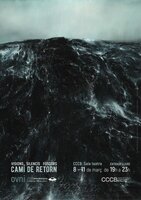
Image de Thierry DE CORDIER, “MER GROSSE”.

ES ES-OVNI CTX-S015
·
Series
·
2012
Part of Non-Identified Video Observatory (OVNI)
/ CONTEXT 1994 - 2020
This program in the form of an essay aims to shed light on some of the more disturbing aspects of contemporary life. Specifically, it looks at experiences involving conflict with power and at the imminent arrival of an even greater confrontation. A clash that exceeds the political realm and expands towards the notion of civilisation itself, and that seems to emanate from a source within the inner life of human beings.
Bearing this in mind, we present a series of screenings that look further than the immediacy of recent events, the logic of action-reaction, and the persistent notion of the other as intrinsically negative, in order to take a step back and observe from a distance that allows reflection.
We convey this vision through a programme with a dual core: La Commune by Peter Watkins, and The Mahabharata by Peter Brook, which we have contextualised with a series of documentaries and other documents that show contemporary expressions of the central theme.
La Commune offers a vision of contemporary conflict that transcends political oblivion. A cinematic reflection that looks back to a historical milestone – the emergence and disappearance of the 1871 Paris Commune and, at the same time, questions our own social reality and its representation in the media, given that Watkins chose to work with non-actors, people who express the actual conditions of their lives in Paris in 1999.
We will screen this film in three parts, each followed by a discussion session led by members of Rebond La Commune , the group that was created as a result of the making of this film.
Peter Brook’s The Mahabharata also deals with conflict but rather than taking a historical approach it positions itself outside of history, outside of linear time. It plays out in mythical time, the time of constant return and of the dialectic tension between the oblivion and remembrance of true human nature. The Mahabharata presents this conflict on several levels – linked to politics (power), civilisation, and the survival of life on Earth –, but also as an expression of the inner struggle that is fought out within every human being.
Each of the three parts of The Mahabharata will be preceded by excerpts from a conversation that we recorded with Jean-Claude Carrière, the screenwriter in charge of the theatrical adaptation of Brook's The Mahabharata , in which we explore the keys to this work in relation to the notions of conflict and oblivion.
This story is about you
The programme begins by following the course of the Mahabharata, an immense poem that flows with the majesty of a great river, which is full of “inexhaustible riches, defies all analysis, whether structural, thematic, historical or psychological. Doors are continually opening, which lead onto other doors. The Mahabharata cannot be held in the hollow of one’s hand. There are many ramifications. Sometimes seemingly contradictory, they succeed each other and intertwine, but we never lose the central theme of a looming threat, to which everything starkly points. We are living in a time of destruction. The question is, can we avoid it?” (1)
Against this background, from its very first lines, the Mahabharata takes us on an inner journey of knowledge and transformation.
- What is the poem about?
-
It is about you. It is the story of your race. How your ancestors were born. How they grew. How vast war arose. It is the poetical history of mankind. If you listen carefully, at the end you will be someone else. (2)
The illusion of power
The story gradually introduces us into a confrontation between the Pandava and the Kaurava . A confrontation that is a battle for power, although it arises from two almost opposite conceptions of life. With all their nuances and ambivalence, we see the Pandava proceed in accordance with their quest to fulfil the dharma , while the Kaurava seem to be guided only by desire and fear: the desire to possess power and the fear of losing it. They do not hesitate to use all possible means to achieve their end, they respect no limits whatsoever. And they act with the complicity of their parents, a blind king and a queen who voluntarily blindfolds herself.
Then the two sides play a game of dice, as a way of representing and temporarily avoiding direct conflict; but it is also a frame-up. The game is rigged – power play is always rigged. There can only be one outcome: defeat and the loss of everything they own, even their freedom. The Pandava face a future of exile and war.
In the present day, this rigged game takes on shapes and names that often hide its true purpose: to create a reality that is tailored to the private interests of a few. This is the case of so-called “free trade”, for example, which is supposedly a fair game in the sphere of economics. But the unequal terms of its participants and the non-reciprocal nature of the rules mean that it is inherently based on a desire for supremacy. Other examples disguise the obvious corporate and entrepreneurial nature of some social networks, and of many digital tools that barely hide their dark underside of control. And so we dwell in a realm of appearances: we appear to choose, we appear to communicate, we appear to be safe, thanks to a dense network of social devices. But inadvertently, when we comply with the daily ritual of submission to our work, to the educational and health system, to culture and to entertainment, we are signing a silent contract:
I accept competition as the foundation of our system, even though I am aware that it generates frustration and anger for the majority of those who lose. I agree to be humiliated and exploited in exchange for being allowed to humiliate and exploit those on a lower rung of the social pyramid (...)"
I accept that, in the name of peace, the largest Government expense will be Defence (...) I agree to be served up negative and terrifying news from around the world every day, so that I can ascertain the extent to which our situation is normal. (3)
Obviously, failure to sign “the contract” entails various increasing forms of exclusion. In view of this situation, protest can easily be channelled through the realm of appearance and made to give up its transformative power. But if protest tries to become real it will be stigmatised as sectarian, aggressive and violent, regardless of the means and ends it chooses.
Del Poder (“On Power”), the documentary by Zaván, focuses precisely on this aspect: the moment at which power reveals its true nature, beyond the fine names that it adopts to protect and legitimise its actions. This moment of revelation when power shows its true face comes about when it turns to the violence of repression. Genoa, 2001, hundreds of thousands of demonstrators protest on the streets. It is not an isolated event, the movement has been gaining strength, in Seattle in 1999, in Prague in 2000, and it is starting to represent a possibility for change… The “authorities” shield the city. They fence in entire neighbourhoods and suspend the Schengen treaty, to protect the summit of the heads of the world’s eight most powerful states. According to police trade union sources, they deliberately plan for a scenario of extreme violence, without ruling out the possibility that people may be killed (4). Police violence is unleashed, people are beaten indiscriminately. There are soon casualties, hundreds of them, some of people in comma. The situation quickly becomes a trap for the protesters, to such an extent that Amnesty International declares it “the greatest violation of human rights in Italy’s history since World War II.” Carlo Guiliani is killed by two shots to the head; the Commissioner who is tried for his murder is subsequently absolved. Far from reigning in the police violence, this death seems to stimulate it and give it its true meaning. The repression continues undiminished during the days that follow. De
ES ES-OVNI CTX-S006-SS007
·
Subseries
·
1999
Part of Non-Identified Video Observatory (OVNI)
Observatory Archives 1999
/ CONTEXT 1994 - 2020
The Dead Row Notebook. Mumia Abu Jamal
People's Video Network
United States of America.
United States of America.
It Happens to the Best of Us
United States of America.
Instituto Universal del Pensamiento Positivo/ Dr. Jose Domingo Rico
United States of America.
United States of America.
Solo per i tuoi Occhi
Noureddine Tilsaghani
United States of America.
Behold the Promise Land
United States of America.
Herbert's Hippopotamus
Paul Alexander Juutilainen
United States of America.
United States of America.
Breakthrough with Rod Parsley
United States of America.
Planet Street: - Slovenia
Loic Connanski, França 1996-98
United States of America.
United States of America.
United States of America.
vo Brazilian Portuguese.

ES ES-OVNI DIF-S010
·
Series
·
2021
Part of Non-Identified Video Observatory (OVNI)
From 4th to 6th November
Decolonizing Vision - Migrant Knowledge
To decolonize vision would be to return it, to integrate it into the body and the other senses, to integrate it into place, its forces and emptiness... to rescue it from the tyranny of the merely optical and open it up to the “other eyes” of the body and the mind, to make it whole. Also, to open up dialogue with the power of vision that the dominant culture in the West excluded or dissected until it was extinguished.
Toni Serra *) Abu Ali
The selection of videos presented in the Migrant Knowledge project puts forward alternative constructions of thought, analysis, and reflection concerning migrations. It does so through a plurality of views, experiences, memories, and stories that converge in a three-day program live at the Centre Civic Can Felipa, and a two-week online audio-visual menu, based on a selection of videos from the Archives OVNI – Observatory of Unidentified Video.
In the face of an understanding of multiculturalism as a space that is predefined and negotiated by power, the institution, and violence, the “other” is partitioned and enclosed. Thus, it is increasingly urgent and necessary to come together and exchange knowledge and experiences so as to bring about a profound transformation of the notions that have shaped the globalized world. This entails a radical redefinition of the notions of time, work, culture, and of the persistence of a single model with totalitarian tendencies. To start a process of decolonization by deconstructing and transforming the notions and beliefs that have shaped our societies.
Modern colonialism is not only a historical phenomenon, it is primarily an attitude towards life and the world. A way of looking that divides and dissects all things, a way of looking that creates and projects ”otherness”, and sees it as a space to be occupied: as territory, culture, even time, to be colonized. By its very nature it can neither understand nor put into practice an organic unity of things, or of life, let alone of economics. It perpetually needs the “other”, to the point of severing it from itself.
The selected program of videos includes resistances from various origins and languages, which are deployed against the imposition of single, hegemonic thought. Stories that make it possible to think, to build other worlds and to discover existing ones that are often hidden by screens of ignorance and prejudice, and by stereotyped images of the “other.”
The video selection is curated by Toni Cots. The program is organized by Jiser and the OVNI Archives, and is part of the process of reflection carried out by the Migrant Knowledge collective.
Jiser, which means “bridge” in Arabic, is a non-profit association based in Barcelona, whose objective is to promote artistic creation and the use of art as a tool for social transformation in the Euro-Mediterranean space, by carrying out activities that promote the exchange and rapprochement between different artistic and cultural realities in the region.
The OVNI Archives compile and document a three-decade history, from analog video to digital video in the time of ‘social’ networks. The materials contained in the Archives are the result of various thematic research projects, a whole constellation of titles with the common denominator of free expression and reflection on individual and collective fears and pleasures, coming together to build a multi-faceted vision, like thousands of small eyes that deepen and explore our world, or announce other possible ones. A research process in which the main values are heterogeneity, contradiction, and the subjectivity that the Archives spring from. In itself, they are an antidote for cloning and repetition in the era of hyper-connectivity.
Migrant Knowledge is a group made up of activists, artists and researchers who bring their diverse experience and background to a process of critical and collective reflection on the symbolic and institutional violence that affects migrants and/or racialized people. It aims to create communal spaces that draw attention to and fight against the mechanisms that legitimize the exercise of this violence, and create narratives of resistance that support the right for people who migrate to have rights.
This process is woven together by connecting artistic practice and reflection. It is open to a plurality of stories, and it is flexible in its path... It defends not only the exercise of critical consciousness, but also the carrying out of actions that transform situations of discrimination, racism, and inequality.
Thursday, 4th November 18:30h - 21:00h
VIOLENCE <> RESISTANCE
London "I don't call it rioting, I call it an insurrection"
BBC, 2011. UK, VO Eng 5Min.
An interview with writer and local resident Darcus Howe on the events that took place in London in 2011. "Have some respect for an old West Indian 'negro' " "I don't call it rioting, I call it an insurrection...of the masses of the people!»
Göran Hugo Olsson, 2014. Sweden, Denmark, Finland, USA, VO English, 85Min.
An archive-driven documentary covering the most daring moments in the struggle for liberation in the Third World, as well as an exploration into the mechanisms of decolonization through text fragments from Frantz Fanon’s T he Wretched of the Earth .
Friday, 5 November 18:30h - 21:00h
Le problème algérien et l'economie française
Jean Pierre Gambarotta, 2006. VO French. 5Min.
A French government report explaining the reasons why it was impossible to accept Algeria’s independence.
Pierre-Yves Vandeweed 2011.Belgium, Western Sahara. VO Arab, 74Min.
Drawing from stories of flight, exile, interminable waiting and arrest, and persecuted lives on both sides of the wall that divides the Western Sahara, Territoire perdu bears witness to the Sahrawi people, their land and their entrapment in other people’s dreams. The film juxtaposes sonorous landscapes, black-and-white portraits and nomadic poetics.
Session in collaboration with the Barcelona Independent Film Festival, l'Alternativa.
Lettre à la Republique
ES ES-OVNI CTX-S003
·
Series
·
1996
Part of Non-Identified Video Observatory (OVNI)
/ CONTEXT 1994 - 2020
La 12 Visual - Unidentified Frame Observatory - UFO
3rd MVI - Independent Vídeo Show
The third edition of the MVI independent video showcase strengthens the foundations of this project. Not necessarily in the sense of ensuring its permanence and continuity, but insofar as it fulfils most of our original aims, taking us well away from the role of a video festival or fair. The aspects we consider paramount are: to be able to pay a fee for all works screened, thus recognising the important role of the authors, which is unaccountably too often overlooked; to maintain our independent nature (we are very grateful to the sensible existence of a public cultural centre like the CCCB, which hosts totally independent projects); and to organise a completely open call for works, connecting filmmakers and artists from different origins and backgrounds, based on quality and the radical nature of the content as the sole criteria. We also wanted to leave the door open to working with different programmers, as long as both the works and the programmers share our commitment to independent video and to the need for (or existence of) an independent audiovisual discourse.
In the 3rd MVI, this approach has led us to focus on two key issues that often intersect: Identity and Mass Media. An idea of identity not only influenced by a conceptual relationship with others and with the media, but also by inner experience – that non-transferable aspect of our individual journey – in a shifting context in which the real expands to embrace the media and the lived experience of everyday technology.
Playing the role of free extensions that either emphasise or contradict the core content of the 3rd MVI, we have invited a series of independent programmers: Rick Prelinger, with The Rainbow Is Yours, an all-colour celebration of consumption that reveals the urgent need for a media archaeology; Arjon Dunnewind, from KableKunst Impakt cable television network; and Eugeni Bonet with Demontage bis, a micro-extension of the Demontage programme that was presented in several venues around Spain but surprisingly not in Barcelona. The contents and texture of the various works that make up this 3MVI programme also raise a paradox inherent to contemporary independent video: the so-called “risky copyright situation” arising from the fact that a considerable number of artists and filmmakers see all existing film and video material as a reality available to them as a source of material for their works. This brings them straight up against legislation that, as it stands today, would have made some of the century’s most significant works of art legally impossible, because it places individual creative projects on the same footing as the use of images by mega-corporations.
In this 3rd MVI we introduce two new programmes, Zona Abierta by Xaxi Hurtado and Floppy Forever by Miquel Jordá, both consisting of digital media works (interactives, QuickTimes, etc...) which will be made available on various computers. These sections are presented here as prototypes, and will be integrated into the rest of the programme in future MVIs, reflecting the increasingly hybrid nature of independent audiovisual production.
In addition, there will also be a continuous screening of the video Portrait by Muntadas. A work that has incidentally become emblematic of this MVI, given that it conjures up the identitity-role-media theme that runs through the programme.
THE RAINBOW IS YOURS. A all-colour celebration of consumption from the Prelinger Archives
No matter how disconcerting we find the “fabulous fifties”, the fact is that its objects, designs, and aesthetics are still with us today. I think that the period we call the “fifties” actually begins with the post-war economic boom of the late forties and ends with the 1964 New York World’s Fair, the last national celebration of commodities and desire. In the fifties, the pressure to consume was stimulated by means of intensive design projects. Fantasy and adventure seemed to be directly linked to advertising and consumer products, and a colourful, appealing media horizon managed to distract attention from issues such as race and class discrimination, the deterioration of cities, and threats of the nuclear age. This all-colour programme celebrates the sheer theatricality of American design – the marriage of style, futurism, convenience, and fantasy. These unashamedly Populuxe films aim to create desire without need, flirting with reality and gender roles in the manner of the Hollywood musicals they emulate. When American nuclear families seemed to do nothing but produce more and more children, advertising films became more artistic, sometimes featuring almost Bohemian couples who carried out their work lightly, if at all, and were always very well-dressed. In fact, mass consumer products have never had such an aura of mystery as they did then. This very complex period has left behind many items that continue to fill marketplaces today. But some authentic consumer and design materials from the period have not been sufficiently accessible until now. As part of their ads and marketing campaigns, big American companies made thousands of films each year. Some, targeted at mass consumption, were shown on TV and screened in schools, car dealerships, and club and association meetings. Others were screened to the workers, sales staff, and managers of the companies themselves. These were some of the most entertaining films of the fifties, and they remind us of the bygone mentality of their contemporaries. I hope that what now makes them entertaining – the fantasy, unreality and celebration of blind consumerism that they professed – will appease our nostalgia and, in a sense, keep us away from impossible dreams of time travel. Rick Prelinger is the owner of the Prelinger Archives, a collection of 33,000 educational, industrial, and marketing films in New York. His series of 12 CD-Roms, Our Secret Century , will be published by The Voyager Company in early October and will be available to the public at 3MVI.
D E MONTAGE encore . A program by Eugeni Bonet.
DEMONTAGE generally involves assembly (or re-assembly, collage, editing, appropriation, recycling...) and also entails deviation, deconstruction, dismantlement, dispossession, and other ways of taking apart pre-existing audiovisual material made by others, against the grain of its original meaning, use, and purpose. This programme is like a small extension of a selection that I put together in 1993. DEMONTAGE: Film, Video/Appropriation, Recycling was produced by IVAM in Valencia but also presented in Madrid, Donostia, A Coruña, and the World Wide Video Festival in The Hague. When I was invited to bring this “encore” to 3MVI, I decided to update the previous programme by adding some new works, while maintaining others that I consider “seminal”. I have also broken down the programme into two parts, which refer to two of the sources or streams of audiovisual materials that are most commonly subjected to dismantling and reassembly. The programme is a selection of feedback and abductions based on the variety (or, depending on how you look at it, the uniformity) of content, products and genres generated from films and TV. A selection that is expanded by other kinds of “demontage” in other sections of this 3MVI.
KABELKUNST. A program by Arjon Dunnewind.
Digital Zen, hymns of angst, to hell with Elvis, Le chien andalou 65 years later, The Spelling Quiz with Man Ray, communist driving lessons, and young mothers wishing they were something else. KabelKunst has seen and shown all of this. KabelKunst is a monthly programme dedicated to video art and experimental film, broadcast on Utrecht’s cable TV. It works closely with IMPAKT Festival. From October 1993 to June 1995, KableKunst was part of the regular programming on the local television network. From No
ES ES-OVNI CTX-S015-SS002
·
Subseries
·
2012
Part of Non-Identified Video Observatory (OVNI)
/ CONTEXT 1994 - 2020
En torno al Mahabharata
The Mahabharata : Part One: The Game of Dice
United Kingdom (Great Britain).
St01en Collective out of SF Bay area
United States of America.
ES ES-OVNI CTX-S015-SS001
·
Subseries
·
2012
Part of Non-Identified Video Observatory (OVNI)
/ CONTEXT 1994 - 2020
ES ES-OVNI CTX-S013-SS006
·
Subseries
·
2009
Part of Non-Identified Video Observatory (OVNI)
Liberated spaces / OVNI 2009
/ CONTEXT 1994 - 2020
Un Día de Abril. ¿Toros sí o Toros no?
21st Century Crusaders
Cuatro hermanas en la Isla del Sol
El Tronco de Senegal ,
Cinco días de diciembre, prefiero un Madrid sin Esperanza
Ocho días de marzo, maquilas en Nicaragua
El Tronco de Senegal ,
A crude Awakening: The Oil Crash
United States of America.
United States of America.
A World Rattled of Habit
United Kingdom (Great Britain).
About Water (People and Yellow Cans)
Adventure Thru Inner Space
United States of America.
United States of America.
United Kingdom (Great Britain).
United States of America.
United States of America.
An Islamic Conscience
United Kingdom (Great Britain).
United Kingdom (Great Britain).
Antonio Negri The Cell
Arunachala Giripradakshina
United States of America,
Assault on Iran - KumaWar